Against the backdrop of growing attention to security issues, Latvian authorities explained to residents how to distinguish a combat drone from a regular hobby drone and what to do upon spotting a suspicious object in the sky.
The information portal for residents 112.lv has updated information on the differences between combat and amateur drones. To raise public awareness and prepare for various threats, the State Fire and Rescue Service (VUGD) has created a new section on its website titled "Threat in the Airspace of Latvia." It contains general information on actions to take in the event of threats in the airspace.
At the same time, the portal has been supplemented with explanations on how to distinguish a combat drone from a regular hobby drone.
According to the published information, an amateur drone is usually small and compact in design — typically up to 50 centimeters in diameter. Such devices often have four propellers, a camera, and noticeable signal lights.
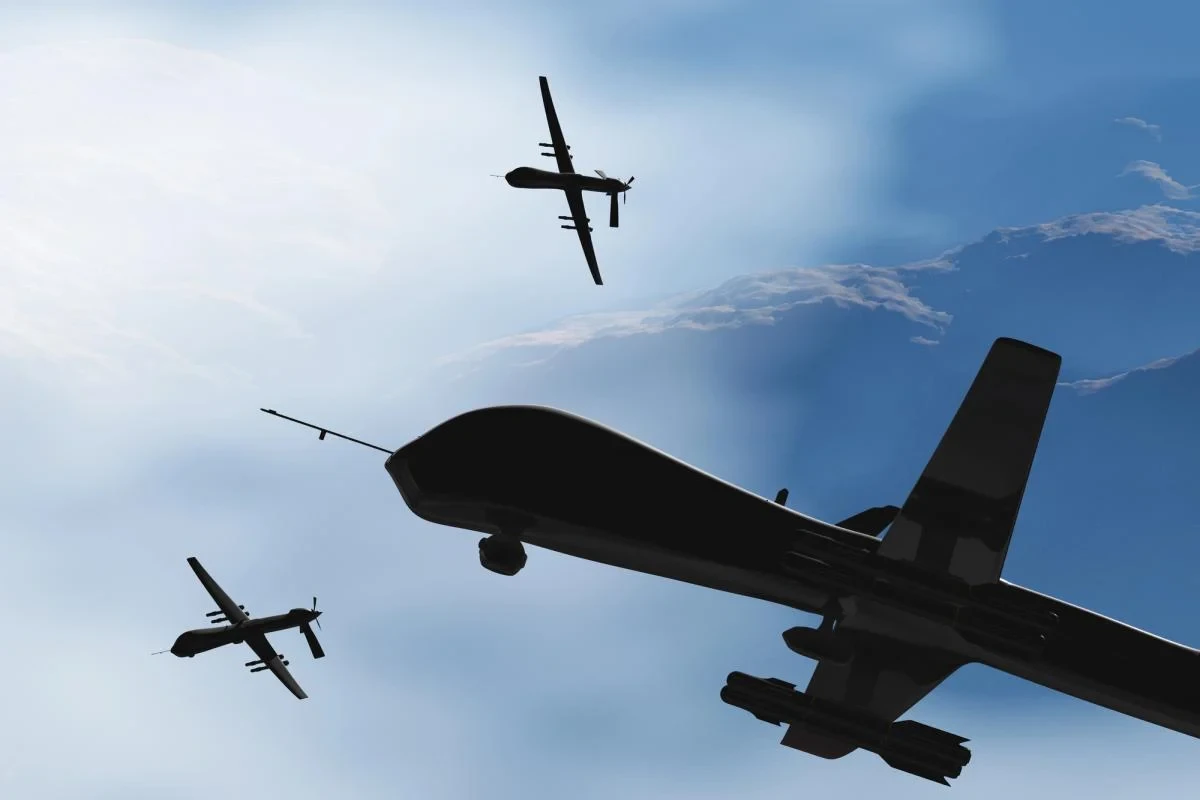
Combat drones, on the other hand, are usually significantly larger. Many of them have wings or a bulky body and externally resemble a small airplane. Additionally, these devices are generally not equipped with identification navigation lights.
The sound is also significantly different. Amateur drones produce a quiet buzzing sound that can only be heard from a short distance. Combat drones create a louder and lower noise that can be distinguished from afar. According to specialists, this sound can resemble that of an internal combustion engine, a moped, or a motorcycle.
Drones also differ in their flight characteristics. An amateur drone typically operates close to the operator, can hover in place, and perform short maneuvers. A combat drone can autonomously cover tens or even hundreds of kilometers along a predetermined route, heading in a specific direction.
Another important sign is the location of the operator. In the case of an amateur drone, the person controlling the device is most often nearby and usually remains within the line of sight. The operator of a combat drone is generally not visible and may be located many kilometers away.
The portal also provides recommendations for residents. If it concerns an amateur drone, there are usually no grounds for concern as long as flight rules, safety requirements, and privacy protection norms are followed. However, if an object resembling a combat drone is spotted, specialists recommend not approaching it and immediately reporting it to emergency services at 112.