They hold protons and neutrons in atomic nuclei.
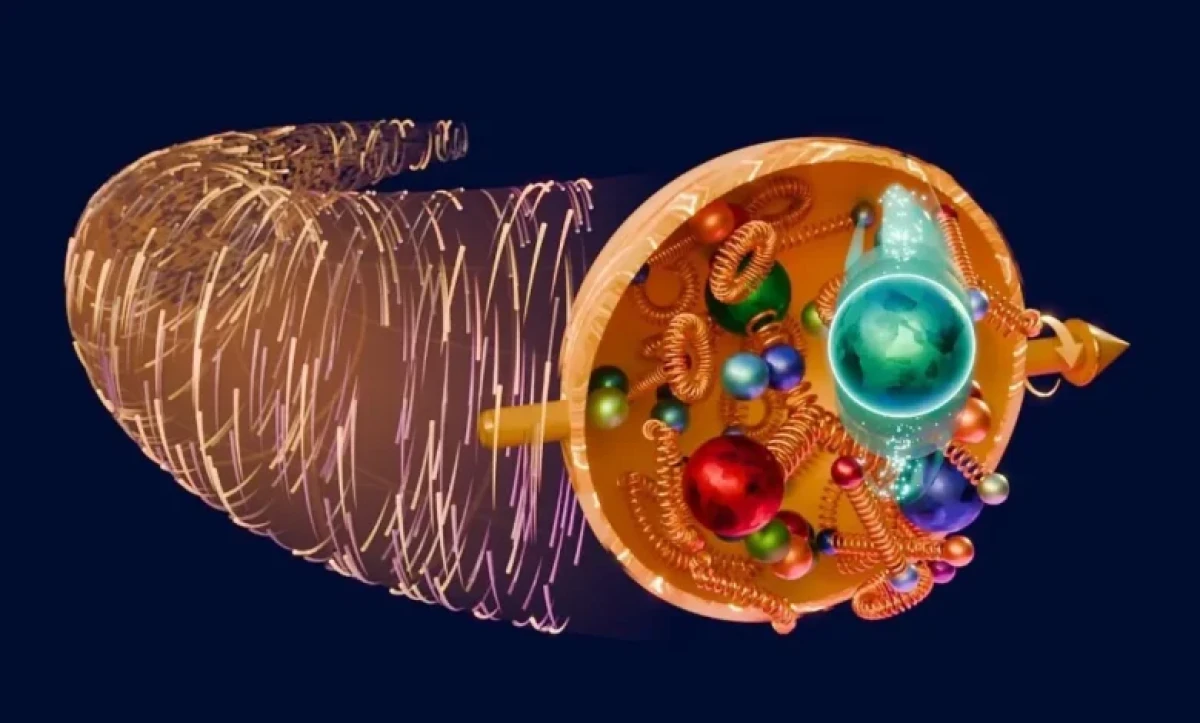
American scientists have created the most detailed three-dimensional model of the pion — one of the key subatomic particles involved in the formation of matter in the universe. To achieve this, they used the Polaris supercomputer, which allowed them to obtain an unprecedentedly accurate picture of the internal structure of the particle, consisting of a quark and an antiquark. The work was carried out by researchers from the Argonne National Laboratory of the U.S. Department of Energy with the participation of specialists from the Brookhaven National Laboratory.
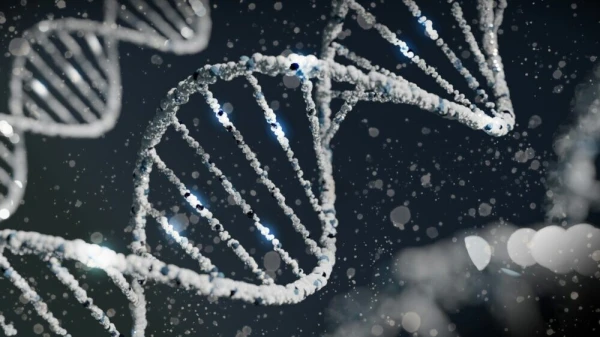
The goal of the project was to study how the pion is structured internally and how its fundamental components are distributed at the level of quantum chromodynamics. Pions are among the lightest hadronic particles and play a crucial role in particle physics, as they are responsible for mediating the strong interaction. This interaction holds protons and neutrons together in atomic nuclei and accounts for the overwhelming majority of the mass of visible matter in the universe. According to physicists, understanding the internal structure of the pion helps to get closer to explaining how observable matter is formed from fundamental particles.
Due to extremely limited experimental data, studying the internal structure of the pion has long remained a challenging task. To overcome this limitation, scientists applied large-scale computational simulations based on lattice quantum chromodynamics methods, placing particles and fields on a computational grid with millions of nodes and modeling the behavior of the system in four-dimensional spacetime. With the help of the Polaris supercomputer, researchers were able to combine theoretical models with high computational power and reconstruct the three-dimensional structure of the pion in motion. The simulation included hundreds of snapshots of four-dimensional spacetime and allowed them to track how quarks are distributed within the particle depending on their momentum and direction of motion.
The results showed that the distribution of quarks inside the pion significantly depends on its momentum. In particular, the scientists found that the transverse size of the pion decreases as momentum increases, and at moderate values, it is smaller than that of a proton. These data were obtained based on the calculation of generalized parton distributions that describe the spatial-momentum structure of quarks. The authors of the work note that the next step will be to use the Aurora supercomputer for three-dimensional modeling of the proton. This will allow for a deeper understanding of the mechanisms that hold quarks and gluons together, forming atomic nuclei and, ultimately, all the visible matter in the universe.