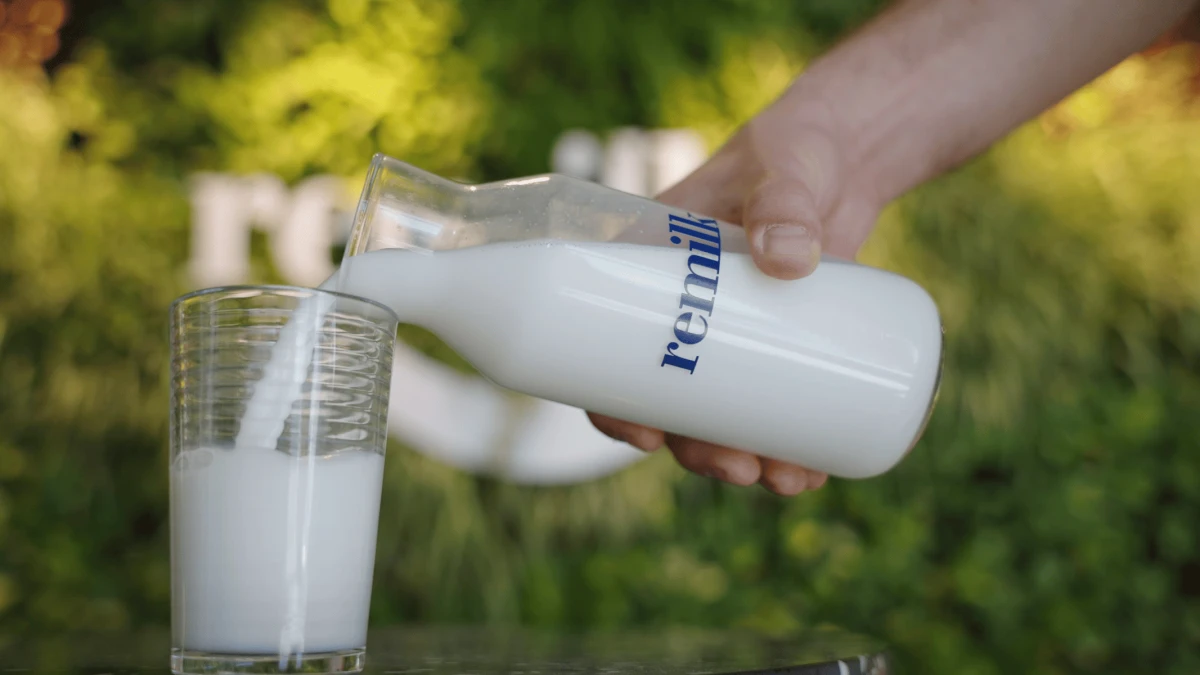
The company Remilk has introduced lab-created milk without the involvement of animals. The product contains real dairy proteins, allowing for the production of cheese, yogurts, and ice creams that are virtually indistinguishable from traditional ones. The product based on real dairy proteins is already available on store shelves.
The main problem with plant-based milk substitutes made from soy, oats, or almonds is that they cannot fully replace real dairy products. Authentic hard cheese, yogurt, or cappuccino foam cannot be made from them. The reason lies in the absence of specific proteins that form a unique molecular structure. The startup Remilk has solved this issue.
At the core of the development is the precise mapping of the chemical composition of milk. Scientists isolated a key component of whey protein from cow's milk – beta-lactoglobulin. The genetic instruction responsible for the synthesis of this protein in animals was implanted into the DNA of a strain of single-celled yeast.
The production process resembles brewing: the modified yeast is placed in massive bioreactors, where they are fed simple sugars. The yeast actively produces pure milk protein. After the fermentation cycle is complete, the biomass is separated by filtration, and the target protein is concentrated and dried. The result is a powder that is 100% identical to animal protein in its amino acid structure. To create liquid milk, this concentrate is mixed with water, plant fats, minerals, and calcium.
The synthesized protein has the same physicochemical properties as natural protein. It melts, gels, and retains moisture, allowing for the creation of full-fledged cheeses, yogurts, and ice creams that are indistinguishable from traditional products in texture and taste. This milk initially contains no lactose, cholesterol, antibiotics, or growth hormones. Production requires 99% less land and 90% less water than a conventional dairy farm.
The technology developed by Remilk could significantly change the dairy market. Scientists claim that the new production method requires significantly less water and land, and the milk itself contains no lactose, antibiotics, or growth hormones. At the same time, the taste and texture of these products are very close to regular dairy products.