During highway construction near Hradec Králové, archaeologists discovered a large Celtic settlement approximately 2,200 years old. On the 25-hectare site, they found hundreds of gold and silver coins, jewelry, Baltic amber, and evidence of advanced craft production.
In the Czech Republic, workers were building a highway and stumbled upon a Celtic settlement that is 2,200 years old, filled with hundreds of gold and silver coins, jewelry, and Baltic amber. This was reported by The Daily Galaxy.
Archaeologists stated that this site, located near Hradec Králové, is among the largest Celtic archaeological discoveries ever recorded in the area, writes Indiandefencereview. The settlement covers an area of 25 hectares. For comparison, most Iron Age monuments in the region occupy no more than a hectare.
Lead archaeologist Matouš Holas recalled the moment when the team realized what they had found underground: "When we started the first work, we came across artifacts that indicated we had discovered something important," he commented.
He added that if it weren't for the highway construction, scientists would never have uncovered this settlement.
What the scientists found
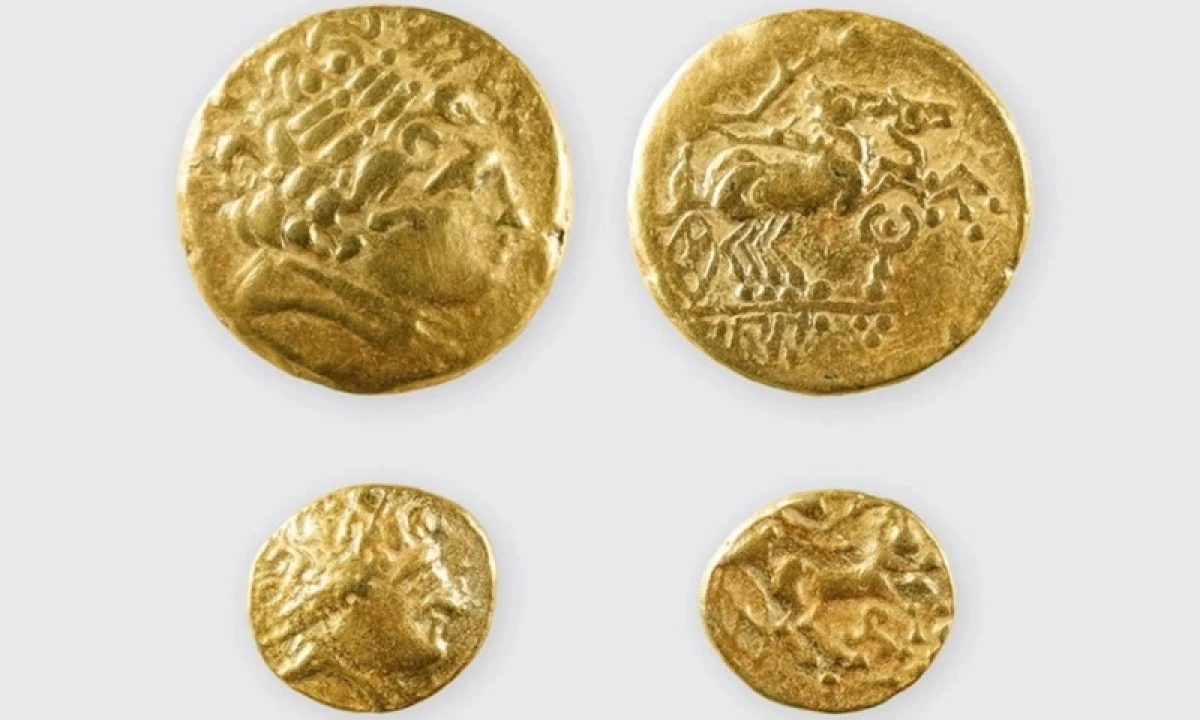
The excavations, which lasted two years, yielded astonishing results. Workers extracted gold and silver coins of various sizes, over 1,000 pieces of jewelry, including brooches and glass beads, as well as fragments of mirrors. Metal vessels, skillfully made ceramics, and beads made of Baltic amber were also discovered. Archaeologists filled over 13,000 bags with material found during the excavations. The small-diameter coins appear to have been modeled after Roman coins of the same period. Their craftsmanship, along with the jewelry and ceramics, indicates that skilled artisans lived and worked at this site.
The tools and production facilities found in the settlement suggest that it was a community that produced goods rather than just trading them. Among the produced items was luxury ceramics, confirming the picture of a Celtic trading and manufacturing center with significant influence.
How the settlement was different
This site lacks one characteristic feature of many settlements from that era: fortifications. It is not surrounded by defensive walls. This absence hints that the people here prioritized trade over conflict. The settlement was located along the historic amber route – a trade network connecting the Baltic and North Seas with Central Europe. Raw amber was transported south from northern regions, passed through this settlement, and continued its journey to the Mediterranean Sea.
Maciej Karwowski, an archaeologist from the University of Vienna, noted that the accumulation of luxury items corresponds to other known stops along the Baltic amber trade route.
Tomas Mangel, a professor of archaeology at the University of Hradec Králové, simply described the significance of the settlement: "The settlement was a supra-regional trading and manufacturing center connected to distant trade routes, as evidenced by the finds of amber, gold and silver coins, as well as evidence of elite ceramic production."
The variety of goods found reflects the settlement's place in an extensive exchange network. It served simultaneously as a workshop and a transit point for moving materials across the continent.
The settlement dates back to the La Tène period, which lasted from about 450 to 40 BC. This era left behind intricate metalwork, flowing decorative motifs, and evidence of extensive trade connections throughout Europe.
No inscriptions, burials, or tribal signs have been found at the excavation site in Hradec Králové that could confirm which specific Celtic group inhabited this place.
Archaeologists do not know why the settlement disappeared
Archaeologists also noted that the settlement was abandoned around the 1st century BC. However, scientists found no signs of violent destruction. In particular, there were no traces of burnt layers, weapon caches, or mass graves in the soil.
In the absence of evidence of conquest, researchers lean towards economic decline or environmental changes as a likely cause. The archaeological data simply do not provide a clear explanation for why the community vanished.
Archaeologists consider the find one of the largest in the region in recent decades. The discovery not only confirms the important role of ancient trade routes between the Baltic and Central Europe but also shows how advanced the economy of Celtic settlements could have been long before our era.