
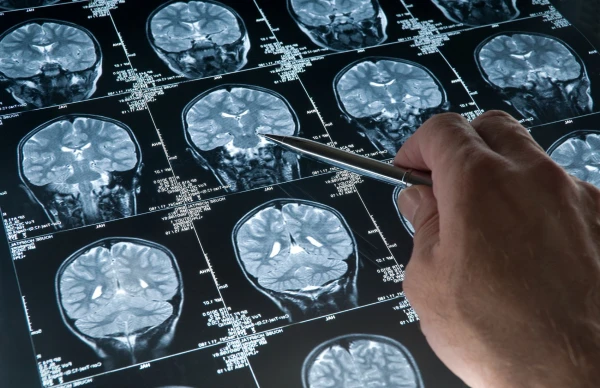
A team of molecular biologists from the United States and China has made a significant step forward by developing a technique that allows for the "reprogramming" of neutrophil immune cells directly in the patient's brain, directing them to destroy neighboring tumor cells.
An international team of molecular biologists from the United States and China has presented an innovative approach. It allows for the "reprogramming" of immune cells known as neutrophils directly in the patient's brain so that they actively attack tumor cells. This method, described in the journal Nature Biomedical Engineering, has already been successfully applied to treat glioblastoma in laboratory mice.
The Problem with Traditional Immunotherapy
Traditional immunotherapy, which uses "reprogrammed" T-cells, has shown excellent results in combating many types of blood cancer. However, it has proven nearly powerless against gliomas and glioblastomas. The main reason lies in the fact that T-cells struggle to overcome the blood-brain barrier, which protects the brain from the bloodstream.
Innovative Approach with Neutrophils
The researchers put forward a bold hypothesis: this problem can be circumvented by "reprogramming" not T-cells, but neutrophils. These immune cells are abundantly present directly in the tumor of brain tissues. The "reprogramming" procedure can be conducted right inside the brain using special nanoparticles capable of penetrating the barrier between the bloodstream and the central nervous system.
The specialists created unique lipid nanoparticles coated with special proteins, allowing them to specifically penetrate immune cells. Inside these structures is a strand of RNA that is activated exclusively in neutrophils. This RNA stimulates neutrophils to produce receptors capable of recognizing glioblastoma and significantly enhances their aggression against tumor cells, as reported by TASS.
Impressive Trial Results
Trials of the new therapy on mice demonstrated astonishing results. It doubled the average lifespan of the rodents after tumor development compared to standard chemotherapy. In combination with classical immunotherapy, this method saved the lives of about 80% of the test mice, while all individuals in the control group did not survive to the fortieth day.
Hope for Patients with Glioblastoma
Scientists are confident that this revolutionary discovery opens up enormous prospects for effective treatment of brain cancer. Glioblastoma is one of the most common and aggressive forms of this disease. It is diagnosed in 250,000 to 300,000 people worldwide each year. Unfortunately, most patients pass away within 12 to 18 months after diagnosis, and only 9% remain alive two years after the start of treatment.















Leave a comment