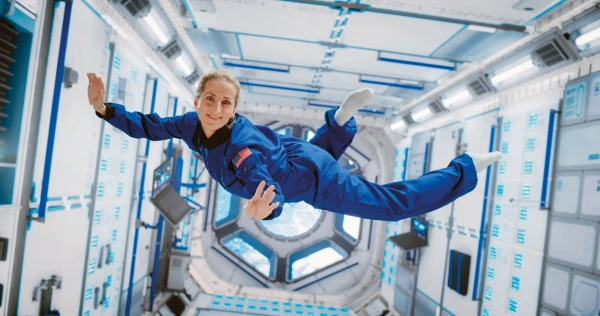
Recent studies reveal the astonishing ability of the human brain: in weightlessness, it reorganizes grip strength control, initially overestimating effort, but ultimately phenomenally adapting to the absence of gravity.
Our body is remarkably adapted to life in space, even though we have spent billions of years of evolution under the relentless influence of Earth's gravity. This is due to the incredible flexibility of the brain, which skillfully reorganizes the functioning of sensory systems in microgravity. Take balance, for example: on Earth, it is inextricably linked to gravity, but in the vacuum of space, vision brilliantly takes over this function. A striking example is astronaut Christina Koch from the Artemis II mission, who experienced difficulties walking blind after returning to her home planet, as she had completely relied on her eyes to maintain balance in space.
Recent research has revealed that weightlessness radically changes our grip strength as well. In our familiar earthly life, it is closely related to an intuitive "load assessment," meaning the effort we subconsciously exert to hold or move an object.
Specialists from the Catholic University of Leuven conducted an exciting experiment, tracking how astronauts interacted with sensory objects before the flight, during their time in space, and after their return. Participants vigorously moved these objects in different directions and at varying speeds so that scientists could capture the slightest changes. The results were astonishing: in weightlessness, astronauts constantly "overcompensate," gripping objects with excessive force.
Imagine, they hold an item as if it is about to slip from their hands and fly away, even when moving upwards. This effect persists even after returning to Earth: initially, astronauts continue to exert excessive effort, and even familiar objects seem heavier than they actually are. Fortunately, over time, as they adapt, their "grip sense" gradually returns to normal.
Scientists explain this phenomenon as a deeply rooted instinct for self-preservation and risk avoidance. The higher the speed and energy of an object in weightlessness, the greater the threat to expensive equipment and crew safety if it suddenly goes out of control.
The increase in grip strength is a kind of compensation for this potential risk. After returning to Earth, the brain requires some time to recalibrate grip strength in accordance with Earth's gravity and actual load. These studies convincingly demonstrate that despite the lack of evolutionary experience living in weightlessness, the human brain possesses an astonishing ability to rapidly adapt even to the most unusual conditions.