Researchers have obtained what they believe to be the most accurate value for the rate of expansion of the cosmos, but this has led to the existing cosmological problem becoming even larger.
Astronomers have obtained an extremely precise value for the rate of expansion of the Universe, and it has shown that the cosmos is expanding faster than predicted by the standard cosmological model. This model describes the evolution of the cosmos from the Big Bang to the present day. The existing Hubble problem has not gone away; it has only grown larger, and astronomers cannot explain it. This may mean that our current model of the Universe is incomplete, writes Focus.
The Universe has been continuously increasing in size since the Big Bang for 13.8 billion years. To determine the rate of expansion of the Universe, known as the Hubble constant, scientists measure distances to stars and galaxies in the nearby Universe and also study the distant past using cosmic microwave background radiation to understand what the rate of expansion of the cosmos should be now, according to the standard cosmological model.
Theoretically, both methods of measuring the Hubble constant should yield the same result. In reality, this is not the case. Observations of the nearby Universe have previously shown a higher rate of expansion of the cosmos, approximately 73 kilometers per second per megaparsec. At the same time, measurements based on data from the early Universe indicated that the Hubble constant is 67-68 kilometers per second per megaparsec. The difference between these values is too great to be considered a coincidence. This is called the Hubble problem.
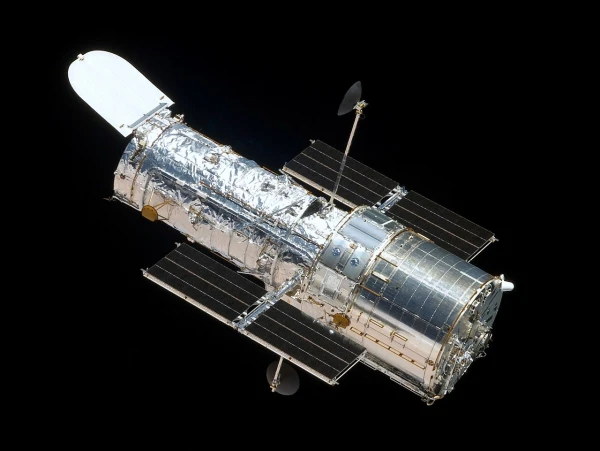
Now scientists have used ground-based and space telescopes to refine the rate of expansion of the cosmos in the nearby Universe, which corresponds to the current rate of increase in the size of the Universe.
Instead of relying on a single method of measurement, scientists combined several overlapping methods used to measure cosmic distances. This approach allows scientists to verify results in multiple ways.
As a result, the authors of the study found that the Hubble constant is 73.5 ± 0.81 kilometers per second per megaparsec, which means it is even further from the rate of expansion of the cosmos in the distant past. If one measurement method were erroneous, its exclusion from the overall system would have changed the final result, but this did not happen. Therefore, astronomers are confident in the accuracy of the obtained data. Scientists say that the Hubble problem has only worsened, and this data may indicate the existence of new physics that goes beyond the standard cosmological model.
The slower rate of expansion of the cosmos obtained from data about the early Universe depends on the standard cosmological model, which describes how the Universe evolved after the Big Bang. If something is missing in this model, such as details about dark energy, unknown particles, or changes in gravity, its predictions regarding today's expansion of the Universe may be incorrect, scientists say. This suggests that scientists may need to reconsider their understanding of how the Universe is structured.