
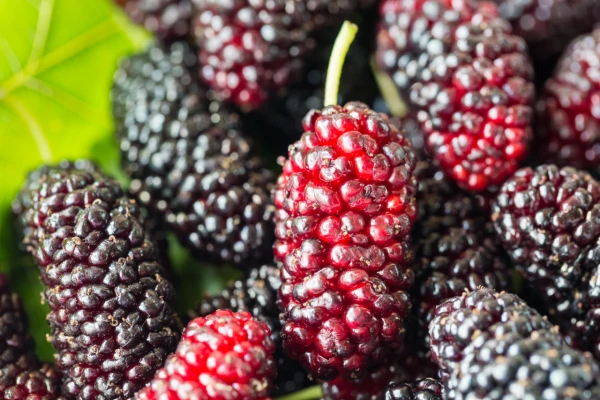
Mulberry fruits help effectively reduce bad cholesterol.
Extracts of anthocyanins from mulberry fruits may help the body cope with the consequences of a fatty and cholesterol-rich diet. This conclusion was reached by researchers studying how substances from mulberries affect gut microbiota, inflammation, and metabolism in the liver. The results were published in Frontiers in Nutrition.
In an experiment on mice with an increased risk of atherosclerosis, supplements containing mulberry anthocyanins reduced levels of 'bad' cholesterol and the inflammatory marker interleukin-1β, while increasing levels of the antioxidant enzyme glutathione peroxidase. At the same time, the composition of the gut microbiota changed: the number of bacteria associated with a more favorable metabolic profile increased, while the number of microorganisms previously linked to inflammation decreased.
Moreover, the levels of important metabolites in the animals' livers changed. In particular, after the intake of anthocyanins, ATP levels and some compounds related to the inflammatory response decreased, while the level of glutamine, on the contrary, increased. The authors believe that it is through such shifts in metabolism and microbiota function that mulberries may weaken risk factors associated with atherosclerosis.
Researchers emphasize that the work was conducted on animals, so it is still too early to directly transfer the results to humans. Nevertheless, the data suggest that mulberry anthocyanins could be a promising natural tool for reducing inflammation and correcting metabolic disorders.
















Leave a comment