
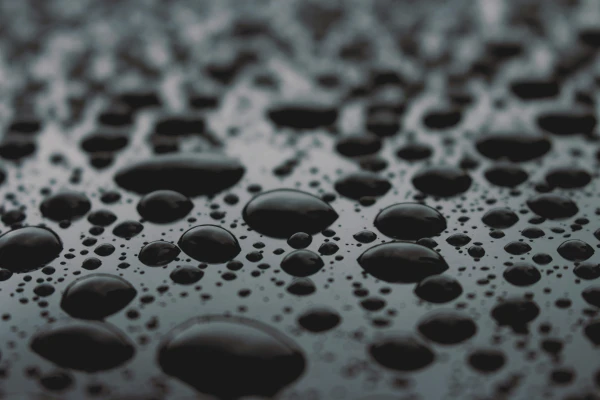
The horrifying "black rain" fell in Iran's capital after U.S. and Israeli airstrikes on Iranian oil infrastructure released toxic clouds into the air. Scientists are alarmed by its impact on human health.
Last week, residents of Iran's capital, Tehran, faced charred buildings, cars, and streets, toxic air burning their lungs, and stinging eyes after the U.S. and Israel carried out airstrikes on Iran's oil infrastructure, reports Focus.
After the bombings of Iran's oil facilities by the U.S. and Israel, huge plumes of toxic smoke were released into the atmosphere. These dangerous clouds subsequently returned to the ground in the form of deadly "black rain." The situation became so serious that global health organizations, including the WHO, issued warnings about the public health risk.
Researchers note that horrifying plumes of thick black smoke were also observed in other areas of the Middle East. If the situation continues to escalate, Iranians will not be the only ones threatened by "black rain."
Experts believe that the health consequences for those exposed to "black rain" may pose immediate and long-term dangers due to contact with this toxic phenomenon.
It is noteworthy that since the start of U.S.-Israeli bombings of Iran on February 28, the air force has confirmed at least four attacks on Iranian oil refineries in the vicinity of Tehran. The capital of Iran is known to have about 10 million residents, with millions more living in neighboring regions. After the bombings of Iranian oil refineries and storage facilities near Tehran, residents reported thick smog and air pollution that, according to them, "obscured the sun," creating a strong smell of burning in many areas of the capital.
Experts believe that the scale of pollution already released into the atmosphere could be "unprecedented" and poses a deadly threat to human health. According to Dr. Akshay Deoras, a researcher at the University of Reading, the sharp increase in air pollution was concentrated mainly in the vicinity of Tehran, where the oil refineries were located.
According to scientists, "black rain" is a colloquial term for precipitation contaminated with a high concentration of pollutants, which causes it to appear dark, sometimes even black. Typically, pollutants are washed out of the air during rain, but the unusual phenomenon, also known as "black rain," occurs when large amounts of soot, ash, and harmful chemicals mix with water droplets in the atmosphere and then fall back to the planet's surface.
Dr. Deoras notes that raindrops essentially act as tiny sponges or magnets, collecting everything in the air. That is why residents of Tehran observed a phenomenon they describe as "black rain." It is also possible that some larger particles of pollutants settled from the air even without precipitation.
It is known that "black rain" can occur after fires at oil refineries or oil fields, and can also be caused by volcanic eruptions, wildfires, and industrial pollution.
According to Peter Adams, a professor of civil and environmental engineering at Carnegie Mellon University, the burning of oil has also led to the formation of compounds known as polycyclic aromatic hydrocarbons (PAHs) and toxic gases such as nitrogen oxides and sulfur dioxide.
Experts believe that "black rain" could be extremely dangerous and acidic, potentially causing "chemical burns to the skin and serious lung damage." The fact is that tiny soot particles can penetrate deep into lung tissue and enter the bloodstream, potentially causing fatal respiratory and cardiac complications or even premature death.













Leave a comment