Now television programs from this country are broadcast to a 5 billion audience.
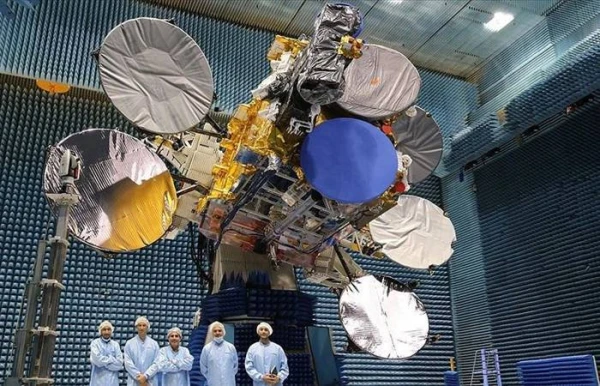
As reported by Armiya.az citing savunmahatti, Turkey currently operates 10 satellites in space, playing a crucial role in communication, observation, and data collection, becoming one of only 11 countries to achieve such success. With the commissioning of the TÜRKSAT 6A satellite, over 80% of which is produced domestically, the total number of satellites in Turkey has reached 10, expanding the coverage area to over 5 billion people.
Turkey's space expedition began in the 1990s. The first communication satellite, TÜRKSAT 1B, was launched in 1994, symbolizing the start of the use of space technologies. It was followed by satellites such as TÜRKSAT 1C (1996) and TÜRKSAT 2A (2001). In the 2000s, Turkey's contribution began to grow. Observation satellites such as BİLSAT-1 (2003) were developed under the guidance of TÜBİTAK. In the 2010s, thanks to projects like RASAT (2011), GÖKTÜRK-2 (2012), and GÖKTÜRK-1 (2016), Turkey made significant strides towards domestic design and production.
The program, gaining momentum in the 2020s, was bolstered by next-generation communication satellites such as TÜRKSAT 5A (2021), TÜRKSAT 5B (2021), and TÜRKSAT 6A (2024). In particular, TÜRKSAT 6A made history as the first communication satellite fully produced by domestic efforts, placing Turkey among the few countries that design and manufacture their own satellites.
İMECE, launched in 2023, became the first domestic observation satellite with a resolution of less than one meter. By 2025, the fleet expanded with new projects such as Fergani FGN-100-d1. Leading organizations in this process included the Turkish Space Agency (TUA) and TÜBİTAK. The budget also increased: space expenditures, which were $140 million in 2025, rose to $209 million in 2026.
Active Turkish satellites in space are divided into two main categories: communication and observation.
Here is a detailed list as of January 2026:
These satellites are operated by TÜRKSAT and provide television broadcasting, internet access, and data transmission. Their lifespan ranges from 15 to 35 years.
TÜRKSAT 3A (2008): the oldest active communication satellite covering Europe, the Middle East, and Africa.
TURKSAT 4A (2014): used for high-speed broadcasting.
TURKSAT 4B (2015): focused on Asia and Africa.
TURKSAT 5A (2021): plays a crucial role, providing coverage for 3.5 billion people.
TURKSAT 5B (2021): designed for high-speed data transmission, covering the Red Sea and the Persian Gulf.
TURKSAT 6A (2024): domestically produced, weighing 4250 kg. Added India, Thailand, and Indonesia to the coverage area, increasing the total coverage to 5 billion people. Observation, reconnaissance, and GPS satellites
Military and civil observation satellites that provide high-resolution imagery. Developed by TÜBİTAK and TUSAŞ.
GÖKTÜRK-2 (2012): Developed in Turkey, used for emergency management and mapping.
GÖKTÜRK-1 (2016): Focused on military observation, weighing 1060 kg.
İMECE (2023): Provides imagery with a resolution of less than one meter, equipped with domestic optical systems. The ULUĞBEY project: A national GPS satellite project.
These 10 satellites represent Turkey's overall presence in space.
<iframe width="560" height="315" src="https://www.youtube.com/embed/MObG8x9qr2w?si=zzJUHngQglKq8ZXd" title="YouTube video player" frameborder="0" allow="accelerometer; autoplay; clipboard-write; encrypted-media; gyroscope; picture-in-picture; web-share" referrerpolicy="strict-origin-when-cross-origin" allowfullscreen></iframe>