
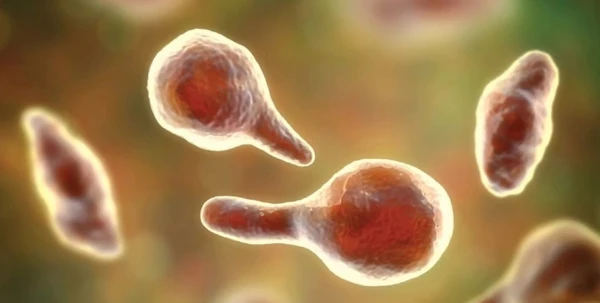
The study showed that microbes continue to evolve in microgravity conditions, and this occurs in ways that are not always predictable, writes Focus.
The International Space Station (ISS) is a closed ecosystem, and the living organisms and microbes inside it do not necessarily behave the same way as they do on Earth. To better understand how microbes might behave in space, scientists studied bacteriophages. These are viruses that infect bacteria. The scientists conducted two identical experiments on the ISS and on Earth. It turned out that viruses can behave quite unusually in space. This research, published in the journal PLOS Biology, is significant for future manned missions to deep space and for treating diseases on Earth, writes Space.
Bacteriophages are the most numerous biological organisms on our planet. According to scientists, there are about 10 to the power of 31 bacteriophages on Earth, a name that means "bacteria eaters." These viruses are found in any environment on our planet.
The scientists studied the interaction of T7 bacteriophages with Escherichia coli (E. coli) bacteria aboard the ISS and compared them with viruses interacting with bacteria on Earth. The researchers found that space viruses took longer to infect bacteria. It also turned out that both bacteria and viruses developed unusual mutations in response to their interaction with each other and the conditions of microgravity. The scientists concluded that viruses in space can develop mutations that are beneficial for humans on Earth. The study showed that microbes continue to evolve in microgravity conditions in space, and this occurs in ways that are not always predictable.
According to the scientists, relatively few studies have been conducted examining the interaction of bacteriophages and bacteria in space conditions. Spaceflight alters fundamental aspects of the environment, such as how liquids mix, how cells interact with each other, and how physical forces shape cellular physiology. The infection of bacteria by viruses depends on the rate of transfer, collision frequency, and the physiology of bacteria, all of which can change in space.
As the study showed, on the ISS, viruses initially infected bacteria more slowly, likely because liquids do not mix the same way in microgravity conditions. But once infection occurred, both viruses and bacteria quickly adapted, often in ways that were completely different from their Earth counterparts. Bacteria evolved in such a way that they enhanced their protection against viral infection and increased their survival in space. However, viruses evolved in such a way that they could more easily infect E. coli. Some genetic changes observed by scientists in space viruses had no analogs on Earth.
According to the scientists, microgravity not only delays the infection of bacteria by viruses, but it also changes how viruses and bacteria evolve together. The study discovered mutations in unexpected genes.
Data shows that microbes can adapt quickly and unexpectedly in microgravity conditions. The results of the study are significant for long-duration manned space missions. Microbes residing aboard a spacecraft can evolve in ways that will impact the health of astronauts and the environment as a whole. Could this pose a threat to the health and lives of astronauts? Scientists say this is possible, but further research is needed.
For people on Earth, the results of this study are more positive, as microgravity may help scientists develop viruses capable of destroying drug-resistant bacteria.
Experiments showed that some genetic changes observed aboard the ISS made viruses more effective in combating drug-resistant strains of E. coli.











Leave a comment