The collected material can be compacted directly in the machine to remove residual moisture.
Wastewater from a washing machine in a family of four can annually contribute up to 500 grams of microplastics, primarily due to fabric wear. As a result, common household appliances become a significant source of such tiny particles. Currently, microplastics directly enter the sludge at wastewater treatment plants. This sludge is often used as fertilizer, which means fibers ultimately end up on agricultural fields. For this reason, many companies are developing solutions to remove microplastics from laundry water, thereby preventing their entry into the environment.
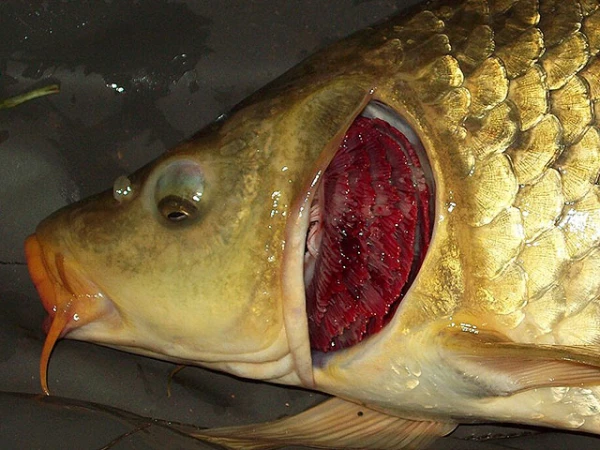
A group of scientists decided to turn to the animal kingdom for possible solutions. The researchers focused on fish – true experts in filtration that have honed this ability over hundreds of millions of years. Some species, such as mackerel, sardines, and anchovies, feed by passing water through their mouths and filtering plankton using their gill arches. The researchers studied the structure of this system in detail and used it as a basis for creating a filter suitable for use in washing machines. Through evolution, these fish developed a technique similar to cross-flow filtration. Their gill apparatus is structured like a funnel: wide at the mouth and gradually narrowing towards the throat. The walls of this "funnel" are formed by gill arches – comb-like structures with numerous small teeth. Together, they create something akin to a mesh filter stretched between the arches.
This mechanism prevents the filter from clogging: instead of encountering an obstacle, particles roll along its surface towards the throat. This method is highly effective – it almost completely removes plankton from the water. The filter for microplastics should possess the same properties. Therefore, the scientists recreated the design of the gill arches, experimenting with the size of the mesh cells and the angle of the funnel-shaped structure. The microplastics that the filter captures from the wastewater after washing accumulate at the outlet of the device and are suctioned several times a minute. The collected material can be compacted directly in the machine to remove residual moisture. Such compacted plastic pellets can be extracted after several dozen washing cycles and disposed of with regular waste.
A team of specialists from the University of Bonn and the Fraunhofer Institute for Environmental, Safety, and Energy Technology (UMSICHT) has already applied for a German patent, and the process of obtaining a patent at the EU level is currently underway. The scientists hope that appliance manufacturers will continue to work on the technology and integrate such a filter into new washing machine models. This would help at least partially reduce the influx of microplastics from fabrics into the environment. This is especially important, as research shows that such particles can seriously harm health. They have already been found in breast milk, placenta, and even brain tissue.