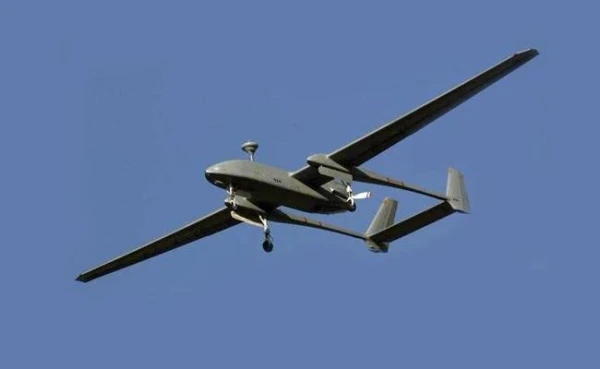
Germany has ordered to shoot down UAVs. And a new danger looms: this could also affect drones transporting vital medicines. Experts demand license plates, like in road traffic. But will this work?
They spy, disrupt airports, and cause chaos — the topic of drones in Germany has polarized public debate in recent weeks. Calls for strict measures against drones have grown louder, and politicians have had to respond.
German Interior Minister Alexander Dobrindt (CSU) recently announced a reform in the fight against drones. It includes the establishment of a joint anti-drone center at the federal and state levels, a drone unit in the federal police, and a separate research and development unit for drone technologies. The federal police will now be able to detect, neutralize, intercept, and, if necessary, shoot down unmanned aerial vehicles.
However, not all drones are dangerous: many are used for civilian purposes, especially in logistics and healthcare. They transport medical cargo by air, including blood samples, medications, and vaccines.
In an interview with Euronews, Norman Kershult, founder of Morpheus Logistik, the only airline in Germany using drones, explained that they have partially replaced conventional road transport.
"Where we fly, there are no alternatives," he added, referring to the lack of taxis, traffic jams, and high infrastructure loads.
Kershult sees the advantage of drones in that they can quickly cover the distance between a hospital and a laboratory, avoiding traffic jams. About 250 laboratory samples are transported in one flight — for the founder, this is proof of practical civilian use of drones, which are often used for military purposes.
How far such civilian applications have progressed is demonstrated by the example of the Asklepios clinic group. Here, drones are increasingly used to transport medical samples between their facilities.
Since March of this year, drones have regularly flown distances of over 50 km in a straight line between Selent in the Plön district and Bad Oldesloe in the Stormarn district, Schleswig-Holstein. So far, they have completed about 100 transports and several hundred test flights. The goal is to relieve road traffic and provide faster, more environmentally friendly transport of blood samples and laboratory analyses.
Can civilian and "hostile" drones coexist in the same airspace? Just like on the roads, clear rules are needed in the sky.
In Germany, UAVs weighing over 250 grams, professional drones, or those flying in critical zones must have a "digital identification number" (EID).
This EID can only be read by authorities and authorized personnel, as the transmission of location data can be used to create profiles of drone operators' movements.
The absence of an EID is punishable by a fine of up to €50,000. For serious violations, such as dangerous interference with air traffic, imprisonment of 6 months to 10 years may be imposed.
Mini-drones for non-commercial flights are usually exempt from the obligation to have an EID. It is unclear which of them have been spotted in recent weeks, as no drone has been confiscated.
Additionally, devices can be monitored and controlled through the internal fleet monitoring system FLAN. Some drones also transmit location data via ADS-B, a standard in aviation that can theoretically be received by anyone with the appropriate equipment. However, precise identification of the operator is only possible through official registration data.
Transparency in the Lower Airspace
"We simply need a federal initiative and clear visibility for the lower airspace," explains the founder of Morpheus Logistik in an interview with Euronews. This is the part of the atmosphere where most conventional airplanes, helicopters, and drones fly. It extends from the ground to about 7.5 kilometers in height.
Morpheus Logistik demands 100% identification of all drones in this altitude range.
"We need to introduce this identification obligation nationwide, and then across the EU," says Kershult. "Then not only the authorities but everyone will be able to see which drones — loaded or not — are in the sky. This can be imagined as a digital license plate for drones."
Thus, drones that may be used for espionage or sabotage can be quickly identified.
"This will provide greater transparency and ultimately relieve citizens of fear," believes Kershult, adding that any technology can unfortunately be used for both good and evil.
However, shooting down drones, as recently demanded by Bavarian Prime Minister Markus Söder (CSU), is an ineffective solution — partly because there are many active drone pilots in Germany.
If now every sighting of a drone is reported to the police or other competent authorities, this, according to Kershult, will cause confusion and irritation. If instead there were a system where the origin and type of drone could be identified, it would provide clarity in the sky.