This question troubles Haralds Brauns on the Pietiek.com portal. He writes:
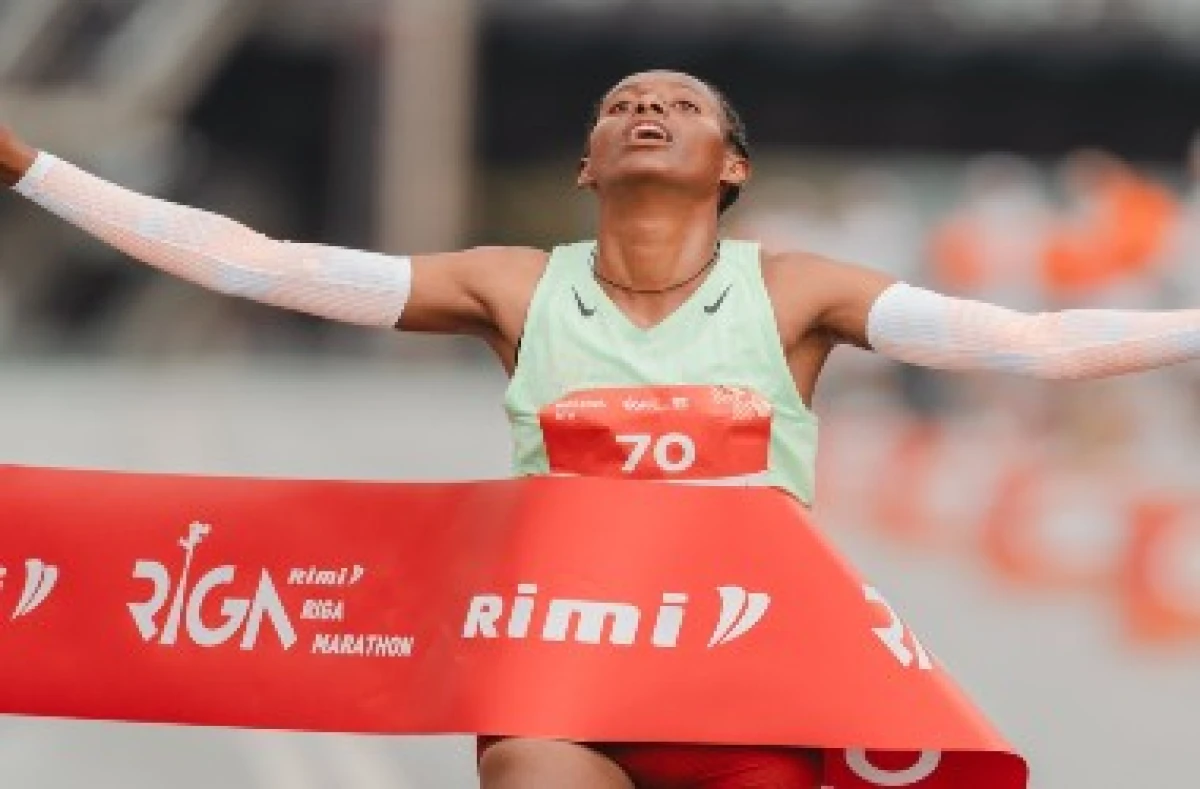
This year, the next Riga Marathon "Rimi" will take place on May 16–17, which made me think. Of course, a marathon is a positive and supported event, but it also has its negative sides.
Perhaps someone has read the article on lsm.lv from April 22, which talked not only about the marathon taking place but also about the arrival of "elite runners." The arrival of this "elite" is presented not just as something joyful but even as an honor and happiness.
This year, the two-time Boston Marathon winner Sharon Lokedi (Kenya), bronze medalist of the World Championship Edgayehu Taji (Ethiopia), and Germany's marathon record holder Domenique Meyer (Germany) will come to Riga. And in the men's distances, there will also be Kenyans and Tanzanians.
They say the marathon will be especially interesting because these elite runners—foreigners—are participating. The problem I see is that the total prize pool is the same for everyone. This means that all these Africans will come to Riga to take the main cash prizes and then go on to earn more at other marathons. How does this support Latvian runners and sports? It turns out: "Yes, our athletes will not receive any prizes, but at least we will see Africans!"
I also have a question about what signal this sends to our young runners. Train your whole life, represent Latvia—but at the country's main marathon, the podium places will be reserved for foreigners?
Of course, I can answer all these rhetorical questions myself. For example, last year the Riga Marathon brought 17 million euros to Riga's economy. Of that, 2.48 million euros came from foreign participants. The basis of everything is money, and local runners remain in the background.
All this reminds me of the story that many of these elite runners resemble some sort of traveling circus that travels the world collecting prize money. At the same time, a significant portion of these funds actually ends up in the pockets of agents representing the athletes.
As early as 2008, The Times wrote that Kenyan and other runners are essentially "sold like slaves." Various agents attract young athletes starting at the age of 15 and, for money, ensure that they represent certain countries. For example, Qatar, Bahrain, and the UAE "buy" foreign runners to compete under their flags and bring them international victories.
European countries are also involved in this business. A poor Kenyan can be made to represent, for example, Spain for a few thousand euros, while the agent takes up to 20% of the runner's income. It is not difficult to draw Kenyans into such a system, as even small amounts by Western standards are a ticket out of poverty for them.
Many female runners from Kenya, Uganda, or Tanzania face not only sexual harassment from coaches but also exploitation from friends and relatives. Since athletes often lack financial literacy, they do not know how to manage their earnings wisely or enter into fair contracts with agents.
One Kenyan runner recounts that she received only half of the amount owed to her because the agent claimed the money went to tickets, accommodation, and food. Meanwhile, runners cannot compete without agents, as they are unable to organize logistics and training on their own until they start winning competitions.
Other intermediaries can also appropriate athletes' money. For example, in 2015, the Athletics Federation of Kenya misappropriated $700,000 from a deal with Nike that was intended for runners and the development of sports.
It is not surprising that at the largest marathons in the world, the top prizes often go to African athletes. For example, in Vietnam, Ethiopian Tesfaye Tsegaye Keres was competing in the marathon, who does not hide that winning would bring him $2,500. This is important for him, as he has a wife, two children, and a farm at home that he wants to expand with the money he earns. For comparison, at the Riga Marathon, prizes reach 7,000 euros.
In conclusion, one can recall the Stockholm Marathon of 2015, where it was planned to award prizes only to runners from Northern European countries. However, under pressure from accusations of racism, this decision was overturned, and prizes could be awarded to everyone—including Africans, who are likely to win. The organizers initially wanted to do exactly what I am talking about—to keep the money with local athletes and promote the development of local sports.
I stand by my opinion and will not be happy about the arrival of the African "elite" in Riga. I wish local runners success.