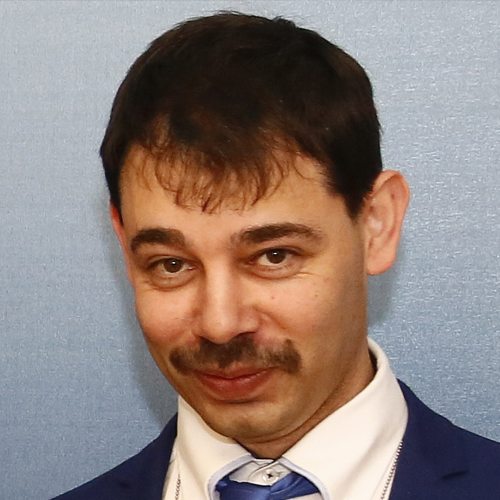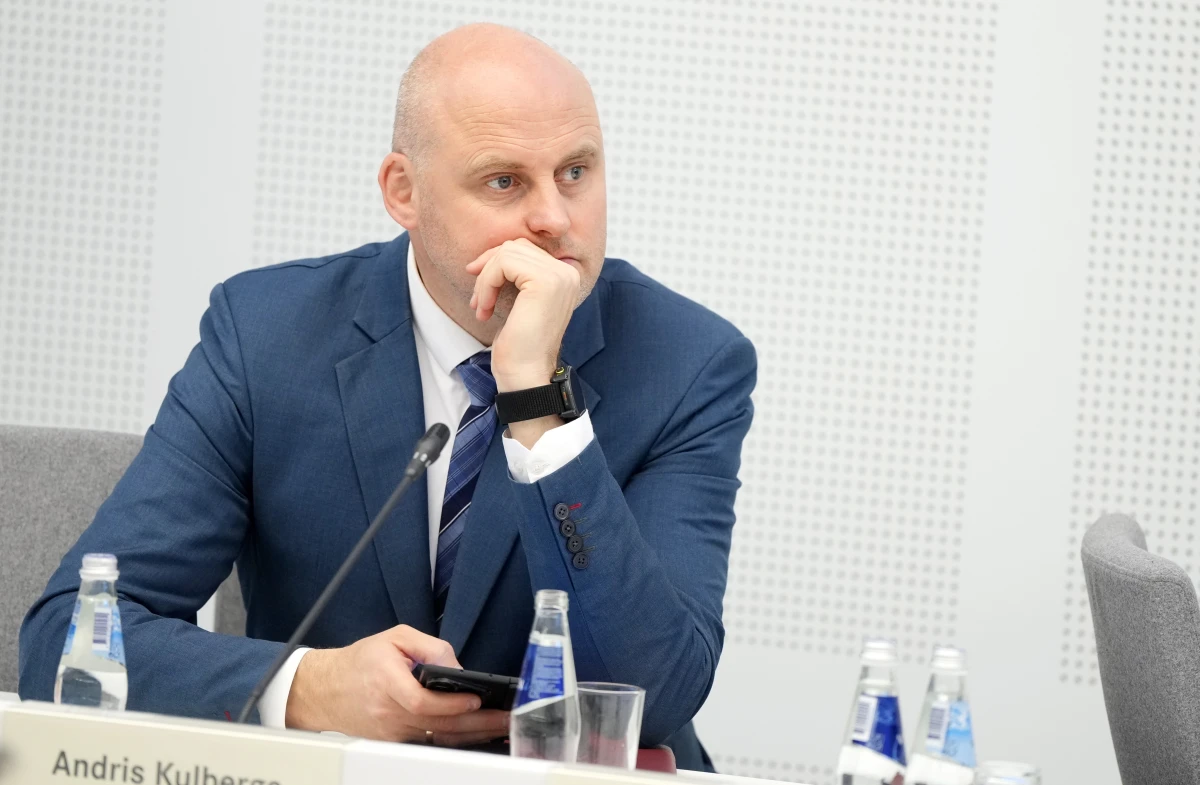
Andris Kulbergs finds himself in a rather unusual situation. On one hand, the elections are coming up very soon, and the official election campaign is in full swing, which means the Prime Minister must work actively and try to show some tangible results.
On the other hand, this government has been given so little time that even with all the desire, it cannot solve a major problem. Unfortunately for the head of the government, there are also issues that he cannot postpone and cannot drag out by delaying unpopular decisions.
So, let us attempt to outline the problems that Kulbergs and Co. will not be able to solve, which will be inherited by the next government.
Problem One – Healthcare
In the healthcare system, there continues to be a severe shortage of funds and chaos in the organization of inpatient and outpatient medical care. The most vivid manifestation of the disorder in healthcare is the increased queues of ambulances at the emergency department of Stradins Hospital.
On one of the Mondays in June, ambulance crews were forced to wait with a patient in their vehicle for about 2 hours for their turn. And this, so to speak, is in peacetime, without any crisis or emergency situation. And what if, God forbid, some emergency occurs with a large number of casualties?! Then a complete collapse is inevitable.
It is clear that the current government is expected to take some actions. But... they will not wait. Of course, formally, the Minister of Health Abu Meri reacted to what happened and instructed the hospital management to rectify the situation. But, as they say, miracles do not happen. Here, just like in a Soviet anecdote, the entire system needs to be changed.
-
Firstly, to sharply increase the throughput of the main clinic in the country, additional human resources (read – medical staff) are needed, as well as the commissioning of a new hospital building – and construction, in light of all the scandals with builders and estimates, is clearly dragging on.
-
Secondly, ideally, another round-the-clock emergency clinic needs to be created in Riga. In fact, this means reviving the former status of the Riga 1st Hospital, which is currently de facto a day hospital that closes at night and on weekends.
To once again make the 1st Hospital an emergency care facility, the hospital's operations need to be completely restructured – for this, again, additional personnel and tens of millions of euros monthly are necessary! It is clear that under the current healthcare budget, this is impossible.
- Thirdly, to prevent or reduce the delivery of chronic patients to hospitals, the outpatient care system needs to be restructured. This includes reviving the service of on-call doctors and nurses on weekends and holidays with home visits to patients, as well as the operation of day hospitals and procedures on weekends and holidays... But this also requires medical resources and funding.
In general, Kulbergs' government is unable to solve this problem. It is clear that the new-old ruling politicians were too hasty in promising to increase government spending on healthcare to 12.5%. It is obvious that the Saeima, returning from vacation in September, just weeks before the elections, will hardly start reshaping the 2026 budget and allocating additional tens of millions of euros to strengthen healthcare.
Problem Two – Rail Baltica
All of Kulbergs' attempts, including during direct negotiations with the leadership of the European Commission, to secure additional funding for the project of the century are doomed to failure.
Brussels will not increase spending on Rail Baltica specifically for Latvia, especially considering that, according to the leadership of RB Rail, the contract for the construction of the main route of Rail Baltica through Latvia is financially very expensive.
It is clear that Kulbergs' government will not manage to find the missing hundreds of millions of euros in this matter – Riga cannot bear such a financial burden, and Brussels does not want to.
Problem Three – The Rich and the Poor
The next "eternal" problem is the change of the equalization fund system. The last time the law on the equalization fund was changed... was in 2015, that is, more than 10 years ago. The essence of the system is that the most successful (read – wealthy) municipalities share part of their budget with less wealthy municipalities, which, for various, including objective reasons, do not have sufficient funds in their municipal budgets.
The main reasons are population outflow (fewer residents declared – less revenue to municipalities from personal income tax), a large distance from the metropolis, a labor shortage, and thus difficulties in attracting investors...
In any case, today 9 entities (mainly Riga, Jurmala, and the municipalities of the Riga region) allocate subsidies to the remaining 34 municipalities, which find it difficult to make ends meet.
The system is not very fair and effective. Subsidized municipalities are not particularly motivated to attract investors and residents – they will receive money anyway. On the other hand, donor municipalities strive to have more residents declared, acting like a vacuum cleaner, pulling labor from all corners of the republic.
As a result, the richest municipalities have become those around Riga – people work in the capital, but 78% of their income tax goes to the municipality where they live. Riga is thus robbed twice – both from those living outside the city but working in the capital, and from subsidies – just this year, Riga contributed over 137 million euros to the equalization fund!
It is clear that the system needs to be modified somehow. For example, to establish that half of the personal income tax of a Latvian goes to the municipality of their workplace, and the other half to their place of residence. Then the "sleeping" municipalities will wake up and start thinking about how to attract entrepreneurs and create jobs.
However, it is unlikely that such a large-scale reform can be implemented before the elections.
Problem Four – airBaltic
There is a question that Kulbergs, like any other politician in his position, would prefer to forget before the elections. Yes, you guessed it – it is the issue of airBaltic.
Kulbergs would be happy not to make any decisions regarding the airline, but... that will not be possible! Without additional financial injections, the airline is unlikely to survive until the elections, that is, until October. The chairman of the board of airBaltic recently reminded that the forecast of needing to invest about 150 million in airBaltic, expressed back at the beginning of the year, remains valid.
The Prime Minister will have to come up with a way to allocate this money – either through a loan or by selling 25% of shares through restructuring... In any case, this is unlikely to please Kulbergs' voters and his party, who will predictably be unhappy when their taxpayer money is thrown into the air.
...Soon we will see how Kulbergs' government's rating will fall, which understands all the problems listed but cannot solve them.