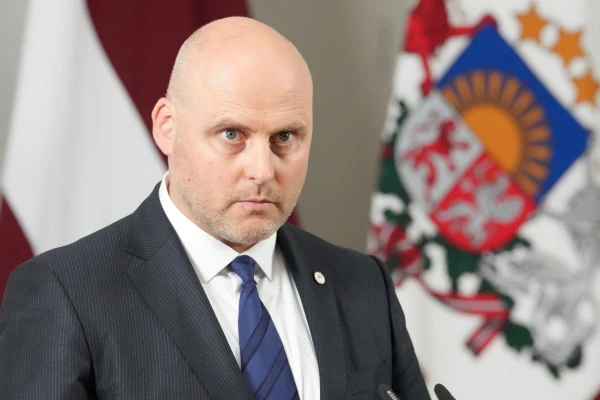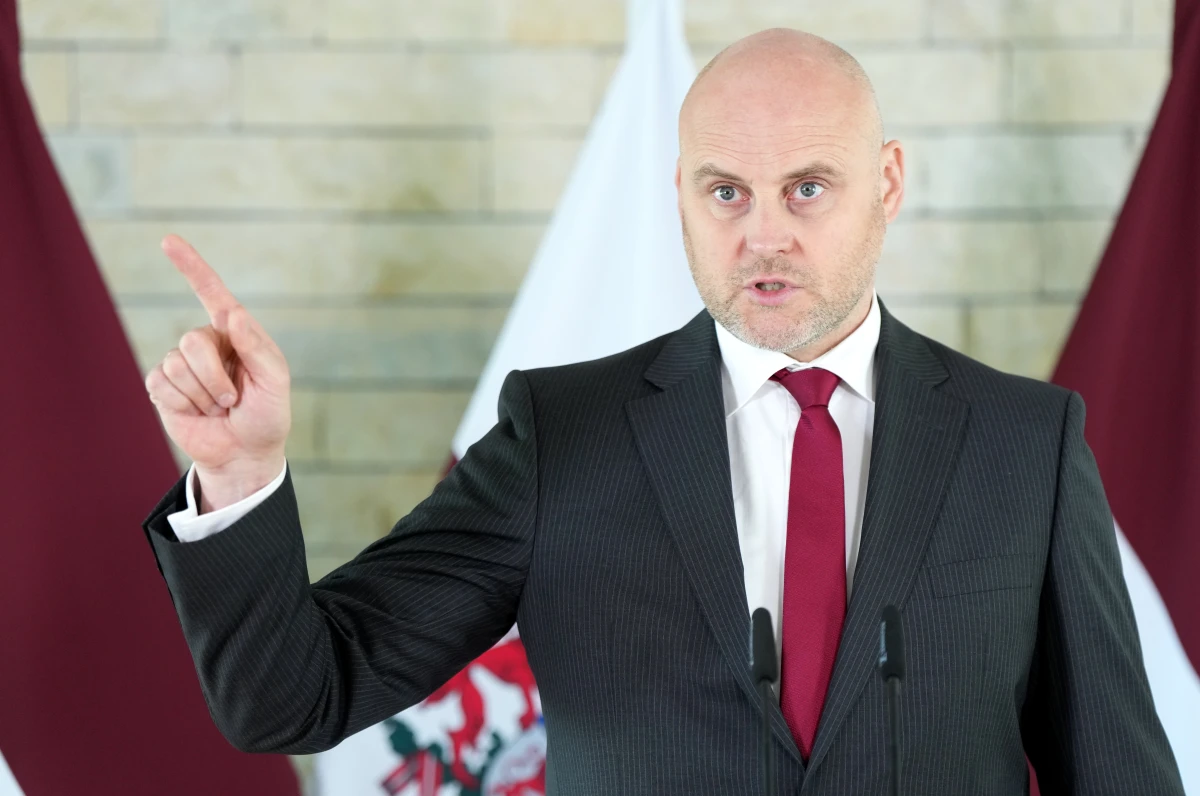
The newly appointed Prime Minister Andris Kulbergs publishes a sort of video report almost every day on social media about how his working day in his new position went and what he would like to change in the government’s labor organization system. At the same time, certain changes have begun in the Saeima related to the change of the ruling coalition. But let’s go in order.
We Need to Meet More Often
So, Prime Minister Andris Kulbergs (United List), faced with the SYSTEM, was, to put it mildly, surprised: not only is the Prime Minister's schedule packed to the brim, but the Cabinet of Ministers meetings, which until recently were held once a week, are, according to the Prime Minister, cluttered with various secondary, technical issues.
It is obvious that discussing the rules for the insemination of cattle and the pricing of services from the Environmental Protection Service is not the level of government. "These issues can be resolved at the level of the sectoral ministry or even a department!" Kulbergs logically noted.
However, there are laws that impose obligations on the government to approve certain regulations, and changing this for the "temporary" government in the four to five months it will be in office is practically impossible. Therefore, the Prime Minister proposed another way out of the situation – to hold not one, but two, and sometimes three Cabinet meetings a week.
At the first meeting – on Tuesdays – various technical documents (regulations) will be considered, while on Fridays, important political initiatives and draft laws will be discussed and decided upon. "And the reports on them should be presented by the ministers themselves, not invited officials and experts. Moreover, ministers must be present in the hall, not broadcasting remotely!" the head of government announced about the new work schedule.
It should be noted that Kulbergs, due to the very short time allocated to this government, instructed each minister to name three main tasks that he wants and can accomplish during the 4-5 months that this government will be in office. As far as can be understood, one of the upcoming government meetings will be entirely devoted to discussing these priorities for each minister.
Under Personal Control
As is known, Kulbergs, upon taking office, promised to monitor and even take political responsibility for two mega-issues within the competence of the Ministry of Transport – the unprofitable airBaltic and the stalled Rail Baltica.
In the very near future, the management of airBaltic is expected to present a business plan that will be discussed by the government. However, it is clear to everyone: even the most brilliant plan will not relieve the government of the need for further injections into the airline. This has already been cautiously warned by Richard Kozlovskis – the new head of the Ministry of Transport, who was moved there from the chair of the Minister of the Interior.
The new Prime Minister also issued his first directive to the minister: Kulbergs instructed the Minister of the Interior Janis Dombrovskis to develop the main provisions of the country's migration policy. It is clear that the Prime Minister is thus playing along with the Minister of the Interior, as Dombrovskis and his party have long advocated for stricter migration policies – in particular, for the introduction of quotas on the issuance of residence permits to citizens of third countries.
Not to Start Liquidation
The Prime Minister and especially his party ally, Finance Minister Maris Kucinskis, do not hide their negative attitude towards the decision made by the Karins government to create a separate Ministry of Climate and Energy.
The "United" party, while in opposition, repeatedly proposed the liquidation of this ministry. They have not changed their position now, but it is clear that the ruling party simply does not have time for such a radical step: liquidating the ministry will require changes to dozens of laws and regulations, and the Saeima is soon going on summer break...
It should be noted that the Speaker of the Saeima, Daiga Mierina, did not rule out that deputies might have to work periodically in the summer – extraordinary plenary sessions will be convened as necessary. For example, if the government decides to "open" the budget for 2026 and start cutting the expenditure part of the budget and redistributing funds for other needs.
By the way, about the budget. This week, the budget commission "rejected" the plan for the redistribution (appropriation) of funds prepared by the outgoing Silin government, so that more money for certain dubious projects would go, in particular, to the Society Integration Fund (SIF). Now this plan from the previous government will have to be reconsidered by the new government. It is clear that SIF employees will have to tighten their belts.
Suspended Pseudo-Reform
Yesterday, a package of 13 draft laws prepared by the outgoing Silin government as part of the so-called reform of oversight of the non-banking sector was removed from the agenda of the plenary session.
Let us recall the essence of this unnecessary reform, conceived by the Ministry of Finance at the behest of the Bank of Latvia, which aims to take away from the Consumer Rights Protection Center the function of oversight over non-banking creditors and transfer this function to the Bank of Latvia. This reform was opposed by both the Ministry of Economy and the Consumer Rights Protection Center itself, as well as the social partners of the government and the non-banking lending sector.
And now, as explained at the plenary session by a deputy from the Prime Minister's party, Juris Vilyums, parliamentarians want to familiarize themselves with the proposed changes before voting to send the package of draft laws to the budget commission.
The leader of the opposition party "Progressives," Andris Shuvalovs, categorically opposed this, stating that the budget commission had already preliminarily discussed this issue several times, and if this continues to drag on, they may not have time to consider this package of draft laws before the summer break.
He was opposed by a representative of another opposition faction – "Latvia First" – Kristaps Kristopans: "Both the Consumer Rights Protection Center and the sector itself oppose this reform. These draft laws were approved by the Silin government at its last meeting – as if clearing the table before leaving!".
The removal of the draft laws from the agenda was supported by the overwhelming majority of deputies.
Thus, the new government is trying to demonstrate its readiness to "live differently" or rather – to manage differently. Will it succeed? We will see soon. And voters will be able to give their assessment soon – in the parliamentary elections on October 3.