
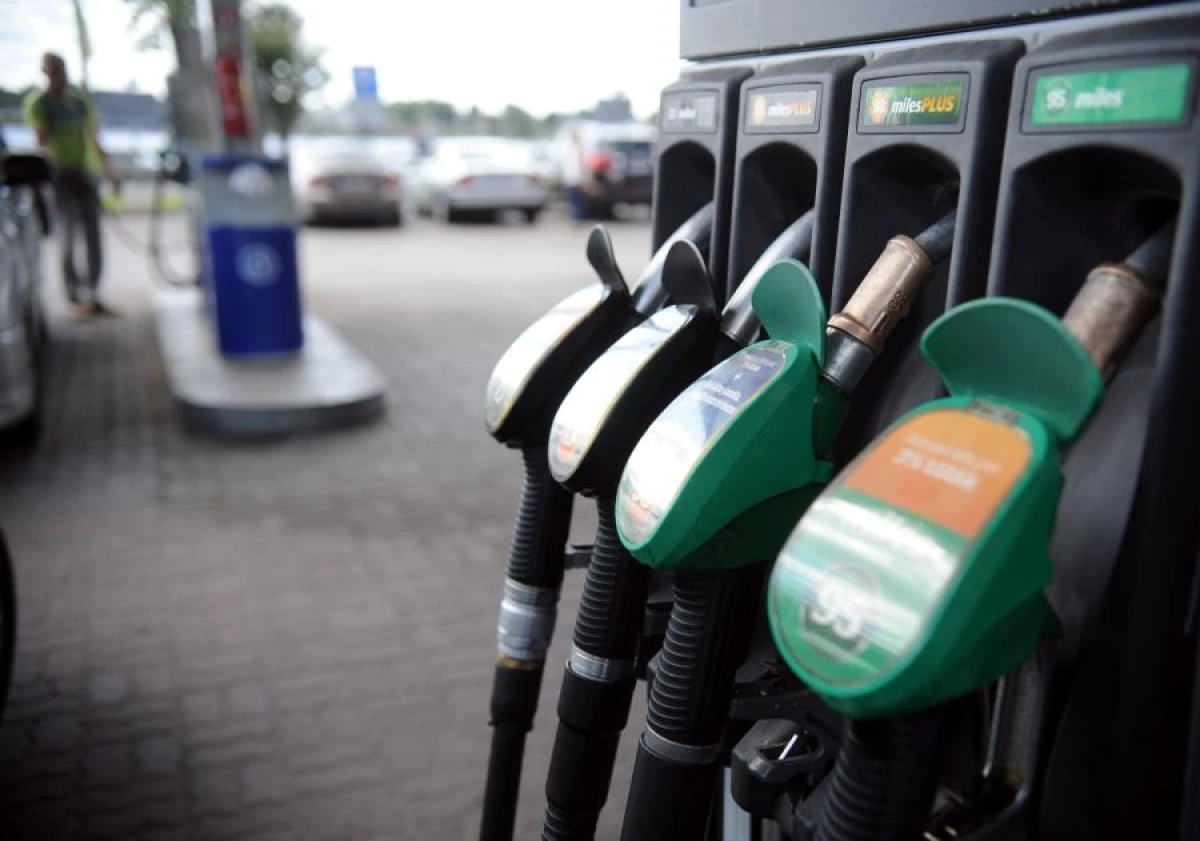
The rapid rise in fuel prices has sparked intense discussions in society. In response to the price increase, it was decided to temporarily reduce the excise tax rate on certain types of fuel, and the Ministry of Economics also proposed introducing a windfall tax for fuel retailers if the retail price exceeds the calculated estimated price by at least 3%.
The proposal to introduce a windfall tax did not receive support in the Saeima. Normunds Ozols, head of the analytical service of the Ministry of Economics, noted that currently, government institutions have no mechanisms to at least make a remark to fuel traders if prices are too high compared to procurement costs. A 'stick' in the form of regulations is necessary, however, its goal is not to generate additional tax revenues.
Recent calculations by the Ministry of Economics show that fuel station prices fall within an estimated price with a deviation of 3%. Most market participants fit into the overall market situation, which is influenced by global changes in fuel prices. Essentially, the conclusions of the Ministry of Economics and the Competition Council about this sector currently coincide. Earlier, the ministry indicated that data from the period between April 20 and 23 suggested that the windfall tax would affect the majority of traders.
Currently, the formula for the estimated price, the results of which are published in the Ministry of Economics' fuel price monitoring, serves as a universal benchmark for determining whether the market situation is being misused. In April, Minister of Economics Viktor Valainis stated in the LTV program 'What is Happening in Latvia?' that there will not be one formula for all fuel traders, as they differ.
Ieva Ligere, Executive Director of the Latvian Association of Fuel Traders (LATT), confirms that the formula cannot be the same for all fuel traders, as, among other things, the calculations for deliveries vary - tied to the average price over three days, one or two weeks, one month. So far, the Ministry of Economics has not conducted an in-depth analysis. It is clear that each market participant has its own pricing mechanism and there are various factors that form profits. Some operate with lower profitability, expenses may be covered from other sources, etc.
"If we decided to conduct a detailed study, it would create a significant administrative burden, we would have to involve the State Revenue Service, study the reports of fuel traders. This is not the path to take; a simplified approach is important right now," Ozols noted.
The estimated price is calculated based on publicly available data: the average five-day price of futures contracts for international diesel fuel (ICE Low Sulphur Gasoil) on the London Stock Exchange, the markup for delivery to Northwestern Europe, currency conversion from USD to EUR, adjustment for biofuel blend, conversion from tons to liters, trader profit margins, and taxes. Ligere points out that the Ministry of Economics did not take into account the industry's comments on the shortcomings of the formula and that it is not applicable to all market participants. Therefore, the Ministry of Economics' assumptions about what the price should be are erroneous.












Leave a comment