The Minister of Economics hopes that the government will consider the bill at the next meeting.
The head of the Ministry of Economics, Viktor Valainis (Union of Greens and Farmers), hopes to pass his bill - "On the Solidarity Payment for Fuel Traders" - through the government on the second attempt.
"We discussed the introduction of a solidarity payment for fuel traders with the chairperson of the Competition Council. We have a common understanding of the draft law; now a political decision is needed. A decision on this matter is planned to be made in the government on Tuesday. Colleagues in the Saeima are ready to move forward as early as next Thursday," the minister reported.
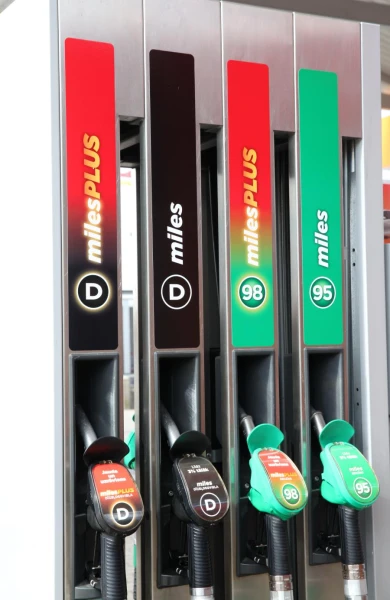
The bill aims to deter fuel traders from the temptation to earn more than usual under the pretext of rising global prices for petroleum products.
"The purpose of this Law is to reduce the negative socio-economic impact on consumers associated with rising fuel prices and to ensure the security of state supply.
The Ministry of Economics will calculate and publish the estimated retail price of fuel on its website on the first working day of each week, no later than at 10:00 AM.
The estimated retail price is used as a tool for calculating the base of the solidarity payment. Its publication does not indicate the desired or recommended selling price applied to retail fuel traders, and traders retain full freedom to set retail prices for their fuel," the draft law states. However, this "full freedom" in price setting will turn into that very solidarity tax! The bill stipulates that the state will collect the solidarity payment if the price exceeds 3% above the calculated price and if fuel traders cannot document the objectivity of the established price. The payment will amount to 100 percent of this "inflated" price. The traders themselves have already labeled this tax not as a tax or solidarity payment, but as confiscation! They warned that they would attempt to challenge this law in the Constitutional Court. But... court proceedings are not quick, and the law will come into effect immediately after adoption.