
On the political Olympus of Latvia, battles are being fought – how to prohibit not only the seller but also the buyer from entering into commodity-money relations not in the state language. However, the linguistic battles obscure one important topic – why, almost 35 years after gaining de facto independence, are there still many people in the republic who do not speak Latvian? And have they tried to teach them, damas un kungi?
STARS – or the sacred mission of the Ministry
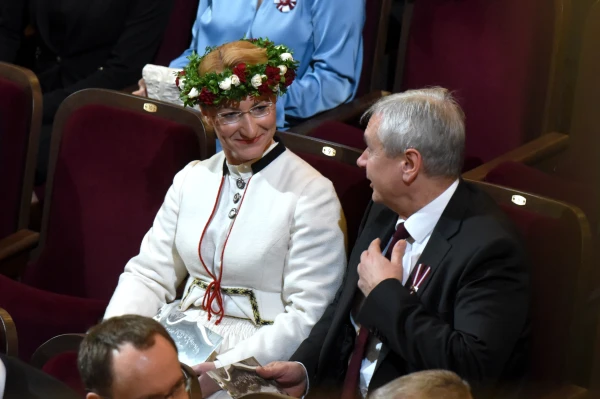
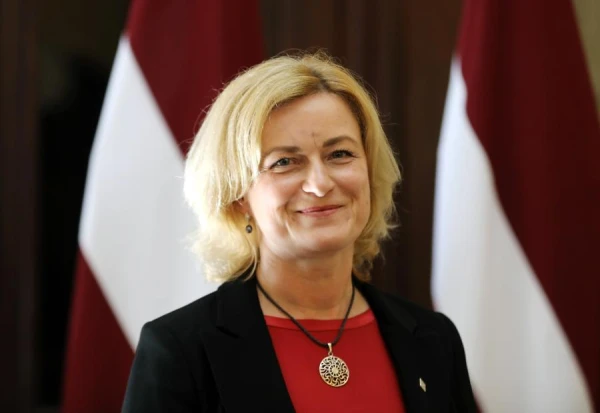
On March 6, it has been a year since Dace Melbarde (1971), a seasoned politician, has been in charge of education and science in Latvia. She gained experience leading the local branch of the British Council, managing the Ministry of Culture (2013-2019), and working within the European Parliament (2019-2024).
What is also important about her is that, initially, Ms. Melbarde was active in the ranks of the National Alliance, but now she is part of "New Unity." As they say, it is not the place that makes the person – but the person that makes the place. Migrations in this political arena are quite natural, as the participants are essentially the same...
The Ministry of Education and Science (MoES) led by Melbarde has launched a new initiative: "The development of educational and methodological materials for the Latvian language for adults, quality oversight, and coordination issues are activities for implementing education and state language policy. Given the current circumstances – the growing number of young people in Latvia, a significant proportion of the civil population from Ukraine, the need to strengthen the use of the Latvian language in society, etc. – the solution developed by the Ministry of Education offers a set of adult education services, including ensuring the quality of Latvian language teaching and oversight, training and professional development of qualified teachers, as well as incorporating Latvian language education into the adult skills management platform STARS for obtaining general information and accounting for language speakers. The goal is a unified process of learning the Latvian language in a new quality."
Now, thanks to D. Melbarde's initiative, Latvia will have a unified, inter-agency, network resource – where clients can find out everything they are interested in regarding the state language; take an online test; enroll in courses according to their level, etc.
Awaiting 23,500 economically active migrants
This is the number mentioned in a document from the Ministry of Economics titled "Human Capital Development Strategy for the Future Labor Market."
So there wouldn’t be guys on electric motorcycles, with green bags, and officials wouldn’t be rushing around. And look:
"As migration statistics and trends today show, as well as conclusions from studies conducted in Latvia, newcomers will increasingly form a group of language learners in the future. A newcomer is an immigrant who is neither a citizen of Latvia nor a non-citizen of Latvia and who has been in Latvia for no more than five years. New arrivals have chosen Latvia as their country of residence for some specific motivation. These are arrivals from the European Union (EU), the European Economic Area (EEA), the Swiss Confederation, or third countries. Their goals for living in Latvia can vary – usually studying at Latvian universities, searching for work, entrepreneurial activities, or family reunification, including the need for asylum. In the context of statistical indicators of newcomers, ensuring the acquisition of the state language can become important for security..."
Currently, the foreign community, which is the target group of the MoES, consists primarily of 11,589 students, many of whom have already joined the local labor market.
"However, it is necessary to increase their interest and desire to stay and integrate into Latvia," is clearly stated in the document from D. Melbarde. Here, the former party functionary, a lover of brown suits with a red tie, the vice-mayor of Riga, Edvards Ratnieks, who leads the municipal police raids on "illegal immigrants," would definitely disagree with her.
Locals – last in line
While the court is in session, our people can also improve their Latvian – at least at the employment exchange. In the first half of 2025, the State Employment Agency sent 1,114 people to free courses. But this practice seems flawed to the Minister of Education and Science:
"It should be assessed whether to refuse public funding for Latvian language training in cases where the target group includes citizens and non-citizens of the Republic of Latvia who have received education in educational institutions in Latvia, who have lived in Latvia for a long time, and for whom opportunities to learn the language have been more accessible than for newcomers."
The logic, of course, is wonderful – but shouldn’t we inquire what citizens/non-citizens were occupied with while Dace was traveling around Brussels and Strasbourg? Perhaps they were working hard, creating Latvia's GDP, from which they paid, by the way, for that very Song and Dance Festival, for which Ms. Melbarde was awarded a high honor – a Letter of Thanks from the Cabinet of Ministers.
Well, maybe in the process of earning money for their beloved state, some forgot the state language – if the work process didn’t require it, say, when pouring concrete or canning fish. So instead of helping, the minister now takes a stance – as if to say, they didn’t finish their studies.
However, against the backdrop of the Russian-speaking population, which, for better or worse, has learned the valsts valoda, a foreigner from "third countries" appears – dark. Moreover, interestingly, when entering the sacred of holies of Latvia – its higher education system! – he does not react to the linguistic environment around him.
"A recent study showed that most students from third countries do not know the Latvian language or know it only at a basic level," the MoES document notes. "41% of surveyed students stated that they do not speak Latvian, while 55% rated their knowledge as basic. 3% of respondents believed they had an intermediate level of Latvian, and only 1% indicated that their proficiency in Latvian was at a high level."
The road will be mastered by the walking
Despite the fact that the MoES will now consolidate all the efforts of linguists, one educational process alone will not suffice.
"Although providing opportunities for mastering the Latvian language is an important prerequisite for stimulating its use, it is not enough. Other factors also influence the everyday use of the language, including attitudes, views, and habits of society. Work continues to inform and engage society in strengthening positive linguistic attitudes and beliefs in forming the values of the Latvian language, as well as promoting the strengthening of positive habits for using the language. Society consciously or unconsciously influences the decision of immigrants to master or not master the language of their country of residence through their actions and linguistic behavior (for example, in conversation, switching to Russian or English at the first opportunity if the Latvian language of the interlocutor is not sufficiently simple). Changing the linguistic views, attitudes, and behaviors of society is one of the most challenging tasks in language policy."
Golden words, Dace! But there remains an important question – what will we talk about if even politicians, opinion leaders who master the state language perfectly, receive the label of an enemy in this country.






Leave a comment