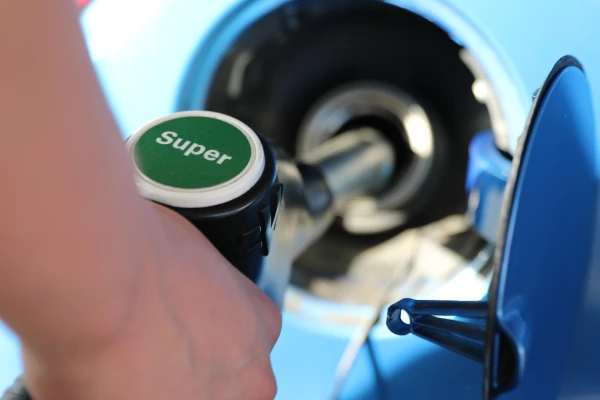
Politicians intend to demand explanations from fuel traders regarding the sharp rise in prices at gas stations and promise to seek solutions to this problem. This was stated by politicians on Monday after a coalition party meeting.
As Prime Minister Evika Siliņa (New Unity) indicated, the government is ready to take action if oil prices continue to rise sharply.
The Prime Minister reported that Minister of Economics Viktors Valainis (Union of Greens and Farmers, UGF) and Minister of Climate and Energy Kaspars Melņis (UGF) have already met with representatives of the fuel industry and are prepared to discuss solutions to prevent the situation from escalating into a crisis.
Valainis stated that what is happening at gas stations is absolutely unacceptable, and he plans to summon fuel traders for a meeting this week to explain why prices are rising so rapidly.
The minister reminded that the relevant institutions monitoring compliance with competition regulations are observing the situation, and fuel traders will have to explain why there has been a spike in prices. Possible solutions will also be discussed to mitigate its impact on the national economy.
In response to a question from LETA about whether Latvia could follow Croatia's example and impose a price cap on gasoline and diesel, Valainis said that this is a fiscal tool that comes with its own cost. In Latvia, such a decision would cost several tens of millions of euros per month.
As reported, on Monday, oil prices continued to rise, reaching their highest level since 2022, while gas prices are also sharply increasing.
The price of Brent crude oil rose by 15% to $103.54 per barrel on Monday, while WTI crude oil increased by 15% to $107.35 per barrel.
Economists warn that consumers and businesses worldwide may face rising fuel prices over the coming weeks or even months, even if the situation in the Middle East is resolved quickly, as oil suppliers will find it challenging to quickly restore operations given the damaged facilities, disrupted logistics, and increased risks of transporting goods.