

The ruling coalition has enough "weights around its neck" to face the elections – a catastrophic situation with Rail Baltica, the lack of a long-term stabilization plan for airBaltic, extremely low trust in the government among the public, especially considering the constant bickering among coalition partners... In general, there is nothing to please voters with so far. And now there’s a new calamity – a dubious gift "from the people and the opposition."
Two Initiatives
First, an initiative group on the portal manabalss.lv proposed... to follow the example of the Baltic neighbors and allow Latvians to choose their savings in the second pension level. This fixation idea quickly gained more than 12,000 signatures from citizens of the Republic of Latvia, and thus the Saeima will have to consider it.
Following this, the deputies of the opposition faction jumped in – they presented a similar proposal, only more legally refined. Let’s delve into the essence of this initiative, analyzing its pros and cons.
Let’s recall: the second pension level (the scheme of state-funded pensions) is a mandatory automatic investment system for workers born after July 1, 1971, directing part of social contributions (5% of salary) to financial markets to increase savings for retirement. The manager and plan can be changed once a year.
Since hundreds of thousands of working Latvians are involved in this system and contributions to the second level are mandatory, substantial savings have accumulated in the accounts – over 10 billion. For comparison: private pension funds, in which Latvians can participate voluntarily, have managed to accumulate only about a billion.
And an Additional Payment in Old Age
The noble goal of the second pension level is to create the opportunity to receive an additional payment to the pension from these personal savings after retirement. This is especially important for today’s working Latvians who earn minimum or slightly above wages. It is clear that in 10 years, when the first participants of the second pension level system (people born in 1971) retire, with a minimum salary, they will be able to expect a very modest pension, which will hardly be enough to cover utility bills and meager food. And here the savings of the second level should come to the rescue. They can be withdrawn either all at once or in parts, providing a regular increase to the pension.
As is known, Estonia (immediately after the end of the COVID pandemic) and this year Lithuania took the unprecedented step of allowing their residents, if they wish, to withdraw their savings from the second pension level even before reaching retirement age.
However, Lithuania took into account the mistakes of Estonian politicians and introduced certain restrictions on the withdrawal of funds. For example, the entire amount can only be withdrawn in two cases – if the amount is small, or if these funds are needed for the treatment of a serious illness.
Are Lithuanians and Estonians Not Our Example?
And what about Latvia? How likely is it that we will follow the example of our Baltic neighbors?
The ruling party is not just afraid of such a development; they are in a state of panic! They have international experts on their side, who see only negative consequences in this initiative.
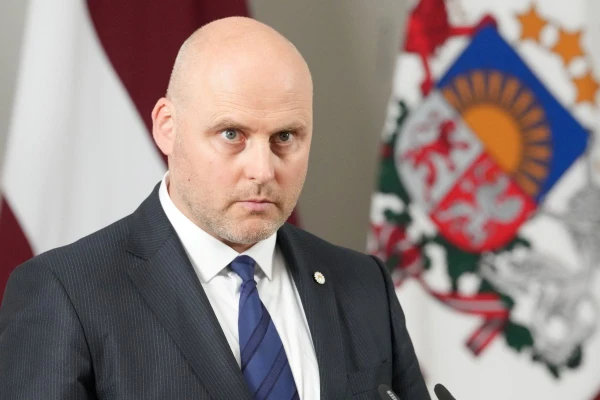
It is noteworthy that recently the Minister of Finance Arvils Ašeradens hastened to assure the visiting representatives of the IMF that our country does not intend to "distribute" the savings of the second pension level. Moreover, the minister assured that we do not even have discussions on this matter!
As you can see, Ašeradens misled the IMF inspectors! There are discussions, and even specific legislative proposals.
Thus, the proposed amendments allow
- either to do nothing with the savings, leaving them until your retirement,
- or to withdraw partially,
- or to take all savings from the second pension level.
In the case of full or partial withdrawal of funds, there is an opportunity to resume savings, that is, to make contributions to this pension level again.
At the same time, the bill obliges the Cabinet of Ministers to establish a procedure for informing residents about the consequences of partial or full withdrawal of funds.
Everything Is Just Beginning
Apparently, the Saeima will decide whether to pass the bill to the parliamentary committee at the plenary session on March 5. Let’s take a risk and assume that the first attempt will be unsuccessful – the majority of deputies will not support the bill even in its initial reading, that is, its transfer to the Saeima committee.
However, everything is just beginning! It cannot be ruled out that closer to the elections – for example, in May – the coalition partners, the "Green Farmers," may come up with a similar proposal themselves. And, for instance, deputies from the National Alliance, as far as can be understood, are ready to allow the withdrawal of savings from the second level in cases where a person is seriously ill and urgently needs money for surgery or medication. This makes sense: if they cannot receive the necessary treatment today, they simply won’t live to retirement.
What arguments do the categorical opponents of the initiative to withdraw funds have? They divide the negative consequences of such a step into two stages – short-term and long-term.
Scaring with Inflation and Poverty
In the short term, the appearance of huge sums in the "hands" of hundreds of thousands of Latvians will lead to a sharp rise in inflation, as consumption will almost certainly increase. Experts refer to Estonia, which, after distributing pension money, outpaced Latvia in inflation rates.
Such a change in the pension system could lead to a decrease in trust in Latvia in the financial and credit sphere, which would result in a downgrade of the credit rating – external borrowings would become noticeably more expensive.
Given the level of financial literacy of the population, there is a high risk that again some Latvians will fall victim to fraudsters who will find a thousand and one ways to swindle this "easy" money from the population. As a result, people will be left without this money and without savings for old age.
In the long term, many Latvians, upon retiring, will only be able to expect a very modest pension and will effectively become dependent on social assistance from local governments.
Give Us Our Money!
On the other hand, supporters of the "distribution of money" also have substantial arguments.
-
First, many Latvians need this money today – both in cases of illness, as mentioned above, and, for example, for repaying debts on loans and mortgages. This will allow for earlier settlement of leasing and credit debts, and to use this money, for example, as a down payment when applying for a mortgage – here is a concrete contribution to demographics! Moreover, money is needed for children’s education now, not in old age.
-
Second, stimulating consumption will also heat up the Latvian economy.
-
Third, one can follow the Lithuanian path and introduce certain restrictions on the withdrawal of funds. For example, the closer a person is to retirement, the smaller the amount they can withdraw. Withdrawing funds does not mean that a person exits the second level system – they continue to save anew.
One way or another, the political discussion on this issue has begun! And if the decision to distribute funds is not made, this topic will become one of the key issues in the current election campaign!



Leave a comment