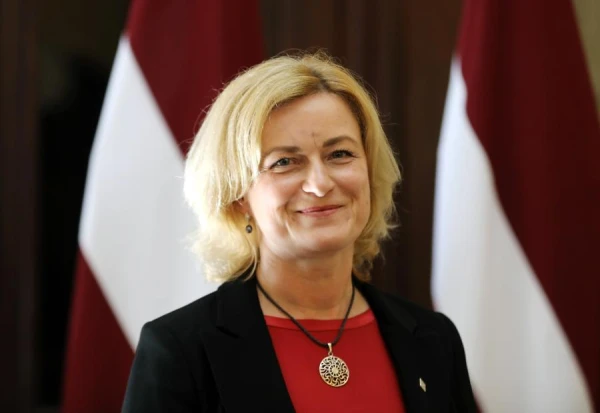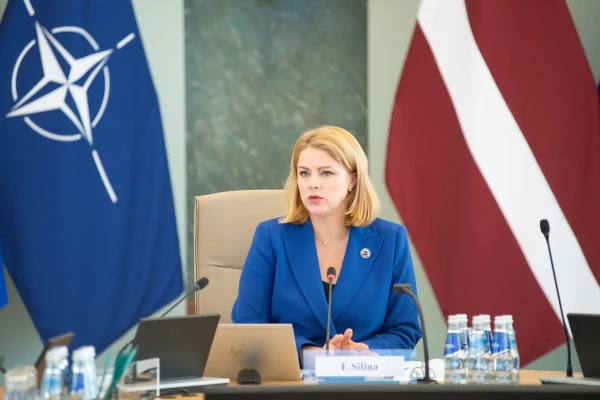
Thus, we quietly marked a year of Evika Silina's plan for the government restart. This week, the head of the government reported — first to her colleagues in the Cabinet, and then to the Saeima — on the work done over the past year. Recall: the restart plan, announced at the end of February last year, pursued three goals.
Goals set. Achieved?
The first goal is to get rid of the useless Minister of Communications Kaspars Briškens ("Progressives"). For this, Silina had to even "sacrifice" one minister from each of the other two coalition parties — the Minister of Education Anda Čakša ("New Unity") and the head of the Ministry of Welfare Uldis Augulis (Union of Greens and Farmers) were sent into resignation. This was the condition of the "Progressives": if you touch our minister, you must "on the basis of parity" dismiss one minister from the partner parties as well.
It is noteworthy that a year later, the Prime Minister admitted in an interview that she delayed too long in dismissing Briškens — it should have been done much earlier.
The second goal of the restart plan is to show both the power partners and voters (especially ahead of the municipal elections) that the government is capable and ready to work more efficiently and with a specific plan.
The third goal of the restart is to "get rid" of the very vague initial action plan of the government, adopted shortly after the approval of this government (which began work on September 15, 2023) and to outline the main priorities.
Four priorities
Let’s recall what priorities Silina included in her government restart plan?
First — external and internal security.
Second — demography.
Third — economic leap (the now-famous comparison to a 4X4 all-wheel-drive vehicle).
Fourth — combating bureaucracy.
As for the first priority, even back then, a year ago, few doubted that the defense sector would be allocated as much money as the ruling parties deemed necessary. In fact, defense allocations reached nearly 5% of GDP, which is over 2 billion euros.
Money for weapons and internal security
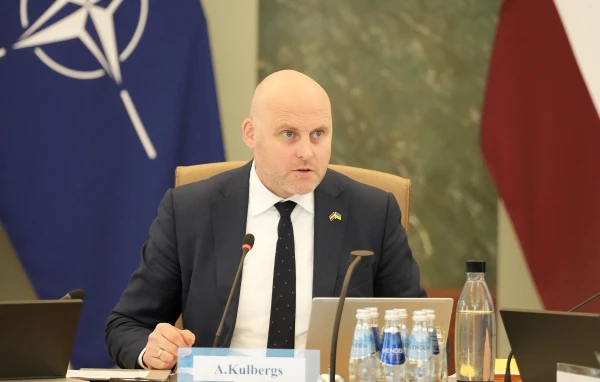
"The government's decisions have strengthened priority areas of defense capability (air defense, missile artillery, coastal defense, and infantry fighting vehicles). A total of 3.49 billion euros has been attracted from SAFE until 2030. At the same time, the presence of NATO allies in Latvia has been secured, including the military presence of the USA, and the mandate of the Canadian contingent to lead the brigade in Latvia has been extended until 2029," the report prepared by the Prime Minister for the Saeima states.
Silina continues to list achievements: "The physical and technological strengthening of Latvia's eastern border has continued. The construction of the border fence on the border with Belarus and Russia, over 420 kilometers long, has been completed. The construction of technological infrastructure along the entire external border is ongoing, and over the next five years, 303 million euros are planned to be spent on military fortifications of the border. In 2025, more than 12,000 illegal attempts to cross the border were prevented."
Pay for those in uniform, shelters for those without
The government did not forget about motivating the guardians of the existing order: "In 2025, officials working in the internal affairs agencies will receive an average 10% increase in monthly salaries (compared to monthly salaries in 2024) along with the introduction of a motivational bonus for performing certain functions and tasks."
What else? "Security also means readiness for crises. A Crisis Management Center has been established, the regulatory framework for disaster management has been improved, and the adaptation of at least 500 shelters in all regions of Latvia has begun. A total of 1,665 shelters with a capacity of over half a million residents have been evaluated. Cell broadcasting has been introduced in the early warning system, alarm sirens have been modernized, and disaster management centers have been developed. A new state model for managing oil product reserves has been introduced, which will significantly reduce costs and strengthen energy security in the long term," the report prepared by the Prime Minister for the Saeima states.
Benefits and minimum wage
And what about the second priority — demography? Let’s be realistic: the situation is so dire that it will not be possible to quickly improve demographic indicators — birth rates have been hitting anti-records for the past few years.
To be fair, it should be acknowledged that the Silina government has taken some steps to support families. These are not so much steps as baby steps.
Namely: "An additional 48 million euros have been allocated for family support. The childbirth allowance has been increased to 600 euros, and the childcare allowance has been raised to 298 euros (with a review every two years). The opportunities for receiving state family benefits have been expanded for young people aged 16-19 if they are studying full-time at a university. The parental benefit for working parents has been maintained at 75% by extending the relevant provision until the end of 2026, and support for parents of prematurely born children has been increased. The conditions for paternity benefits in cases of multiple births and adoption of several children have also been improved."
There are also other solutions aimed at encouraging Latvian women to give birth more often: "An informational report on the development of demographic policy has been supported, which provides for intersectoral actions to support families with children and improve demographics. The funds obtained from the review of expenses are directed towards improving material support for families with children (review of childcare allowance, childbirth allowance, and state family benefit), as well as support for children under family care (adoption, foster families, and guardians)," the report by Evika Silina states.
Speaking of the social sphere, it should be acknowledged that the minimum wage is gradually increasing — this year it reached 780 euros before taxes. At the same time, Latvia ranks second to last in the European Union in terms of minimum wage! Let’s recall that at the initiative of the Silina government, the non-taxable minimum for pensions reached 1,000 euros.
And where is the leap?
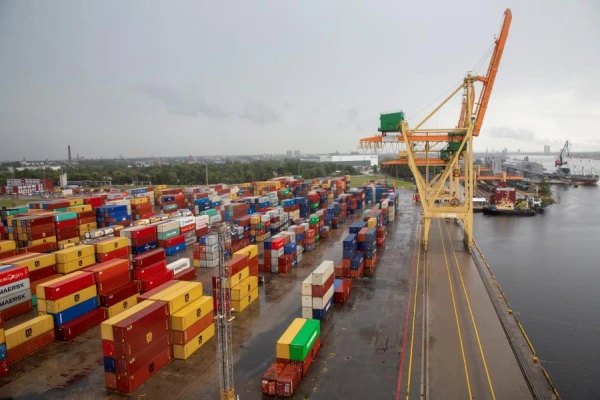
If we talk about economic development, Silina has little to boast about so far. Just recently, the economy began to revive after nearly three years of stagnation — the annual GDP grew by 2.1% (more details on page 7).
This is certainly better than nothing, but with such growth, we are unlikely to catch up with Lithuania in the coming years, let alone the countries of the "old world."
In her report, the Prime Minister, of course, did not "emphasize" the failure to implement Rail Baltica (the funding deficit for this mega-project with questionable benefits is at least 3-4 billion!) and the inability to adopt (propose) a long-term development plan for the national airline airBaltic. The financial indicators of state (almost 90%) aviators still do not provide confidence that they can survive without government support.
However, the Silina government itself, contrary to all predictions and even common sense, has survived, and there is a high probability that it will last until the elections — it has exactly 7 months left to "endure."