
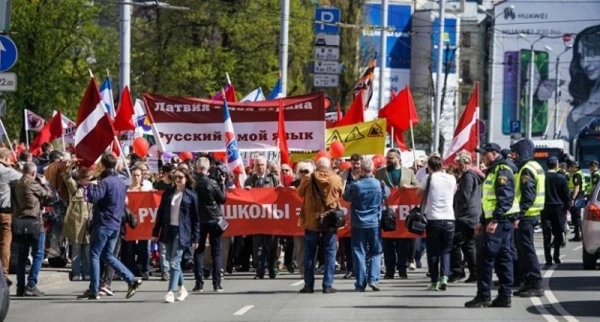
“While nation-building and social engineering of other societies do not fall within the purview of the U.S. government, the marginalization of Russian-speaking minorities in Latvia and Estonia poses a clear long-term security threat — this is one of the conclusions of the report prepared by Quincy Institute for Responsible Statecraft staff member Eldar Mamedov (the full text in English can be read here.
“The Baltic States — Estonia, Latvia, and Lithuania — occupy a unique precarious position in the U.S. strategy towards Europe, Ukraine, and Russia. Geographically vulnerable, politically rigid, and militarily heavily dependent on their NATO allies, they are simultaneously a vulnerable link and a potential escalation factor in the dynamics of NATO-Russia relations.
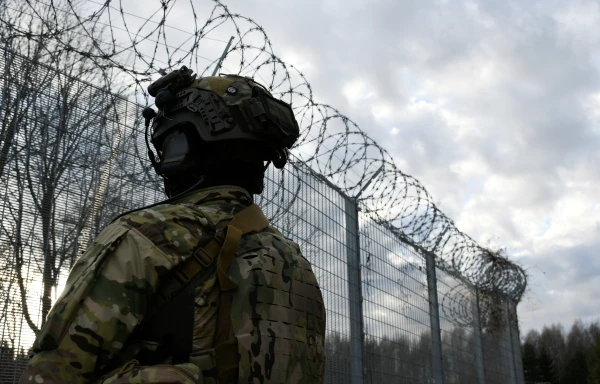
Their historical trauma from Soviet occupation, exacerbated by Russia's war in Ukraine, fuels a maximalist anti-Russian stance, often pushing towards a confrontational EU/NATO policy that risks unintended escalation. A crisis in the Baltics, whether resulting from a military miscalculation or hybrid warfare, could place the United States in a no-win situation: either intervene militarily, risking a major war, or refrain, undermining NATO's credibility.
Therefore, U.S. policy towards the Baltics, based on national interests, must ensure a balance between deterrence and de-escalation.
Perception of Threat and Strategic Reality
The Baltic States wield excessive influence in EU and NATO forums, using the historical trauma of Soviet occupation and geographical vulnerability to forge a hard consensus on Russia. The core position of the Baltic States — that Russia will not stop at Ukraine and only its strategic defeat can prevent a third world war — is a matter of internal political consensus, most vividly expressed internationally by leaders such as Kaja Kallas, former Prime Minister of Estonia and now the EU High Representative for Foreign Affairs and Security Policy, and Andrius Kubilius, former Prime Minister of Lithuania and now the EU Commissioner for Defense and Space.
This rhetoric is amplified at the international level. Instead of softening her position for the sake of European consensus, Kallas has used her position in the EU to institutionalize a confrontational stance as the union's standard position.
The idea of 'strategic defeat' of Russia is also propagated at other institutional levels, such as the foreign affairs and security and defense committees in the European Parliament.
However, this position is no longer monolithic, as evidenced by the cautious steps of French President Emmanuel Macron to establish contacts with Moscow and the softening rhetoric of German Chancellor Friedrich Merz. As a result, even Latvian Prime Minister Evika Silina and Estonian President Alar Karis have deviated from Kallas's line and supported the appointment of a special EU envoy for negotiations with Russia.
A Sobering Reevaluation of the Russian Threat to the Baltics
While the emotional and political factors driving the policies of the Baltic States are understandable, a realistic assessment of the threat posed by conventional armed forces reveals a significant gap between perception and current reality. The scenario of a Russian invasion is not a likely threat in the near term due to Russia's disproportionate losses and fundamental strategic imbalance, as evidenced by the following data:
Degradation of Russian Conventional Armed Forces: The Russian armed forces have been weakened in Ukraine. Specific forces that once posed a threat to the Baltic States, particularly the 11th Army Corps based in Kaliningrad, have been largely destroyed in the early stages of the war.
Overwhelming NATO Superiority: Any actions by Russia against the Baltic States would provoke a full-scale NATO response, including:
Air Superiority: NATO outnumbers Russian tactical aircraft in Europe by a ratio of 10:1 and has a massive qualitative advantage in pilot training and integrated operations.
Maritime Superiority: With the accession of Sweden and Finland, NATO controls all the coastline of the Baltic Sea, turning it into a NATO-controlled lake. The Russian Baltic Fleet is vulnerable and will be quickly neutralized.
Assumptions of 'Blitzkrieg in the Baltic States': The idea of a rapid capture of the capitals of the Baltic States by Russia ignores the reality of urban warfare, as demonstrated by the situation in Ukraine.
A large-scale Russian invasion of the Baltic States using conventional armed forces is unlikely in the current and medium-term strategic environment. Attention should be shifted from this unlikely scenario to the real and ongoing threat of hybrid warfare and unforeseen escalation of conflict, which will be exacerbated if the war in Ukraine remains unresolved.
The Maximalism of the Baltic States Undermines Their Security
The concerns of the Baltic States are well-founded. However, their political measures often lead to excessive actions, strengthening the positions of hardliners in Moscow and creating the risk of alienating allies.
A striking example is the initiative of the Baltic States to begin large-scale seizures of Russian oil tankers passing through the Baltic Sea. Justifying this on the grounds of environmental protection and countering sabotage (following the cutting of the Estlink 2 power cable by a tanker in 2024), their goal is to paralyze a vital oil export line for Russia.
However, this is a risky move. Seizing vessels could provoke a direct military response, resulting in Moscow deploying its fleet to escort the tankers, leading to a high-risk confrontation between NATO and Russian military ships.
President Putin has characterized such potential actions as 'piracy' and promised a tough response from Russia. Alexey Zhuravlev, Deputy Chairman of the State Duma Defense Committee, stated that 'any attack on our tankers could be regarded as an attack on our territory,' threatening an immediate military response, including mutual boarding of Western vessels and 'active measures' from the Baltic Fleet. This poses a problem as a casus belli, sharply raising the stakes.
Alienation of Russian-Speaking Minorities
At the domestic level, restrictive policies towards Russian-speaking minorities in Latvia (35% of the population) and Estonia (27%) create long-term vulnerabilities. After regaining independence in 1991, both states decided to restore legal continuity with the pre-Soviet republics. This meant automatic granting of citizenship to descendants of citizens who lived in the country before 1940, while others, primarily Russian speakers, had to undergo a naturalization process.
While this policy can be seen as a correction of Soviet-era demographic engineering, it has failed to create a sense of belonging among a significant number of Russian-speaking citizens, resulting in incomplete integration. It also violates promises made by the leaders of the Baltic States to the Russian government under Boris Yeltsin prior to independence in 1991, as well as Latvia and Estonia's commitments regarding minority rights in the EU accession process. This situation is a primary reason why Russia does not trust the European Union to guarantee the rights of the Russian-speaking minority in Ukraine within the future EU accession process.
The Council of Europe resolution on Latvia from 2025 highlights serious concerns and calls on the country to expand its approach to integration beyond promoting the Latvian language and to support education and media in minority languages.
Estonia, meanwhile, has shifted from relatively liberal policies, such as granting voting rights in local elections to a large group of non-citizens, to revoking this right on the grounds of 'national security.'
These measures are expanding. After the invasion of Ukraine, Latvia amended its immigration law, requiring thousands of Russian citizens residing in the country to apply for EU long-term resident status, demonstrate knowledge of the Latvian language, and pass a reliability check by June 2025 to remain in the country. The immediate result was that about 2,600 Russians voluntarily left the country, while another 841 were expelled by mid-October for non-compliance with the requirements. The presumed security threat posed by the Russian-speaking population — often elderly, isolated, and lacking family ties to Russia — is hardly commensurate with the rules enacted. Such alienating policies have drawn criticism even from traditionally sympathetic international media, such as The Economist.
Alliance Management and Crisis De-escalation
Private pressure on Baltic leaders: The United States should privately urge Baltic leaders and other European hawkish leaders to tone down escalation rhetoric and policies. This includes using U.S. influence to block initiatives that pose an unacceptable risk of military confrontation between NATO and Russia — such as large-scale seizures of Russian tankers, shooting down Russian aircraft, or blockading Kaliningrad — without explicit consent from the U.S. administration.
Facilitating minority integration: While nation-building and social engineering of other societies do not fall within the purview of the U.S. government, the marginalization of Russian-speaking minorities in Latvia and Estonia poses a clear long-term security threat. The United States should quietly support the recommendations of bodies such as the Council of Europe, encouraging Latvia and Estonia to balance language promotion with minority rights. Facilitating the integration of the Russian-speaking population is an important long-term security measure that deprives the Kremlin of a potential fifth column.
Conclusion
The Baltic States are at the center of great power competition in the 21st century. Their security is vital, but their preferred policies often lead to counterproductive escalation. A sober U.S. strategy should recognize the real hybrid threat from Russia while rejecting the exaggerated threat of conventional invasion. By affirming deterrence through resilience, actively working on crisis de-escalation, and vetoing provocations, the United States can fulfill its commitments to NATO without becoming embroiled in a catastrophic, potentially nuclear war with Russia. This is the essence of sustainable deterrence: a commitment that becomes reliable not through a policy of balancing on the brink of war, but through strategic discipline and de-escalation.
As a consequence of this policy, the United States should begin creating a genuinely inclusive architecture of European security, removing the war in Ukraine as an open wound in Europe, ultimately being the most stable structure for strengthening Baltic security and aligning with the Trump administration's National Security Strategy.”
About the Author:
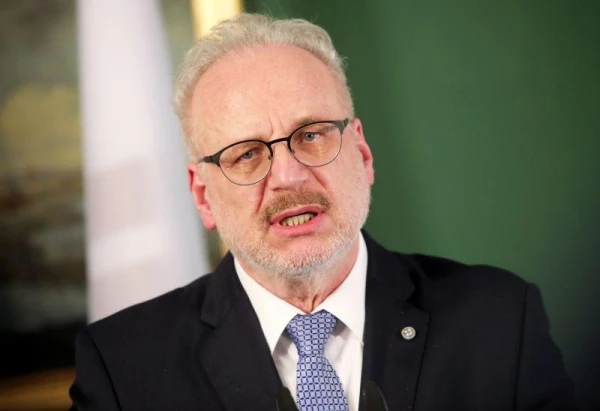
Eldar Mamedov was a Latvian diplomat for nearly 10 years, serving in Latvia's embassies in the U.S. and Spain, specializing in Latvia's integration into the EU and NATO. From 2007 to 2024, he served as an advisor on international policy in the European Parliament (Social Democratic faction).
In December 2022, the Belgian prosecutor's office opened a case regarding suspicions of corruption within the European Parliament, with several deputies charged with allegedly receiving bribes and influence on behalf of other states (Qatar, Morocco). Several Latvian media outlets mentioned Mamedov's name in connection with this scandal, but he has not been officially charged.
He is currently a visiting fellow at the American think tank Quincy Institute for Responsible Statecraft.







Leave a comment