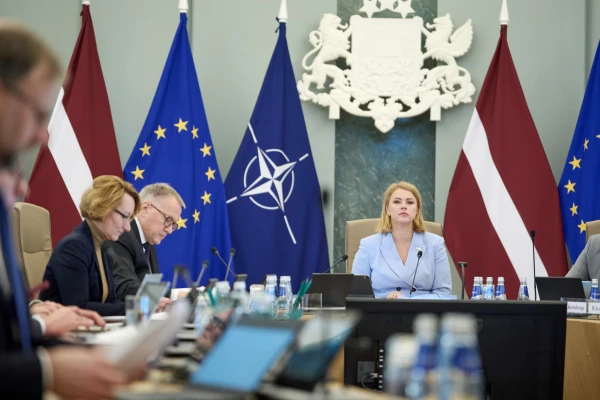
There is less and less time before the elections – 8 months. If we take away the summer holidays, when the parliament is de facto not working, then the current government has about six months to make important decisions.
However, decision-making is complicated by the fact that... "there is no agreement among the partners." As is known, the "green farmers" have been playing the role of internal opposition since last autumn, often aligning with parties that are not part of the coalition. This has severely strained relations between the "green farmers" and the "progressives."
If the Government Has Suddenly Become... "Technical"
"There is nothing in common between us," said Andris Shuvaevs, leader of the parliamentary faction "Progressives," in a recent interview, adding that the cabinet of Evika Silina is already functioning as a "technical government."
To clarify: the term "technical government" means that the power partners cannot agree on politically significant, fundamental issues. As a result, each minister simply manages their own department, and only secondary, technical issues are brought to the Cabinet.
In fact, such a government is merely working until the elections or, more precisely, until the new Saeima forms the next government. It is clear that the current government will not adopt the budget for 2027 – that task will fall to the next government.
The Appearance of Work
But can Latvia afford the luxury of a non-functioning government for at least 10 months? After all, the new Saeima will start working in November, and it is evident that it will not approve a new government before December – and that would be a sensation.
It is clear that voters expect real work from the ruling politicians, not just "sitting out" the time allotted to this government.
Well, for Housing Benefits!
What decisions should the government and the Saeima have made before the elections?
First. Heating bills in light of the cold have become a heavy burden even for families with average incomes. This means that the government should have introduced a mechanism that would allow a broader range of households to qualify for assistance. Currently, only those with low-income status are eligible for such benefits.
Yes, this will require tens of millions of euros in the form of subsidies to municipalities. But this must be done if the ruling parties still hope for a good result in the elections.
The Fund of Injustice
Second. Donor municipalities (mainly Riga and the Riga region) demand a revision of the republican "equalization fund" system – why should the residents of the capital support other municipalities with their taxes?!
At the same time, payments from Riga residents to this equalization fund are increasing every year! The Ministry of Finance is proposing various reform models, but will the coalition be able to find an acceptable compromise?
Invest Millions Again or...
Third. Authorities must decide what to do with the beleaguered airBaltic – whether to subsidize it from the state budget again under various pretexts.
Or seek a strategic investor, offering this role to Lufthansa, which currently holds only 10% of our national airline's shares. Alternatively, they could organize the long-promised sale of shares on the stock exchange, stepping back from managing the airline.
A Long-Overdue Reform
Fourth. Implement a real reform of public administration: merge several ministries, create a single center (council) for managing (or rather – overseeing) all state enterprises, and reduce the number of officials and agencies.
Notably, the Prime Minister recently proposed a "different" reform for managing state enterprises. The essence of the Prime Minister's initiative is that state capital companies (read – state enterprises) would be managed or, more precisely, controlled by not one ministry, but two or even three.
For example, Riga Airport, currently under the Ministry of Transport, would also be overseen by the Ministry of Economics. As far as can be understood, this idea is strongly supported, along with the Prime Minister's party members, by the "progressives," which is understandable – they likely hope that the Ministry of Transport could share responsibility for the scandalous Rail Baltica with the Ministry of Finance. The "progressives" believe that this will improve the process of securing funding for this mega-project.
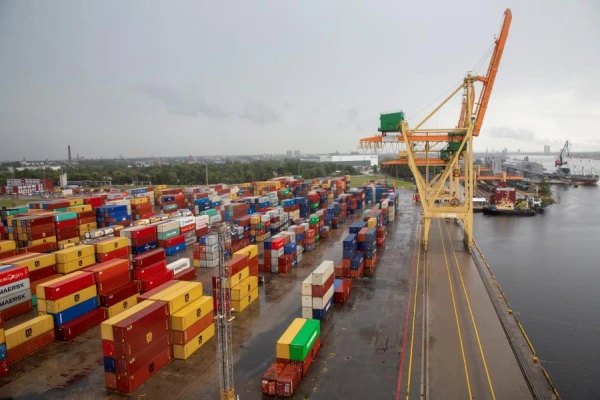
By the way, this government should already put things in order regarding the implementation of Rail Baltica. It should start by determining how much money can realistically be obtained for this project and whether it is worth continuing its implementation at all.
How to Stimulate the Stock Market?
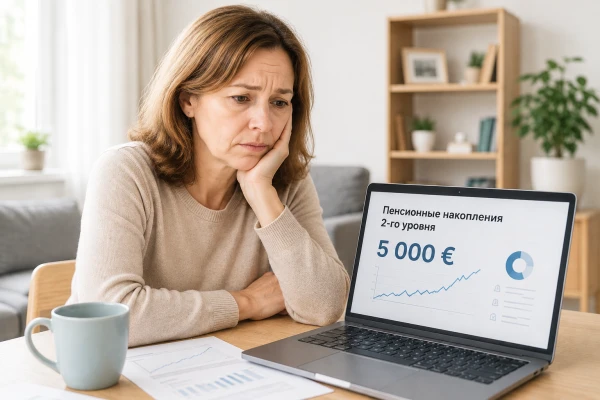
Fifth. Activate the stock market, including by investing part of the second pension level funds in shares of Latvian enterprises. Without an active stock market, it is hardly possible to expect a significant influx of investments and, consequently, accelerated economic growth.
If we are talking about the second pension level in general, political discussions will surely unfold in Latvia soon about whether we should allow residents to choose at least part of their savings in the second pension level, following the example of Estonia or Lithuania. "New Unity" and "Progressives" categorically oppose this, while the third power partner – the Union of Greens and Farmers – has taken a wait-and-see position. Specifically, they want to see what the opposition will do. Will they dare to come up with any initiatives on this matter?
So What Problems Have Been Solved?
In any case, over the 2.5 years of Silina's government, it cannot boast of either efficiency or popularity. No, we are far from the idea of painting everything in black, but it is evident that there have been no breakthroughs in the economy.
None of the acute problems (airBaltic, Rail Baltica, rising food prices) have been resolved. And it is unlikely that they will be resolved during the peak of the election campaign.
The ruling parties have spent a lot of energy and effort on internal coalition disputes, various empty arguments, and declarations. They have certainly over-sat!
However, in the first days of October, voters will be able to evaluate both the ruling parties and the opposition... The wait is almost over...