
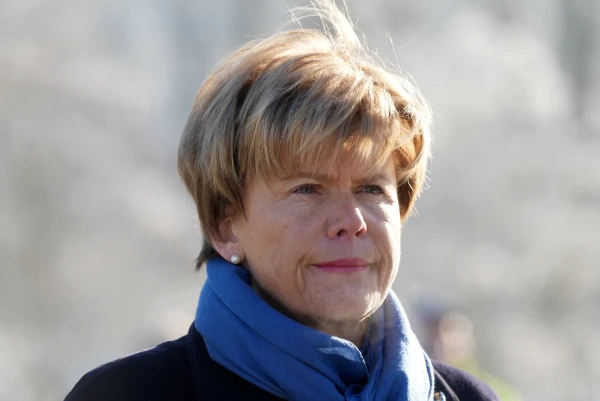
Russia's actions do not indicate any readiness for peace, therefore additional pressure on the aggressor is necessary, according to the statement by Foreign Minister Baiba Braže to the LETA agency and information disseminated by the Ministry of Foreign Affairs.
The minister noted that she, the president of the state Edgars Rinkēvičs, and the prime minister Evika Siliņa openly stated at the Munich Security Conference at all levels that the only path to peace is to force Russia into genuine negotiations. Currently, there are no signs that Russia wants peace. This is evident from the shelling of Ukraine and attempts to destroy all civilian infrastructure, including maternity hospitals.
“This is truly a terrorist state,” emphasized Braže.
“The brief conclusion is this: we do not see that Russia is still inclined to negotiate, therefore, additional pressure on Russia is necessary — both sanctions and tariffs, reduction of quotas, and so on,” noted the minister.
Contrary to Russian propaganda, its economy continues to collapse, battlefield losses are enormous, and successes are minimal, said Braže, adding that Ukraine's allies are stronger both militarily and economically. Allies must provide maximum support for Ukraine's self-defense, addressing the energy crisis, and assisting the civilian population, while Russia should continue to be “forced to peace by force” — through sanctions and measures against the “shadow fleet,” the minister indicated.
Braže emphasized that the tariffs imposed by the United States, for example, against India for purchasing Russian oil and gas, have been effective. The same can be done regarding other countries, as it is important to reduce the revenues of the Russian budget and prevent Russia from acquiring goods that it can use to produce missiles.
“This, of course, immediately brings us to China. For Russia, China is the largest sponsor of the war, as it supplies dual-use goods,” the minister reminded.
Commenting on U.S. Secretary of State Marco Rubio's statement at the Munich Security Conference about the revival of transatlantic ties based on a common heritage, the minister reminded that the U.S. stated that Europe needs to take its own defense more seriously and ensure appropriate funding.
“Americans are deeply concerned that Europe is currently technologically lagging behind, and there are fears that Europe may at some point slow down joint work with the U.S. regarding third countries for influence in the world,” the minister emphasized.
This morning, there was also a meeting of the foreign ministers of the Baltic and Nordic countries (NB8) with Ukraine's Foreign Minister Andrii Sybiha. The ministers discussed Ukraine's most critical needs for self-defense, overcoming the energy crisis caused by Russia's terrorist actions, and supporting the population. In turn, Sybiha informed about the peace negotiation process.
This week, the foreign minister participated in several high-level discussions at the Munich Security Conference focused on current challenges in foreign policy and security policy, as well as meeting with ministers and high-ranking officials from Ukraine, the Baltic states, Nordic countries, and other states.


Leave a comment