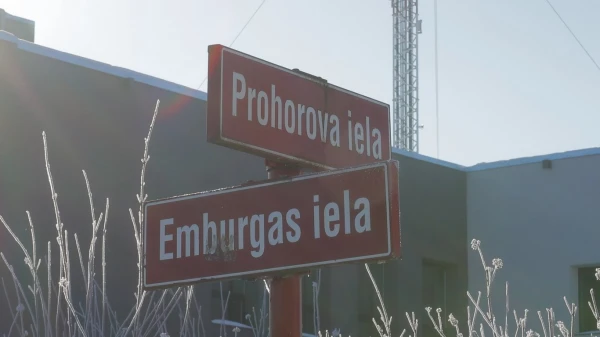
This week, the Ministry of Environmental Protection and Regional Development (MEPRD) announced that Minister Raimonds Čudars ordered a partial suspension of the territorial planning in the Bauska and Preili regions, writes Latvijas Avīze.
The reason was significant legal and substantive deficiencies in certain parts of the document, which impose disproportionate restrictions on the development of renewable energy sources (RES), commercial activities, and the exercise of private rights without sufficient data, research, and legal justification.
Although the political leader of the Ministry of Environmental Protection and Regional Development (MEPRD) believes that municipalities have considerable freedom of action in the field of spatial planning, they should not impose vague, unfounded, or excessive prohibitions that significantly limit individuals' property rights and hinder the achievement of common state goals. The Ministry, after reviewing the plans of the Preili and Bauska municipalities, concluded that the restrictions established in them are incompatible with the economic specialization defined in the sustainable development strategies of both regions, which are oriented towards the production of RES.
State policy also supports the production of renewable energy. In turn, the plans contain solutions that significantly restrict the development of renewable energy and contradict state goals of strengthening energy independence and transitioning to renewable sources. The Ministry also identified significant discrepancies in the building regulations and the graphical part of the plan.
The Ministry concluded that broad prohibitions and restrictions have been established on the placement of wind farms and solar power plants even in areas where state regulation permits such development. Special conditions have also been established for certain territories, prohibiting the production of renewable energy, including for self-consumption. The Ministry believes that the prohibitions are not justified by data and are disproportionate, as in several cases the provisions are formulated vaguely, with subjectively interpreted criteria.
What will "partial suspension" of planning mean? It means that the provisions will not be applied until the municipality itself cancels them or until a decision of the Constitutional Court comes into force, which recognizes the Minister's order as justified (in whole or in part) or unjustified (in whole or in part), said MEPRD representative Ilze Junde.