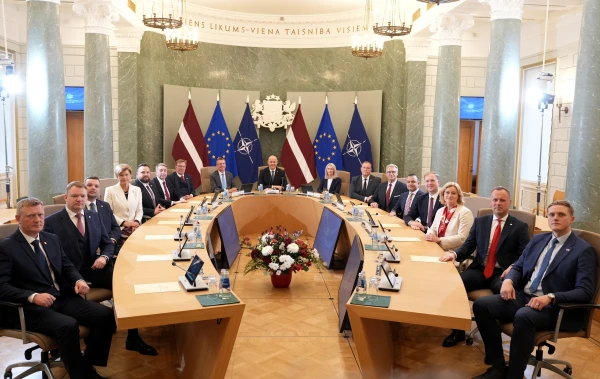
The Saeima today in the final reading adopted amendments to nine laws that provide for gradual changes in the current regulation of the pension system for length of service starting from 2027, writes LETA.
Changes are necessary to ensure a fair, equitable, and financially sustainable system of pensions for length of service. The bills are related to the state budget project for 2026 and the medium-term budget framework for the next three years.
Before the vote, opposition MP Linda Liepiņa (LPM) noted that she does not oppose the need for changes in the length of service system but is against the way these changes are being adopted — urgently and without discussion.
In the final reading, amendments to the law "On pensions for length of service for employees of the Ministry of the Interior system with special ranks," the law on military service, the law on the official activities of employees of the Ministry of the Interior system and the Prison Administration with special ranks, the law on pensions for length of service for diplomats, the law on pensions for length of service for employees of the Corruption Prevention and Combating Bureau, the law on pensions for length of service for emergency medical service workers involved in providing emergency medical care, the law on pensions for length of service for artists of state and municipal professional orchestras, choirs, concert organizations, theaters, and circuses, as well as on benefits for ballet artists for creative activities, the law on pensions for length of service for employees of state security agencies, and the law on military service were adopted.
It is stipulated that the changes will not affect those who, at the time the amendments come into force, are already receiving a pension for length of service or will be entitled to it under the current regulations (provided they meet the relevant age and service requirements, even if the person continues employment).
"Currently, pensions for length of service are appointed based on how long a person has worked in a specific position or profession and how old they are. However, the rules differ across sectors — each has its own specific conditions. This has created inequality between professions: for some, the conditions for appointing pensions are simpler, while for others, they are more complex. The calculation methods also differ. Furthermore, these conditions are not reviewed in light of changes in the labor market and sectors, and this is becoming increasingly costly for the state budget," said the chair of the budget commission, Anda Čakša, earlier.
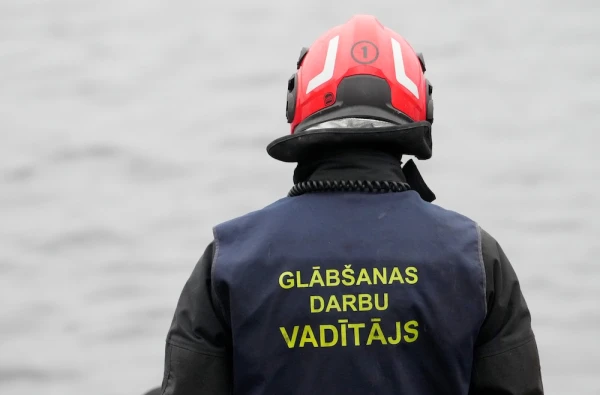
The amendments provide for a gradual change in the system, which will affect those workers who until now could retire earlier than the general retirement age, including military personnel, employees of the Ministry of the Interior system, border guards, firefighters, and others. In the future, pensions for length of service will only be granted to those whose work is associated with increased risk, threats to health or life, such as firefighters and rescuers.
The changes are initiated with the aim of reducing the disparities between pension recipients for length of service and the rest of society, creating a fairer overall system. They are planned to be implemented starting from 2027, gradually introducing unified principles and a transparent financing model. At the same time, social protection will be maintained for those whose work is associated with special risks or ensuring public safety.
The amendments also provide for a phased increase in the required length of service and age by six months each year over five years, as well as the exclusion of the last two months from the pension calculation. For individuals who will have accumulated less than 10 years of service by January 1, 2027, the formula for calculating the pension for length of service will be changed. In this case, it will be calculated based on the remuneration received for the last 10 calendar years, ending two months before leaving the service.
There is also a provision for reducing the minimum and maximum amounts of pensions for length of service by 10–20%, leveling them between different services, including a 5% reduction if a person is dismissed or released from their position.
Prosecutors and judges, for whom a special pension will be provided, as well as diplomats, are expected to be excluded from the list of professions entitled to pensions for length of service. The changes will also affect ballet artists, circus performers, choir members, puppet theater actors, orchestral musicians, soloists, vocalists, and theater actors — for these professions, support measures will be provided, including retraining for other specialties.
According to the planned changes, pensions for length of service will no longer be provided for those positions and professions where the performance of labor duties is not associated with a regular threat to health or life, including individuals performing auxiliary functions.
It is planned that time worked in the private sector can be included in the length of service, but not more than 20% of the total service. Pensions for length of service will be paid until the general retirement age is reached. After that, payments will cease, and the person will receive a regular old-age pension calculated based on their social contributions.
Changes to the length of service system are also proposed due to the rapid increase in fiscal pressure on the pension system. According to the explanatory notes to the bills, it is expected that in five years, state expenditures on these pensions will exceed 200 million euros per year.
It was previously reported that the Saeima today began the final reading of the budget for the next year and related bills.
The revenues of the consolidated state budget for the next year are planned to be 16.1 billion euros, and expenditures — 17.9 billion euros. Economic growth this year is projected at 1.1%, next year at 2.1%, and in subsequent years up to 2.2%.
Evaluating the proposals from ministries for the budget, the government established that targeted grants to municipalities next year will amount to 674.543 million euros instead of 676.286 million euros provided in the first reading.
Between the first and second readings in the Saeima, the government supported the allocation of additional resources amounting to 22.3 million euros for the 2026 budget. The funds were found by reducing expenditures on managing state debt by 10 million euros, as well as by revising expected dividend revenues from JSC Latvijas valsts meži by 12.3 million euros.
The most significant additional funding is provided for the redesign of the Rail Baltica project — 8 million euros, and another 1.4 million euros is allocated for evaluating the implementation of the Rail Baltica project in Latvia.
Support for rural family doctors is allocated 4.8 million euros. Another 1.8 million is directed to support victims of violence, and one million euros for preserving sacred heritage.
For the implementation of programs and project competitions of the State Cultural Capital Fund, an additional 402,908 euros is provided. The government has also allocated additional funds to the Ministry of Education and Science to support educators, as well as to the Ministry of Health — for the establishment of an emergency medical care point in the Indra municipality — 349,536 euros.