
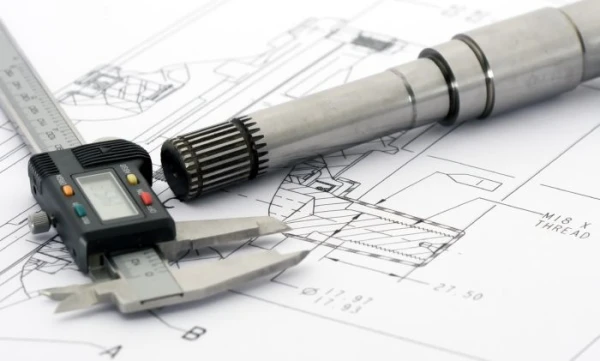
Last week, the meeting of state secretaries – the working body of the Latvian government – considered the merger of small state capital companies and the creation of a "Technology Development Center." Optimization will allow for resource savings and asset modernization.
Currently, the Latvian state has a direct stake in 78 capital companies, of which 63 are state capital companies (100% owned by the state), 4 have direct decisive influence from the state (more than 50% and less than 100% ownership), and 11 do not have direct decisive influence (ownership of less than or equal to 50%).
However, there is currently an idea to merge only 3 enterprises: the metrology center, the state standard, and the assay office. What do they do?
Measure Seven Times: The Metrology Center
The fully state-owned capital company Latvian National Metrology Center (LNMC) is 100% owned by the Ministry of Economics and employs 49 staff members. According to the company, board member Kaspars Paupe received a remuneration of 56,868 euros before tax in 2024, or an average of 4,739 euros per month.
The main area of activity is providing metrological services. The company's commercial activities cover services in verification, calibration, testing, and certification.
The enterprise is delegated to perform the functions and tasks of the National Metrology Institute, which is implemented by the structural unit – the "Metrology Bureau". The goal is to "ensure a unified and indivisible approach to managing the standards of national units of measurement and the equipment for their maintenance in order to fully fulfill the tasks of state management related to maintaining the reference base of units of measurement of physical quantities and ensuring the reproduction of units of measurement, as well as implementing the state tasks in the field of metrology established by Article 14 of the Law on the Unity of Measurements."
Market functions do not cover expenses, so the institution operates on a budget subsidy, which was 151,300 EUR in 2024. Market and competitor analysis indicates that in the Baltic region, the competition for LNMC and other metrology service providers comes from the Estonian state joint-stock company Metrosert and the Lithuanian state enterprise Vilnius Metrology Center. "These enterprises provide equivalent metrology services," the document prepared by the Ministry of Economics states. However, Latvia cannot simply abandon its own enterprise – the regulatory framework stipulates that this segment of activity must be carried out at the national level.
A Member of the European Family: The State Standard of Latvia
Despite its commercial name, the company Latvijas valsts standarts (LVS) is not only 100% owned by the state, represented by the Ministry of Economics, but is also subsidized by taxpayer funds – last year it spent 210,617 euros, which significantly exceeds its modest equity capital of 11,455 euros. The company employs only 18 staff members. Board member Ingars Pilmanis earned 60,384.54 euros in 2024 (just over 5,000 euros per month).
According to Article 7 of the Law on Standardization and Clause 2 of the Cabinet Regulation No. 346 of June 1, 2021, "Rules on the National Institute of Standardization," LVS "implements state policy in the field of standardization and develops the operation of the standardization system in the state, contributing to the provision of a common quality infrastructure." Widely recognized standards such as ISO 9001, for example, set requirements for the quality management system of organizations of any size and field of activity, ensuring stable quality and customer satisfaction.
LVS represents Latvia as a full member of the European Committee for Standardization (CEN), the European Committee for Electrotechnical Standardization, and the International Organization for Standardization.
In addition, LVS is an associated member of the International Electrotechnical Commission and has signed a memorandum of understanding with the European Telecommunications Standards Institute.
All That Glitters Is Not Gold: The Assay Office
Latvijas proves birojs, also known as the State Assay Office (SAO), is a capital company, 100% of which is owned by the Ministry of Finance. The registered and paid-up capital of the company amounts to 3,614,333 euros. In 2024, the enterprise employed 19 staff members. The chairman of the board, Peters Branguļs, was the wealthiest among the government officials mentioned in this article, earning 68,600 euros last year (an average of 5,716 euros per month).
The enterprise is also an authorized institution in accordance with the Law on the Convention on the Testing and Hallmarking of Precious Metal Products and its amendments, and while performing this task, it is under the supervision of the Ministry of Finance.
In 2024, a sample was taken from 939,739 precious metal products (-1.2% compared to the previous year), serving 10,818 clients, testing 92,381 products with gemstones, and conducting 2,831 examinations. Pricing depends on several factors, but here is a small example to understand the order of figures – the minimum fee for testing 1 product with laser marking is 2.84 euros. It seems inexpensive.
Despite its substantial capital and the fact that the SAO is an indispensable companion to the entire jewelry business in the country, this enterprise also receives a state subsidy, albeit a small one, comparable to the remuneration of one of its officials – in 2024, 86,722 euros were allocated from the budget. "These funds are used to ensure market oversight functions, maintain delegated registers, verify product safety, and cover examination costs for law enforcement needs," the Ministry of Finance explained.
At the regional level, the main competitors are: the Estonian state enterprise Metrosert, the Lithuanian state institution Lietuvos prabavimo rumai, and the Polish assay office, which are structural units of the Gowny Urzad Miar.
The Ministry of Economics believes that the SAO "provides equivalent services and is capable of competing for attracting foreign clients (mainly from Lithuania), especially in the field of testing products with gemstones." "However, competition is negatively affected by the ability of Polish institutions to offer public services (for example, hallmarking silver products) at significantly lower and economically unjustified prices."
In summary, the country has three completely different enterprises in terms of functions and scope of work, which will attempt to merge into a single "Technology Development Center." Perhaps it will be possible to save on management salaries – but this is uncertain.
Standardization is conducted under constrained conditions. There is a place to put the sample.







Leave a comment