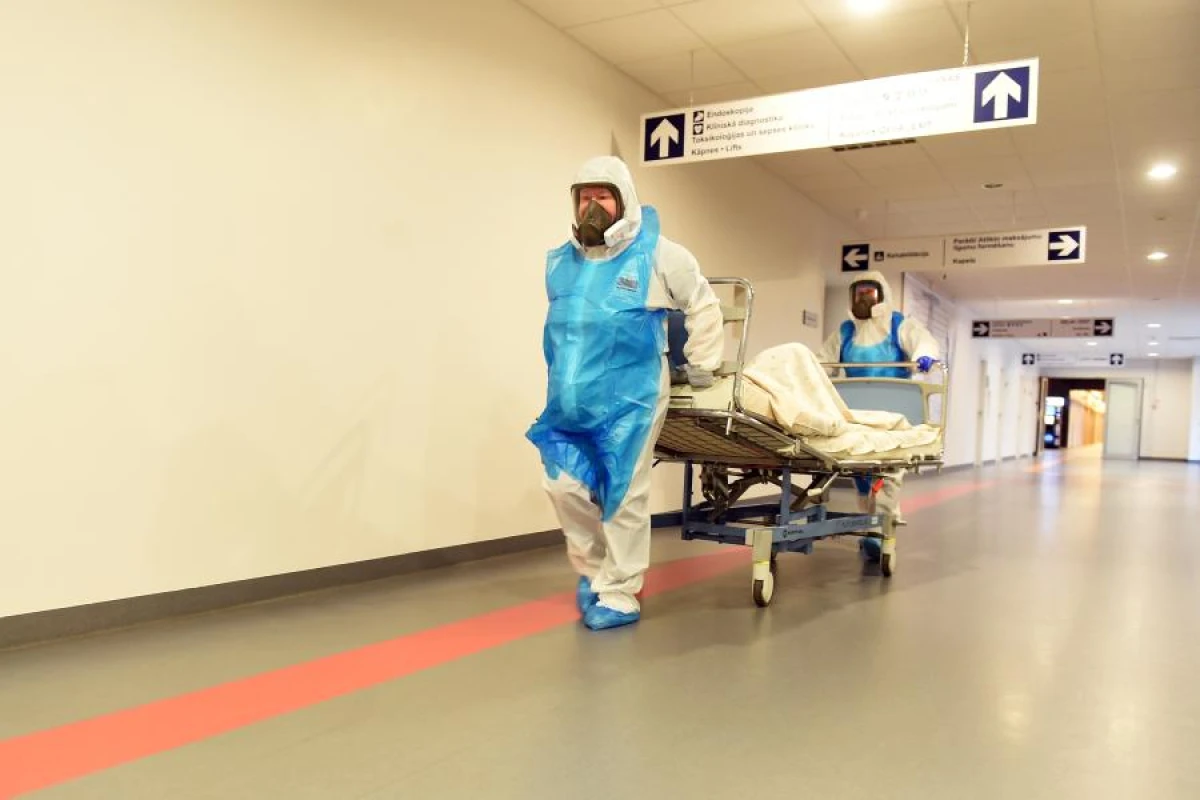
Latvian hospitals are increasingly facing a shortage of nurses. According to the expert, the system is sustained only by the selflessness of the older generation of hospital staff, while young specialists are increasingly leaving the profession even before starting work.
The shortage of nurses in Latvian healthcare has reached a critical level and today poses a much more serious problem than the shortage of doctors. This opinion was expressed by Dagniya Pamata, Deputy Chair of the Clinical University Hospital Stradins’ Union and a nurse, during a broadcast on TV24.
According to her, from the outside, it may seem that hospitals continue to operate as usual, departments are functioning, and patients are receiving the necessary care. However, behind the facade of well-being lies a severe staff shortage.
“If they say that due to the lack of doctors we are in a pit, then due to the lack of nurses we are already in a chasm,” emphasized Pamata.
She believes that the authorities are not yet paying enough attention to solving this problem. Meanwhile, the system continues to function mainly thanks to those employees who are willing to take on increased workloads and work beyond their norm.
Recently, Pamata was part of the state examination commission at the Stradins University in Riga and personally observed the graduation of a new group of future nurses. However, this did not add to her optimism. According to the specialist, a big question is how many graduates will actually start working in hospitals. “I think that this percentage is very, very small,” she noted.
As an example, Pamata recounted a conversation with one of the graduates who candidly admitted that she did not intend to work in her specialty. “I don’t need anything anymore, just to somehow get a credit. I don’t plan to work in this profession,” the nurse quoted the graduate. When asked why she enrolled in the training then, the girl replied, “I started studying, but then I realized that it’s not for me. So I decided just to finish my studies.”
According to Pamata, such cases are far from isolated. Many students graduate but do not associate their future with work in medical institutions. At the same time, the expert does not believe that the younger generation should be criticized for this. On the contrary, she is convinced that modern young people better understand their own needs and know how to set boundaries between work and personal life. “I don’t want to say this as a reproach to the younger generation. It’s rather a compliment,” noted Pamata.
She stated that the current experienced nurses are essentially the last representatives of a generation willing to sacrifice themselves for the profession.
“We, nurses of my generation and a bit younger, are essentially the last workhorses,” she confessed.
These specialists are ready to take on extra shifts, endure enormous workloads, and serve a large number of patients. However, it is impossible to build the future of the healthcare system solely on such self-sacrifice. Pamata emphasizes that young specialists view life differently. For them, not only work and professional mission are important, but also family, rest, free time, and balance between personal life and career.
“The younger generation thinks differently, and I am actually glad about that. They think about how to create a family, how to spend time with loved ones, how to relax, and how to maintain a balance between work, free time, and family,” said the expert.
In Pamata's opinion, if the healthcare system wants to attract and retain young nurses, it needs to offer decent working conditions, competitive pay, and a predictable work schedule. Otherwise, the staffing crisis will only worsen, and providing quality care for patients will become increasingly difficult.