At the meeting of state secretaries — the working body of the Latvian government, on May 7, the "Action Plan to Support the Trading Sector" was presented.
What officials have devised to support Latvian traders:
-
The first direction is the revision of regulatory requirements, for example, addressing problematic issues identified by the industry regarding the use of cash registers and the threshold for mandatory audits of annual reports.
-
The second direction is the reform of advertising placement in public places. Industry representatives noted that the approval process is cumbersome and lengthy, so it is necessary to reconsider this process to reduce the bureaucratic burden and costs for both entrepreneurs and local governments.
-
The third area of action is the reform of street trading regulation. With the development of new forms of commercial activity and innovations, entrepreneurial practices have significantly changed. The current regulation is outdated.
-
The fourth area of action differs from the first three, as it does not outline specific tasks but rather focuses on studying possible political initiatives. Data indicates that more than half of retail food traders, whose legal addresses are located outside cities (in rural areas), as well as those who meet the definition of a micro-enterprise by two criteria, are operating at a loss.
For this reason, it is necessary to seek opportunities to support small traders in the regions so that these stores can continue their operations, providing the population with food. Often, stores also play an important social role, so a solution for their support must be found.
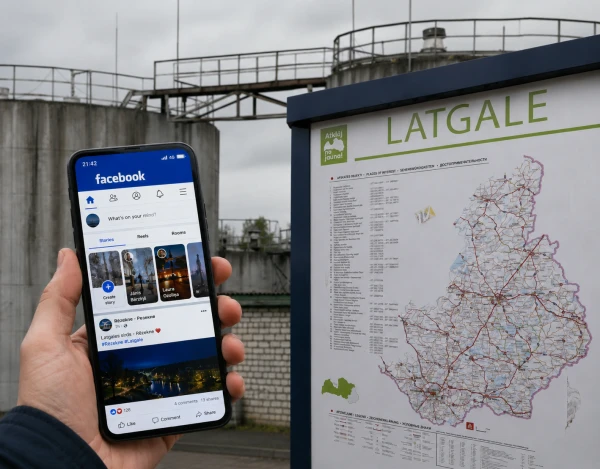
For reference: there are only 354 small grocery stores left in Latvia, with the most in Latgale — 89, the least in Zemgale — 51, and in Riga — 67.
Their total annual turnover exceeds 80 million euros. For comparison, last year's turnover of the Maxima retail chain in Latvia was 1.1 billion euros.
Problems with Shelf Life and Language
In communication with sellers, a discrepancy was also revealed that leads to the mass destruction of perfectly safe food products. Specifically, those that are "recommended until..." — but what to do after that, the Food Circulation Supervision Law does not provide for.
As a result, for example, canned goods, cereals, and pasta, which have just passed their best-before date, cannot legally be donated for charitable purposes.
And finally, for the first time in recent times, a government agency (the Ministry of Economics) acknowledged problems with language. Specifically — in the approval of advertisements, many of which are imported into Latvia from the countries of origin of retail chains, but do not undergo thoughtful local expertise...
"Representatives of the trading industry pointed out that such an approach creates legal uncertainty, increases administrative burden, and is based on subjective assessments rather than clear and predictable criteria."
As for street trading, mentioned in the Ministry of Economics' plans, one can note how many kiosks were demolished in Riga during the five years of the 'Coalition of Change'. And this is in the largest city with a solvent demand. Who was bothered by a newspaper and a sausage?