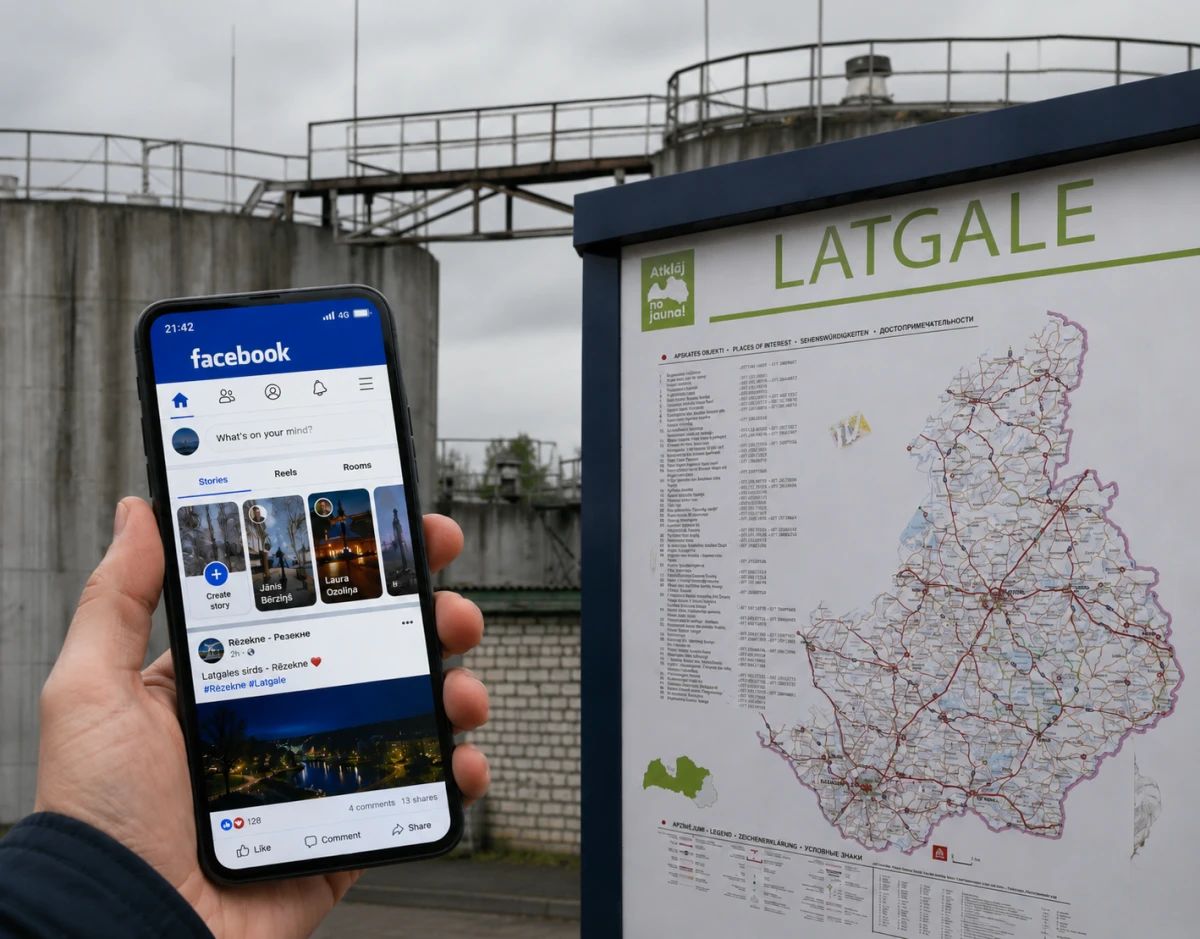
After drone strikes on the fuel storage facility in Rēzekne, the local Facebook group turned into not only a platform for information exchange but also a source of heightened anxiety. LETA's analysis showed that the spread of panic was fueled by unverified versions, emotional rhetoric, and distrust of government institutions.
The LETA agency analyzed 1,714 public comments on 17 posts in the "Rēzeknes forums" group from May 7 to May 9.
A total of 758 different user profiles participated in the discussion. The group has about 27,000 members and effectively covers a significant portion of Rēzekne's residents.
The first wave of comments began around 3:35 AM — almost immediately after the incident. In the first 30 minutes, users left 56 comments, over 170 in the first hour, and after two hours, the number exceeded 400.
Initially, residents tried to understand what had happened — whether it was an explosion, an accident, or a military attack. Later, the discussion quickly shifted to theories about the origin of the drones, the actions of the army, the alert system, and potential threats to Latgale.
LETA notes that it is impossible to prove that users were deliberately trying to sow panic. However, there are signs in the comments that objectively heighten anxiety in a crisis situation.
One such factor was the mass repetition of unverified versions. At least 67 comments from 47 profiles were linked to Ukraine. In 42 comments from 30 profiles, claims about "Ukrainian drones" were already presented as established facts.
Users wrote that Latvia allegedly allows Ukraine to use its airspace, and that the authorities are hiding the truth.
According to LETA, the transformation of assumptions into "obvious facts" is one of the key mechanisms for spreading misinformation on social media.
Another factor was the emotionally charged rhetoric.
Comments included statements about "betrayal," "hiding threats," and the state's inability to protect residents. Such language quickly attracts attention and contributes to the further spread of alarming messages.
Analysts also note a growing distrust of government institutions. Users questioned the actions of the National Armed Forces, the government, and the alert system.
While some questions were legitimate, given that the incident occurred in the city, many comments generalized that the government could not be trusted.
LETA emphasizes that in a security crisis, this is particularly dangerous, as people begin to rely not on official information but on rumors and emotional versions of events.
Sensitive operational information was also published in the group — users reported sounds of aircraft, flight directions, and movements of services.
Such posts were not always made with malicious intent; however, in an open group, they can create additional risks.
At the same time, some users tried to reduce the level of panic. At least 23 comments from 15 profiles contained calls not to spread unverified information, to follow official messages, and not to publish information about the movements of aircraft.
However, this self-regulation proved limited and could not stop the spread of alarming versions.
LETA concludes that in crisis situations, it is extremely important to quickly fill the information vacuum with official and clear information.
If this does not happen, social media begins to independently form explanations of what is happening — including those based on rumors and emotions.
As reported earlier, on May 7, two drones crashed into a fuel storage facility in Rēzekne. A criminal case has been initiated regarding the incident, and the investigation is ongoing.