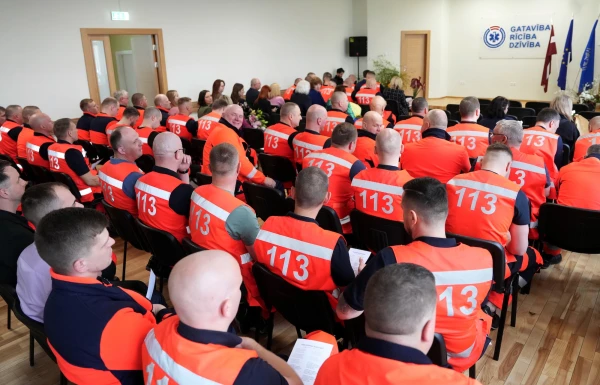
A controversial case in Latvian medicine: an ambulance employee recounted how a patient was humiliated in the emergency department due to their appearance. The story sparked a wave of discussions about humanity and professionalism among doctors.
Social media is discussing a post by an employee of the Emergency Medical Service (NMPD), who openly shared a situation that raised questions about the empathy and professionalism of medics.
She recounts that in their work, ambulance crews encounter patients in a variety of conditions: "in stores, on the street, at workplaces, in fish processing plants, car repair shops, on construction sites, in the forest, in the mud, in the snow." According to her, people most often find themselves in front of medics "in the most helpless state, having just experienced an unpleasant event — a stroke, a heart attack, a car accident, or simply someone slipping and sustaining a serious injury."
The medic emphasizes that no one can predict when they themselves will need help: "Our patients are not always well-dressed, clean, and well-groomed — most often we meet them in everyday life." Therefore, patients are taken to the hospital in the condition in which they were found: "from work, in the clothes they are wearing at that moment — because health status is more important than clean pants or combed hair."
She notes that the attitude towards a patient should not depend on their appearance: "Neither my work nor my attitude changes because of this — the patient's condition is always the most important."
However, according to her, it is not always possible to find the same understanding everywhere. A specific case occurred at Stradins Hospital: "Unfortunately, today our patient was unlucky — sarcastic remarks were made about his appearance." At the same time, as the author emphasizes, "not for a second did they think about why the patient was brought in and that the reason could be quite serious."
She calls on her colleagues for professionalism and empathy: "I would like to see a person behind the work clothes who currently needs help." And she adds: "After all, none of us can predict when we will need to call an ambulance for ourselves — and how well we will look at that moment."
In the comments, users confirm that such situations are not isolated. One of them writes: "Unfortunately, we have also faced this," thanking the medics for their "courage, care, and ability to be there in the toughest moments."