The health ministry reported to the government.
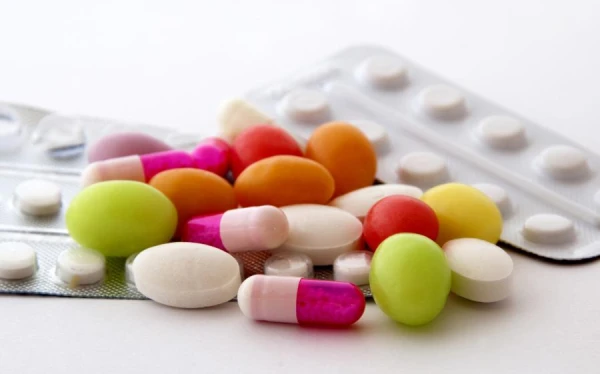
Last year, a reform of prescription drug pricing was launched. Today, the government reviewed an informational report on the effectiveness of the new markup model for prescription drugs and the possibilities for its further improvement.
"Data analysis confirms: since the introduction of the model on January 1, 2025, personal expenses of the population on prescription drugs have generally decreased," the health ministry's report states.
The new markup model is part of broader measures to improve the accessibility of medicines, approved by the government on January 16, 2024. They are implemented in four areas: drug pricing, compensation system, equal accessibility and information, as well as the development of pharmaceutical care.
The report concludes that the change in the markup model for drugs has brought real benefits to patients, especially those residents who take several medications daily. At the same time, proposals have been developed for the further development of the model aimed at long-term strengthening of the accessibility of prescription drugs, continuity of drug supply, and improvement of cost distribution among the involved parties.
"We have done what patients have been waiting for years – we broke the mechanism that made medicines unreasonably expensive, and today’s data clearly proves this: prices for medicines for most prescriptions have decreased, and people are paying less for treatment. And although we had very sharp discussions on the way to this achievement, with threats directed personally at me – today we see that as a result of targeted actions and cooperation between the ministry, pharmacists, and entrepreneurs, it is the patient who has won. Our task is to continue working on the implemented model, strengthening and improving it, to continue reducing the population's expenses on medications," stated Health Minister Hosam Abu Meri.
Currently, there are 3,635 prescription drugs in the Latvian Medicines Register with a declared manufacturer price. If we compare the maximum allowable pharmacy price on February 2, 2026, with the price on December 31, 2024, it has been established that the pharmacy price for 3,285 drugs, or 90% of all prescription drugs, has decreased. At the same time, for 344 drugs, or 9.5%, the pharmacy price has increased, and for 6 drugs, it remained unchanged.
Data on the TOP-200 most frequently prescribed prescription drugs show that their average pharmacy price in 2025 compared to 2024 has decreased by 17%. The most significant price reductions are noted for drugs priced over 10 euros, but some drugs in the price group from 5 to 10 euros have also become cheaper. At the same time, in the group of the cheapest drugs under 5 euros, prices have increased on average by 50 cents.
A more detailed price comparison indicates:
• For drugs in the price group from 5 to 10 euros, the price has decreased on average by 92 cents or 12%;
• For drugs in the price group from 10 to 25 euros – on average by 3.27 euros or 21%;
• For drugs in the price group over 25 euros – on average by 12.61 euros or 20%.
The cost of prescription drugs for patients with six or more medications has decreased by 32%.
In the segment of reimbursable drugs, significant price reductions are also observed in certain price groups. For example, for drugs priced between 10 and 25 euros, the price in some cases has decreased to 4.50 euros per package, or 28%, while the average reduction reached 10%, or 1.38 euros per package. At the same time, the analysis showed that for certain cardiological drugs in this price group, the price has increased.
Data analysis of a randomly selected "basket" of drugs confirms that with the introduction of the new markup model, total costs per patient have decreased. It was also concluded that the application of the new markup model for prescription drugs has not affected the number of pharmacies and pharmacy branches.
The report includes several proposals for improving the new drug pricing model. It is planned to assess the need to revise the application of the pharmacist service fee by July 1, 2027, providing for it with each dispensing of prescription drugs in accordance with the allocated funding from the state budget. In addition, by November 30, 2026, it is proposed to revise the markup model of large retailers to ensure the continuity and accessibility of prescription drug supply in the long term, reducing the markup on cheaper drugs and increasing it on more expensive drugs. Furthermore, an analysis of the impact of inflation on the real cost of markups and necessary decisions will be conducted every three years or more frequently if the consumer price index in the previous year exceeds 10%.
As previously reported, in the second half of the year, it is expected that the state will fully cover the cost of the pharmacist service fee for prescription drugs that cost up to 10 euros, as well as all prescription drugs for people with disabilities of the first group.