
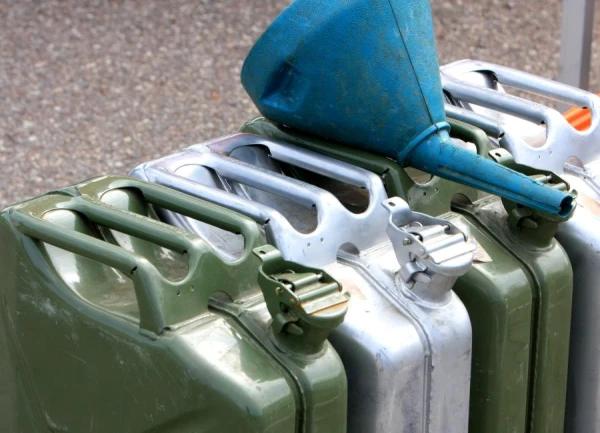
Exactly one month has passed since the beginning of the conflict in the Middle East, which caused an unprecedented rise in fuel prices. Diesel fuel, in particular, has become significantly more expensive — over the month, its price has risen by more than 30%.
A month has passed since the beginning of the price increase, and the psychological mark of two euros per liter for diesel fuel has been exceeded for about a week, reports TV3 News.
At one gas station in Riga, journalists spoke with several driving instructors. They admit that filling up the tank has become significantly more expensive, but they have to accept it — at least for now, their habits have not changed, as the car is necessary for both work and everyday life.
"Well, it’s bad, what can I say. We have no choice. We still need to refuel," says driver Monika.
When asked if her habits in daily driving have changed, she answers negatively: "Not really. Maybe if the price rises to three euros, then I will start to think. The only thing that will change is that the motorcycle season is starting, I will be riding more on my motorcycle. (TV3: Because it’s more economical?) Much more economical. First of all, gasoline is cheaper. This is the first time in my life I see this."
Driver Janis also does not change his habits:
"Honestly — I don’t change. I go where I need to. Of course, it feels like it has become more expensive. But I don’t change anything. I have no choice — it’s my job. What difference does it make if I fill up for 20 euros — tomorrow I will refuel anyway. If it were just to work and back — maybe I would think about it, but I just feel that it’s more expensive, yet I still refuel."
One of the largest fuel retailers, Circle K Latvia, notes that trends vary depending on the type of fuel. In the gasoline market, where the price increase has been less sharp, no significant changes are observed. At the same time, in the diesel segment, there is an increasingly noticeable trend — drivers are refueling less frequently on weekdays.
"We see that people are taking advantage of discounts more often on weekends. They are shifting fuel purchases from weekdays to weekends, but there has been no noticeable decrease in consumption yet, because a longer observation period is required. On average, a customer refuels twice a month, so more time is needed to assess radical changes," said Gatis Titov, head of the fuel category at Circle K Latvia.
Moreover, the March statistics are also influenced by the fact that at the beginning of the price increase, many began to stock up on fuel.
"At the beginning of March, there was a pronounced panic — people took any opportunity and filled their tanks 'to the brim'," noted Titov.
Other major fuel companies in Latvia declined to comment on the situation, citing busyness or a lack of aggregated data for March.
The Association of Fuel Traders also confirms that the statistics have not yet been compiled. They note that predicting further price movements is extremely difficult due to market instability — even a politician's message on social media can affect it.
"We do not know what will happen tomorrow or even in the coming hours in the Middle East and how the markets will react. This week, the fluctuations are less sharp, so the price increase at gas stations has slowed down a bit, but the overall trend remains high," admitted Ieva Ligere, head of the Association of Fuel Traders in Latvia.
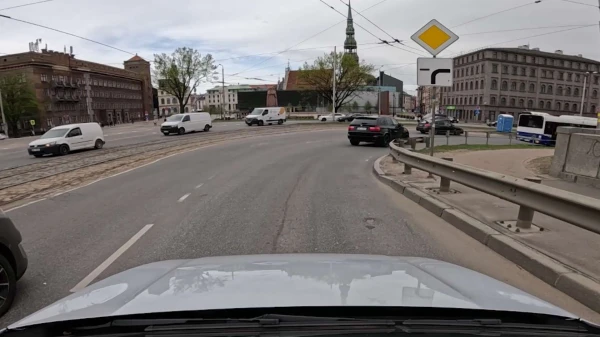
At the same time, changes in driver behavior can also be assessed by traffic intensity. Data from Latvijas valsts ceļi on the country's busiest highway — the Jūrmala highway — shows that compared to the beginning of March, traffic intensity has slightly increased.










Leave a comment