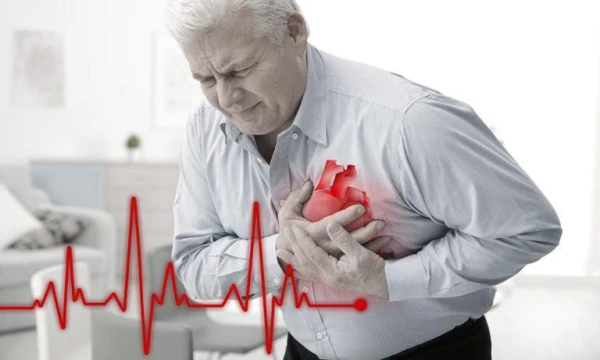
When comparing data across all EU countries, Latvia's mortality from cardiovascular diseases is twice as high, writes Latvijas Avīze.
Among the population aged under 64, it is even three times higher, according to "Eurostat" data.
The Prime Minister, Evika Silina, assessed the action plan for improving Latvian healthcare in the area of cardiovascular disorders for 2026-2027 as extremely important. Speaking about the necessary funding (42.2 million euros in 2027 and 47 million euros in subsequent years), the Prime Minister did not elaborate much: the funds need to be found. It may be necessary to eliminate some agency for this purpose.
Finance Minister Arvils Aseradens predicts that funding can be secured by "reviewing the functions of the public sector and discontinuing any services with much lower priority."
Since 2018, a screening for cardiovascular diseases using the SCORE method (short for "Systematic Coronary Risk Evaluation") has been introduced in our country, conducted by family doctors to determine the risk of a patient developing a heart attack, stroke, or other diseases within the next ten years. The new improvement plan in this area includes optimizing the method for calculating disease risk.
According to the Ministry of Health, by 2024, 1.1 million patients in the relevant age group had been registered in family doctors' practices, of which 215,000 residents were supposed to undergo the SCORE check, but only 19,000, or 8.9% of patients, actually did.
"Many know that the risk factors for cardiovascular diseases include smoking, high blood pressure, and high cholesterol. But this needs to be combined in a clear way so that we can explain to the patient what to expect in the future. This is not a system invented by family doctors or local cardiologists, but an algorithm for risk assessment recommended by the European Society of Cardiology. And it is not so simple because it is necessary not only to obtain the patient's data but also to take the time to evaluate them. In Latvia, an electronic system has not yet been created where cholesterol levels and other data can be entered to calculate risks. When a doctor decides to assess the risk, they determine what screening examinations are necessary for the patient. And for the entire patient assessment process, the state pays us ten euros," said Ainīs Dzalbs, a family doctor from Stalgene and a representative of the board of the Latvian Association of Rural Family Doctors.
Dzalbs does not hide that the National Health Service often reproaches family doctors for referring patients too frequently for laboratory tests and exceeding the quotas set by the state.
"But what are we spending them on? On determining cholesterol levels, blood sugar, kidney function indicators... These are parameters necessary for assessing the risk of cardiovascular diseases," the doctor explains.
His colleague, cardiologist at Pauls Stradiņš Clinical University Hospital, Professor Gustavs Latkovskis, stated that the improved SCORE 2 method, which the Ministry of Health promised could be introduced this year, will focus specifically on primary prevention so that people who may be at risk of a heart attack in the next ten or even twenty years undergo timely checks and, if risks are identified, receive a specific action plan to prevent the disease.