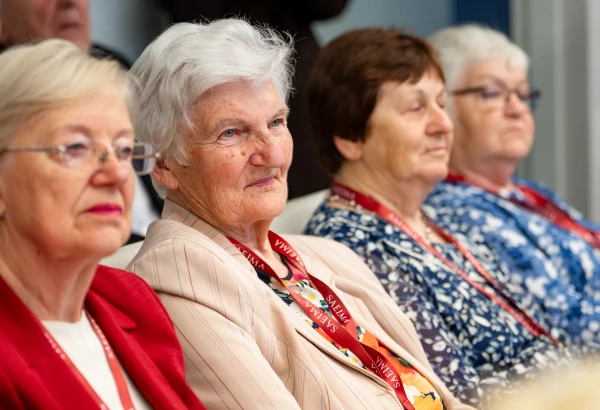
Few things can compare in sadness to the morning hour at the outpatient clinic of the Latvian Oncology Center in winter. Everyone is scheduled to arrive as early as possible, but – the computer system is still coming to itself...
A mass of people in outerwear, at an overcrowded wardrobe, waiting for the next act of their personal drama. Or – tragedy. And on the monitors, some otherworldly smile is displayed, prescribing mutual politeness...
Robots Will Take the Scalpel, Modify Their Cells
In February, the situation in the oncology sector raised concerns for the Saeima's subcommittee on public health. Deputies, gathered under the chairmanship of Liga Kozlovska, heard from their head – an experienced family doctor, that oncological diseases in Latvia remain the second leading cause of mortality, after cardiovascular diagnoses.
Parliamentarians learned from representatives of the Ministry of Health that in 2026 it is planned to:
"Review quality requirements. Also change the performance indicators established during the strategic procurement of breast cancer screening for medical institutions providing screening mammography services.
Start evaluating the introduction of other malignant tumor screening programs in accordance with EU recommendations.
Develop a protocol and calculate the costs of performing colonoscopies for population groups for whom colonoscopy is indicated as an initial examination."
Latvian doctors will be assisted in combating oncological diseases by European programs EUCanScreen, STRIVE, ILLUMINAS. By 2027, as part of the Healthcare Services Improvement Plan in the oncology field, it is planned to expand public information and education.
This year, the Ministry of Health promises: "Expand surgical methods by introducing robotic surgery (funding has been allocated). Expand the range of treatments covered by the state budget, conducted outside Latvia."
The latter includes proton beam therapy, CART-cell therapy (Chimeric Antigen Receptor T-cell therapy) – an innovative method of cancer immunotherapy, where the patient's own T-lymphocytes are genetically modified in the laboratory to recognize and destroy cancer cells. This method is effective for certain oncological hematological diseases, such as leukemias, lymphomas, and multiple myeloma.
Two Corridors
Liga Abolinja, parliamentary secretary of the Ministry of Health, stated that the extremely relevant breast cancers for women in the country will be "personalized, values-based therapy... introducing the OncotypeDX genetic test." Pathology diagnostics will be carried out at the molecular level, which will become known as precision medicine.
For primary investigations, a "green corridor" will be provided, and the most expedited – a "yellow corridor" – for those whose disease has returned in the form of metastases... In total, for those in both corridors, more than 12 million has been allocated.
According to L. Abolinja, funding for cancer screening has been allocated in full until 2029. It is important that all patients come according to reminders! The priority remains – pediatric oncology, for which the overwhelming majority of more than 6.8 million euros has been allocated for 2026. "We, as a ministry, do not abandon our plan."
– But if a couple of years ago we had a breakthrough, now things do not look so good, – admitted the parliamentary secretary. The cancer center in Latvia is still planned to be accredited – in March-April of this year; work on the screening registry is ongoing.
Referral for Examination is Not a Sentence
According to the Ministry of Health, as reported by the parliamentary secretary, after undergoing tests, the diagnosis along the aforementioned alarming line is confirmed in 30%. That is, more than 2/3 of people passing through the oncology waiting area – are not completely healthy, but certainly not cancer patients. And for the others, an uncompromising struggle begins.
For 2026, the following is planned:
- 8,288,301 euros – for radiation therapy;
- 3,611,554 euros – for chemotherapy;
- 5,504,910 euros – for PET/CT – positron emission tomography combined with computed tomography, one of the most accurate methods of radiation diagnostics.
Annual funding for oncology medications is increasing – if in the pre-crisis 2018 the state paid 30.5 million euros for them, then for 2026, 108.5 million euros has been allocated. The conditions for compensation are constantly being reviewed – for example, last year 16 new types of drugs were included, more than in any year since 2020.
Overall, for the next year, the plan for "funding of state core functions" in oncology will increase more than tenfold to 75.2 million euros. In the future, it will amount to 71.1 million euros annually.
Major Reconstruction in Gailezers
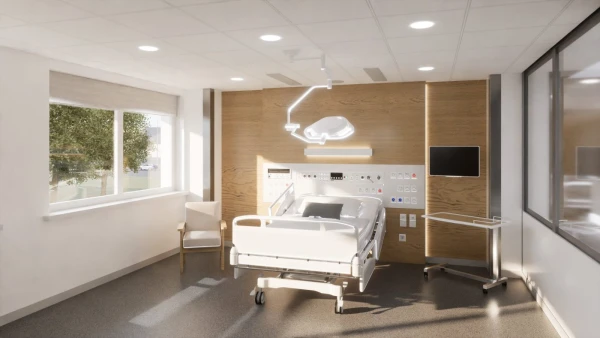
An essential component of medicine is, so to speak, the walls. In January 2026, a contract was signed for the reconstruction of the Latvian Oncology Center. The total budget is 81.3 million euros, of which 69.2 million euros have already been found for the renovation of the well-known building near the "Gailezers" hospital. An additional 12.1 million euros will be needed for equipment and furniture.
Andrey Pchelkina, acting chief physician of the oncology center of the RAKUS hospital, and his subordinates hope that the operating block in its new form will be ready by spring, and the inpatient department – by summer. Currently, the main oncology hospital is in the most challenging period, having to operate in temporary premises. Otherwise, unfortunately, it is impossible – the previous building was constructed 42 years ago according to the standards of the USSR Ministry of Health, and although it was advanced at that time and helped tens of thousands of patients – it is now morally outdated.
The task that Latvian oncologists set for themselves, meanwhile, looks extremely harsh in numbers – they need to achieve the European indicator of 5 years of so-called "survival" after diagnosis. But even this is not achieved by everyone, only 55%.
How realistic this is, our family learned from sad personal experience when treating our loved one. Mother and grandmother. With a diagnosis established at 77 years old, there were still 4 years ahead. During this time, there were both bright days and a true nightmare. There were examples of miraculous solutions and unprofessional indifference.
"The number of patient satisfaction has increased," says a health ministry official about Latvian oncology. I would like to believe that. But everyone understands that this is an eternal process, with no final result possible.