
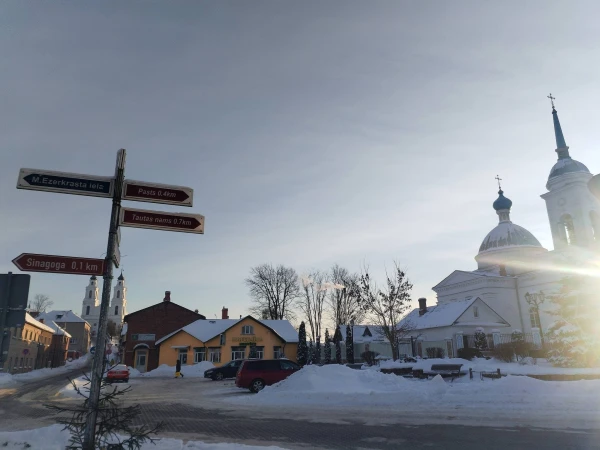
This text will not contain names. Only age and explanations – how people define themselves, with whom they identify. This is a conversation on the condition of anonymity about how Latvia is preparing for a Russian attack and how much people believe in this threat. If the worst is assumed, Ludza will be among the first to be affected.
People, where are you?
You sit down upon arrival on the platform, light a cigarette, and relax — I always do this. One of those towns where there are no clocks at the train station. I don’t remember them ever being there.
It’s a short walk to my parents' house — twenty-five minutes. You might not meet a single person along the way. Silence. If it weren’t for the burning windows of apartment buildings, what’s happening could easily be mistaken for a post-apocalypse. It’s ten o'clock in the evening.
Ludza is a small town in Latgale (about 7,500 residents) in eastern Latvia, among lakes. The oldest town in the country. Historically, Catholics, Orthodox, Old Believers, Lutherans, and Jews lived here — hence the mix of Russian, Latgalian, Polish, and Jewish traditions, as well as religious diversity. I was born here and lived half my life. The Russian border is thirty kilometers away.
“It’s some kind of fantasy”
The town has several lakes. In season, you can leave the house in slippers and go swimming. Right now, locals are fishing.
Ludza is a place where, at least during my time living here, people weren’t particularly divided by nationality. Even politicians didn’t push this topic in local elections — it wasn’t relevant. The sickle, hammer, and “swastikas” coexisted quite well (and still do). Literally.
“Will Russia attack? I wouldn’t be surprised. What can we do? If there’s an opportunity, we’ll go to our little house in the woods. It’s dangerous to stay in the city, and most likely, critical infrastructure will be damaged.” 46 years old, Russian-speaking resident of Ludza.
In Ludza, to work in the service sector, you always needed to know three languages: Russian, Latvian, and Latgalian.
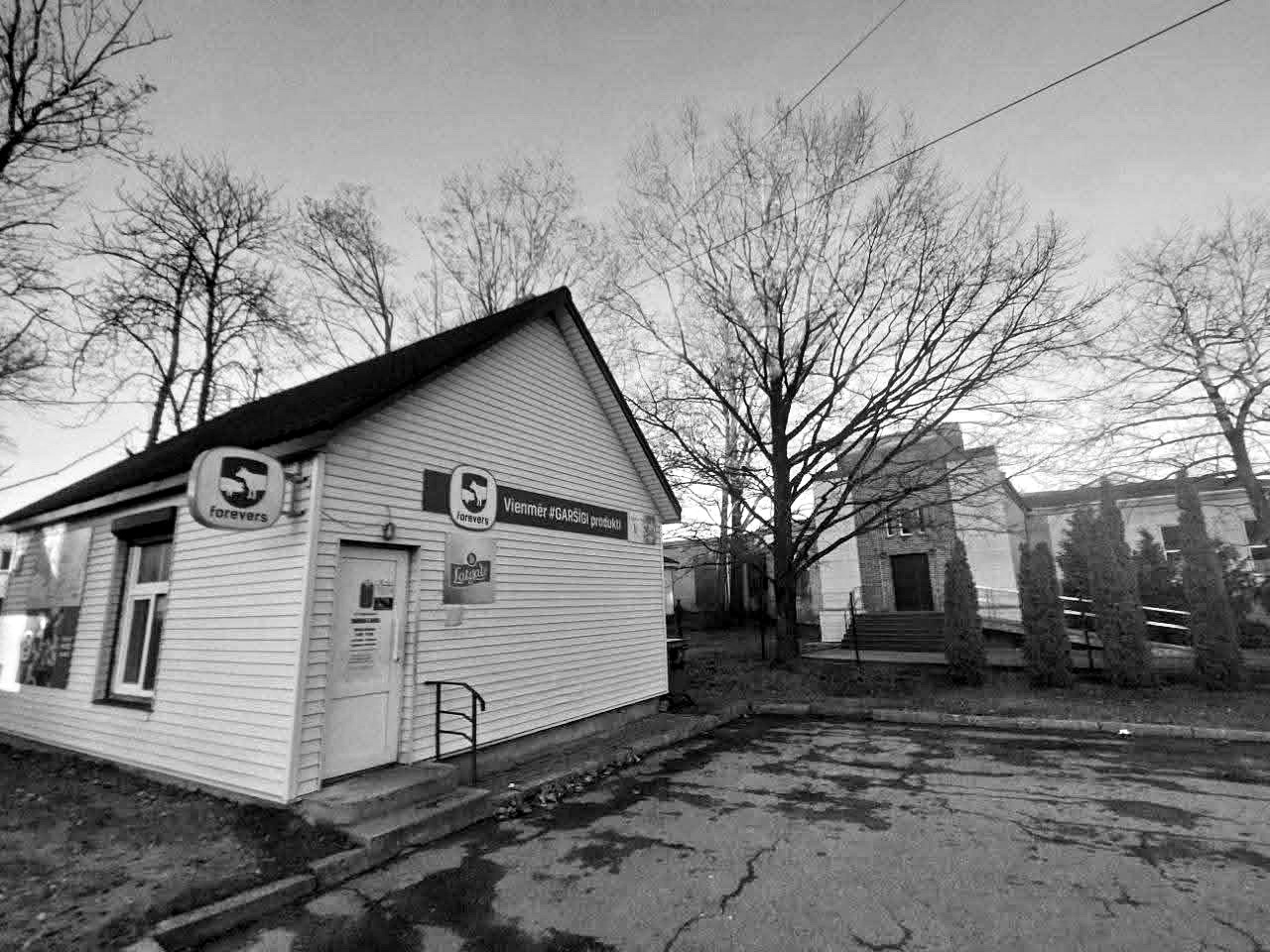
Meat shop, in the background – the morgue. Photo by the author.
Like most small towns, one of the main problems is employment. Some of the male population works on a rotational basis: three weeks somewhere abroad, one week here with family. The schedules vary, but the rhythm of life is clear. “Somewhere abroad” is most often Scandinavia.
“An attack? It’s some kind of fantasy. Nonsense. I don’t believe it. Why would they want our land? There’s nothing to take here. Even if we imagine it’s possible… I’d be sad to lose my mother, my home, and the opportunity to return to my homeland. I haven’t lived in Ludza permanently for the last twenty-five years.” 42 years old, Russian-speaking citizen of Latvia.
“This is my home”
I walk down the main street. On the left is an area fenced off with PO-2 concrete barriers, the most common in the former USSR. It was believed that the diamond-shaped protrusions create a play of light and shadow, making the fence attractive even without paint. This used to be the “Metalist” factory. During Soviet times, they produced buckets, bathtubs, watering cans, nets, mousetraps — other galvanized items. My father worked here for a while.
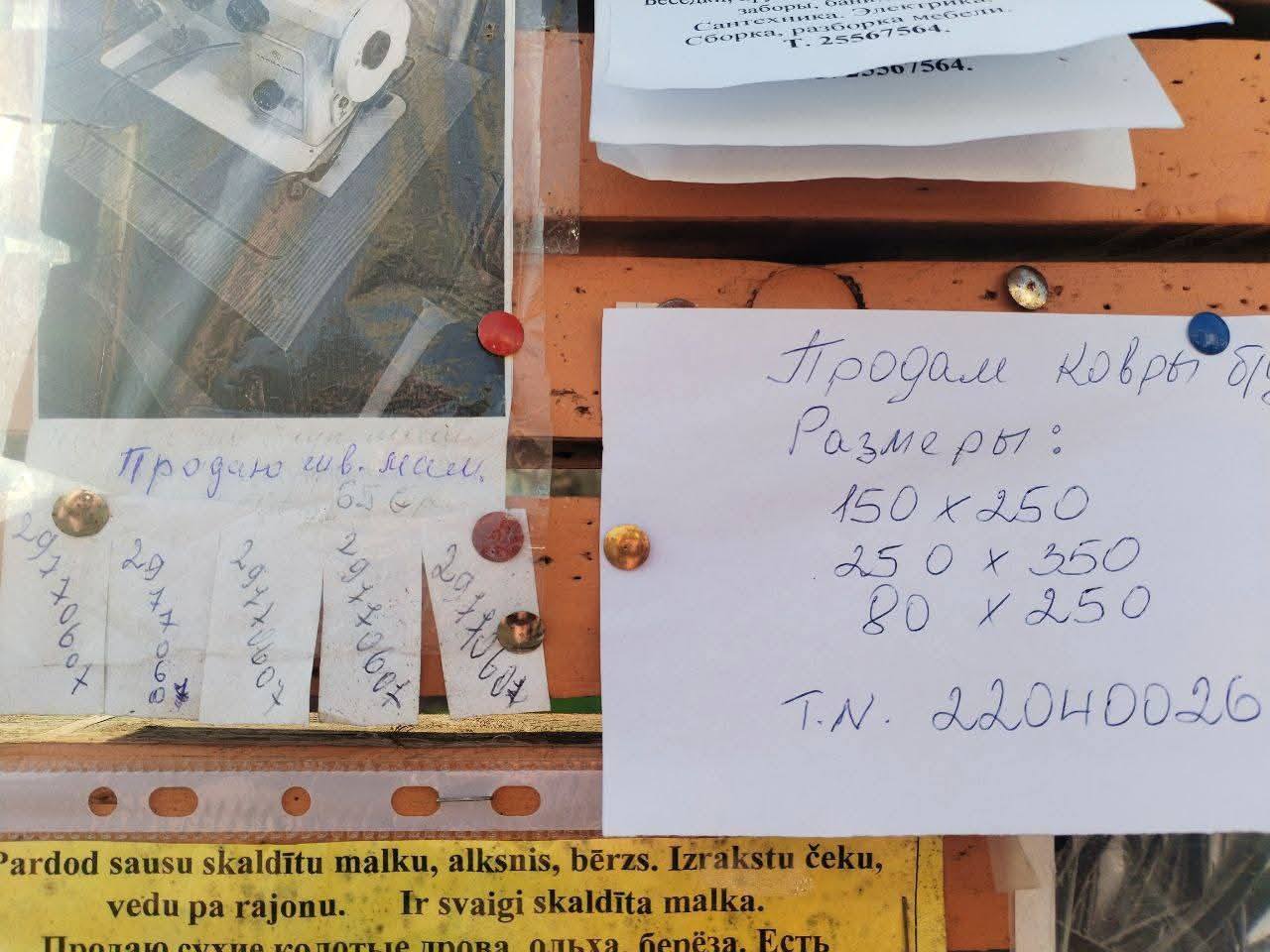
Bulletin board. There are several of these in the town. Photo by the author.
Ludza was generally an industrial town: “Metalist,” “Commutator,” lemonade and sausage workshops, a meat processing plant, a bakery, a dairy plant, a flax plant — nine hectares of territory. Abbreviations come to mind: PMK, KBO, MSO. Agricultural machinery, furniture workshop, knitting, clothing tailoring shop. This is not nostalgia for the Soviet Union — it’s nostalgia for childhood.
“I believe war is unavoidable, but I always want to believe in miracles. Besides war, I’m scared of the possibility of land expropriation for military needs. In case of an attack, I don’t plan to do anything and won’t run away — this is my home.” 45 years old, Latgalian.
“Mom is a Soviet person”
She is thirty-nine years old. She graduated from a Russian school but doesn’t consider herself Russian. A citizen of Latvia, a Ludza resident, a native of the country. A Latvian, as she says, to the bone. “Despite the fact that my native language is Russian, I speak Latvian fluently and without an accent, and I know Latgalian.”
She ironically notes that she is a white crow against the backdrop of sentiments in both the city and her family. “Thank God my husband supports me. Mom is a Soviet person. And I’m a fan of the state, a fan of the country, symbols, holidays, and so on. One of those patriots who cry during the national anthem.”
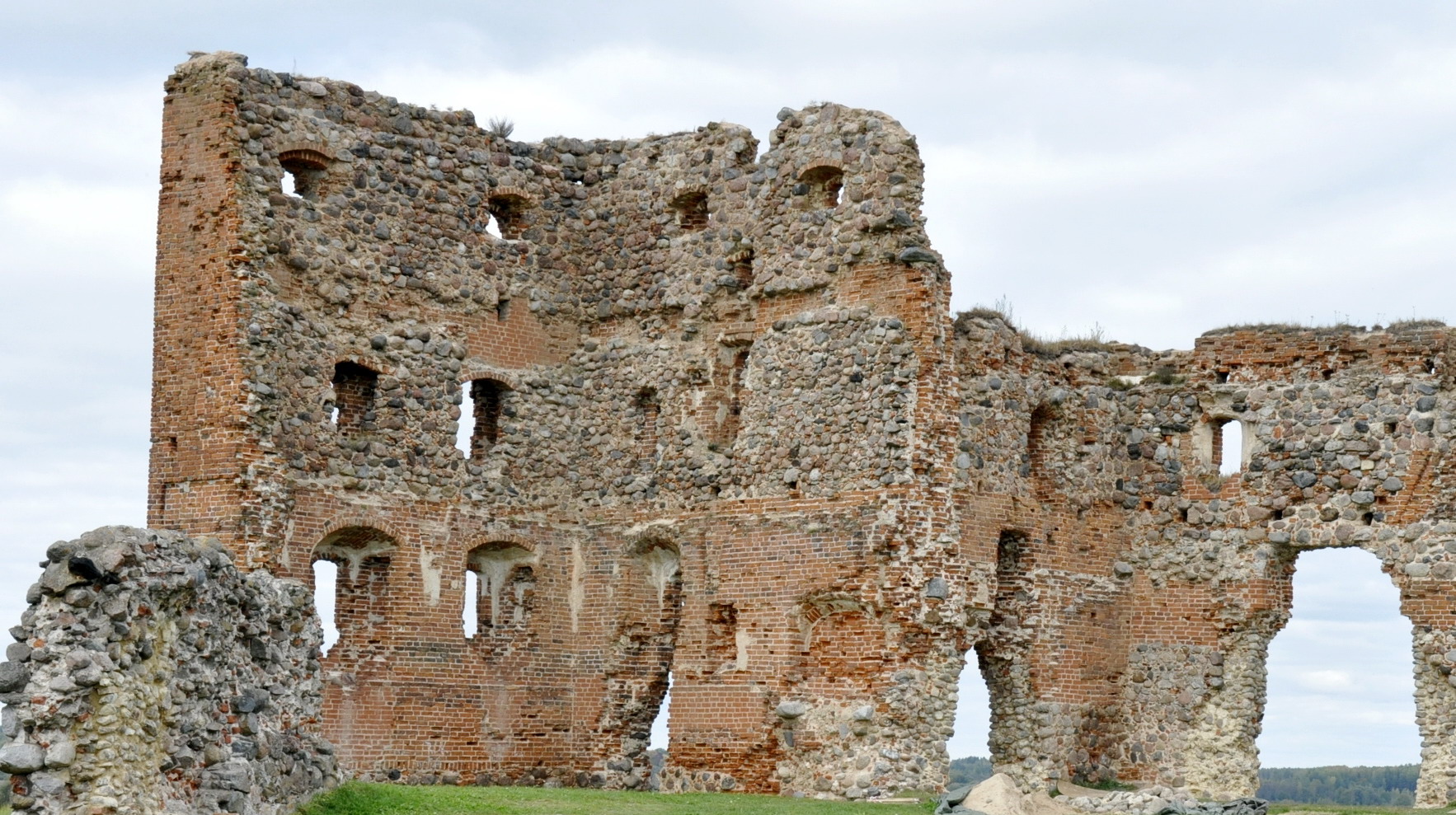
Ruins of the Ludza medieval castle.
In February twenty-two, she was packing her bags. “We just finished the renovation, I was walking around and stroking the walls. I believe we are next, I believe in imperial ambitions. I hate the neighboring state.”
She talks about her terrible and tragic experience with Russia: “Even before the war, during COVID, in St. Petersburg, black realtors killed my grandmother. We faced the total corruption of the local police and prosecutor’s office.”
She tries to explain her current state: “Once, a friend from Odessa sent me a picture: a room on fire, in the middle sits a little dog with bulging eyes drinking coffee. You understand that something terrible is about to happen, but you’re so paralyzed that you do nothing.”
“If in twenty-two I was ready to run away, now I’m trying to hope for the best. I’m still scared. For my little daughter. For my elderly mother. For the pets. I’m scared. I’m tired of being afraid,” she concludes.
From Sausages to the Grave
I watched an interview with demographer Alexey Raksha. Raksha is convinced that the likelihood of the start of World War III today is the highest in human history. According to him, Russia will definitely be one of the participants.
I walk past the clinic. Right across the street is a kiosk selling sausages, one of those stalls on chicken legs. It seems like just a kiosk. To the right, less than fifty meters away, is the morgue. This is how we live: just a couple of steps from sausages to the grave.
Latgales is the main street running through the entire town. An Orthodox church, nearby — a memorial to partisans. Everything looks quite harmonious. Right here is the oldest surviving wooden synagogue in the Baltics, a Lutheran church, and a Catholic temple.
“No, I’m not scared. And no, I don’t believe that Russia will attack. I watch in amazement as trucks carry concrete slabs to the border. It reminds me of the Maginot Line — just as useless. But money needs to be spent. What will I do? Live. Sometimes I think about stocking up on food, charging batteries, buying matches. Basically, this is a big PR campaign to cover up a massive outflow of funds from the country. The second series after COVID.” 44 years old, Russian.
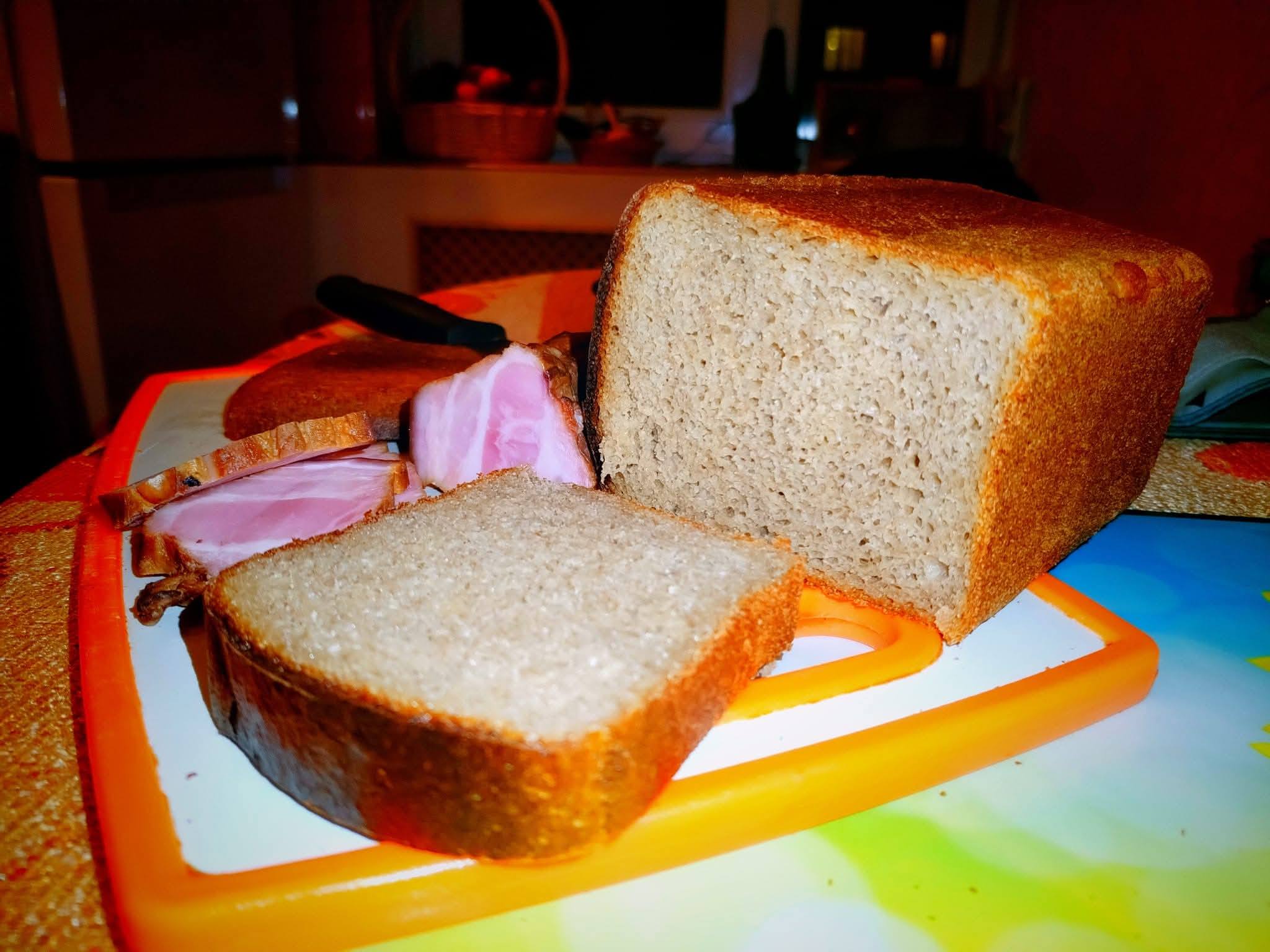
Taste of childhood. Photo by the author.
“We are stronger than ever”
Do you remember the street water fountains on almost every corner? In childhood. In summer, during the holidays, you’d run around playing cops and robbers, play football, and get exhausted playing hide and seek — wet, red, and out of breath — you’d rush to such a fountain. You’d press your lips to the tap and drink cold, often icy water. They are no more.
However, the tradition of bulletin boards — special stands where information about events and private announcements is posted in Ludza has survived. “Urgent! Cultivator for sale. With wheels.” Announcements about firewood, funeral services, and logs — chopping, selling, delivery — prevail.
“At the moment, the threat of invasion is unlikely. Russia currently has no free resources. If the option of capturing Ukraine in two days had been realized, we would definitely be next. I think in the case of an invasion, the border zone would suffer the least — there’s nothing to bomb here, there are almost no strategic targets. The front line could pass somewhere near Jekabpils. I serve in the National Armed Forces of Latvia, I understand our capabilities, the number of allies, and possible scenarios. We are stronger than ever.” 45 years old, Latvian.
It’s Safer to Remain Silent
Most people are willing to talk about a possible Russian invasion only anonymously. There is a fear of saying something “wrong” and facing problems for it. Moreover, not everyone can even explain what exactly these problems might be. It’s always safer to remain silent.
If you stay silent — nothing will happen for sure. If you say — no matter what — it’s already unclear how it will all turn out. Uncertainty scares a person more than anything.
This fear is not only of possible punishment from the state. It’s a fear of the neighbor in the stairwell, who may have a completely different opinion. And you have to live with him. You’ve lived side by side for so many years, got along. And how now?
Now, when you meet, you don’t look into each other’s eyes, pretend you’re in a hurry, don’t greet each other, grab your phone as if it’s urgently ringing? So many years next to each other — and how to erase all of this?
What I love about Ludza is that on weekdays after three, fresh bread is still delivered to the shops. A brick and a loaf. I’m not very interested in white bread, but black bread — very much. A fresh brick is the most powerful flashback. I’m not buying the taste of bread. I’m buying the taste of childhood.
Denis BARTETSKY.



Leave a comment