

January for many of us begins with certain health-related intentions. However, motivation to realize these intentions over the long term often wanes in the first few months of the year.
“A good way to maintain active interest is to create a health calendar!” Why this is so important and what to include in this list is explained by internist at Veselības centru apvienība, head of the Aura Premium day hospital Inga Orleane, and head of Centrāla laboratorija Jana Osite.
“By planning important health activities monthly – physical activity, prevention, doctor visits – it’s easier to stay focused on health-related needs. A well-structured annual calendar serves as both a guide and a reference point, allowing not only to record what has been done but also to understand what else needs to be done for one’s health,” emphasizes Inga Orleane and provides valuable recommendations.
The Main Condition – Planning
Based on her consultations with patients of different generations, the doctor concludes that a major issue is time and event planning. “Often, it is young people who come with complaints of headaches and fatigue. Upon examination, it turns out that there are no serious health problems; however, it must be noted that there is an abnormal daily routine and an incorrect schedule of physical activity. For example, if a person does nothing for themselves during the workweek but goes all out on the weekends – hiking, running, skiing – it’s no surprise that they feel completely drained of strength and energy on Monday morning.
“We need to start with the minimum, with proper planning, so that a small amount of physical activity is included in each day. Additionally, it should be anticipated that this volume will be maintained or increased throughout the year. For example, allocate at least two working days each week for light physical activity and one for serious activity on the weekend, leaving a rest day before the new workweek,” the doctor urges, adding that maintaining health requires intentions such as quality sleep of sufficient duration, which means sleeping at least seven hours a night at least five times a week.
“The principles of diet should also be included in the annual health plan. Choose a menu that meets the health-related needs of each individual, such as the Mediterranean diet. It’s not difficult to plan for fish to be on the table once a week, to choose lean meat, preferably poultry, and to ensure that green salads are an integral part of the diet. This will generally allow for the weekly intake of all necessary nutrients for the body. Additionally, the menu should correspond to physical activity. More calories should be consumed before exercise, and after – foods that compensate for lost energy. And, of course, drink more water.”
Prevention – Care That Pays Off
It is well known that prevention is the cornerstone of health; however, not everyone has the motivation to engage in it in a timely manner. The doctor advises: “Adults of any age are recommended to have tests done at least once a year – even if there are no complaints. If it is important to monitor the dynamics of indicators, they can be included in the annual plan, marking specific months.
Visiting doctors (unless an acute situation arises) can also be planned in advance. There are two options – to undergo a comprehensive health check or check-up during vacation or to plan visits to specific specialists throughout the year. Visiting doctors, of course, depends on health status. For example, if thyroid function needs to be monitored every three years and that year has arrived, the check should be planned at the beginning of the year.
Women should definitely consider which month to go for their annual gynecological consultation and, following the government’s call, to have mammograms and cervical cancer screenings.
Men should visit a urologist for preventive purposes to monitor prostate health. Additionally, it should be noted that young men often face prostatitis – a condition that can be caused by frequent partner changes. This disease can be mild and initially unnoticed, so a visit to a urologist in such cases is very beneficial.”
The doctor recommends that both women and men who lead an active sex life also plan to take an HIV test.
Heart and vascular health should not be neglected either. After the age of 35, it is essential to check cholesterol levels in the blood annually. Even if these indicators are good every year, once reaching 40, a comprehensive cardiological examination, including echocardiography, bicycle ergometry, and Holter monitoring, should be conducted every five years. Men aged 50 to 65 should do this every three years.
In turn, both men and women should start monitoring blood pressure from a young age, as high blood pressure, or hypertension, can lead to other serious health problems.
“It is not at all commendable to claim that you haven’t seen a doctor in 15 years. That’s just irresponsible! There are a number of indicators whose changes initially do not cause any symptoms; however, without monitoring, they can reach levels that require medication. Monitoring health indicators and being confident in them is completely normal, and having blood tests done once a year is a must!” emphasizes the internist.
Tests – The Easiest Way to Check Health
“Regular blood tests allow for timely detection of changes in health indicators even before symptoms appear,” adds doctor Inga Orleane, head of Centrālā laboratorija, doctor Jana Osite. “It’s worth planning, for example, a general health check at the beginning of the year, which includes a complete blood count, tests for cholesterol, glucose, ferritin, or iron reserves, thyroid hormone, and other tests.” To facilitate health monitoring, the laboratory offers ready-made test packages tailored to lifestyle and individual needs, such as a sports health screening, an office worker package, a vitamin and mineral package, or a vegetarian and vegan package.
“This approach helps avoid chaotic testing and allows for targeted health monitoring,” emphasizes Jana Osite. “Moreover, regular monitoring of laboratory indicators is important not only for prevention but also for considering lifestyle changes. It helps determine how health improves after physical activity and adjustments to diet or sleep patterns.”
Vaccination – An Important Entry in the Calendar
Vaccination is one of the most effective preventive measures. “You should keep your vaccination passport handy and check it from time to time to avoid missing vaccinations or revaccinations, such as for tick-borne encephalitis. Coming to your senses at the end of May, a couple of days before a planned retreat in nature, when you urgently need to get vaccinated against tick-borne encephalitis, is not the best option. That’s not how it works! It should be noted that there are vaccines whose doses need to be administered in parts, so there will be a first, second, and possibly a third shot. Different vaccines within the same month are also not ideal: vaccination places an additional burden on the immune system, so it would be wise to allow it to produce antibodies after each vaccination without stress for the body,” explains Inga Orleane and reminds about vaccination against diphtheria and tetanus (especially if gardening work is planned, where there is a risk of injury and infection).
“Do not neglect viral infections – flu and coronavirus. We know that flu can cause complications, and those who have recovered from coronavirus may experience long-term, including neurological, consequences. Vaccination against these viral infections should be included in the annual health calendar. For example, the flu shot at the end of October, followed by the coronavirus vaccine.”
Travel-Related Health Plan
“When purchasing plane tickets and booking hotels for the next year, you should write down everything that needs to be done beforehand in the calendar. If you plan to travel to exotic countries, make sure to get the necessary vaccinations, such as for yellow fever. If visiting a malaria-endemic area, anti-malarial medications should be taken. Vaccination against hepatitis A and B is recommended even if you are traveling within Europe; moreover, hepatitis B vaccination only needs to be done once in a lifetime,” the doctor points out and emphasizes that preparation for hikes and trips that involve significant physical exertion is not only about training but also timely health monitoring, which should be included in the calendar several months before the event.
To the Family Doctor – Even If You Feel Healthy!
At least once a year, an adult should consult a family doctor. “The family doctor will determine what examinations are necessary according to the patient’s age and needs and will issue referrals. For example, an abdominal ultrasound must be done every five years – even if there are no complaints. In turn, tests can show which vitamins or minerals are lacking. Such entries should also be made in the schedule, rather than chaotically or taking dietary supplements several times.
In this regard, a consultation with a pharmacist can be very helpful, as various mineral complexes designed for different purposes have similar compositions, and if taken all at once, substances can enter the body in excessive amounts. Even such a simple action as taking dietary supplements should be justified and planned,” emphasizes Inga Orleane and wishes good luck in creating a calendar that will serve as a good assistant for leading an active and healthy year and help avoid unpleasant surprises and stress for health.
What Intentions Do We Most Often Set
At the end of the year, the Mēness aptieka association, in collaboration with the research agency Norstat, conducted a survey*, clarifying what health-related intentions the residents of Latvia have set for themselves this year. Most often, respondents want to reduce stress and spend more time resting – this was indicated by 37%. More than a third of residents plan to take better care of quality sleep, adhering to a sleep schedule that includes at least seven hours of rest per day. Additionally, 32% committed to engaging in moderate physical activity for at least 150 minutes a week.
Almost a third, or 28%, of respondents planned to undergo preventive checks and tests at least once a year for health care purposes. This intention is more frequently confirmed by respondents aged 60 to 74 (34%), and less so by those in the age category of 30 to 49 (23%).
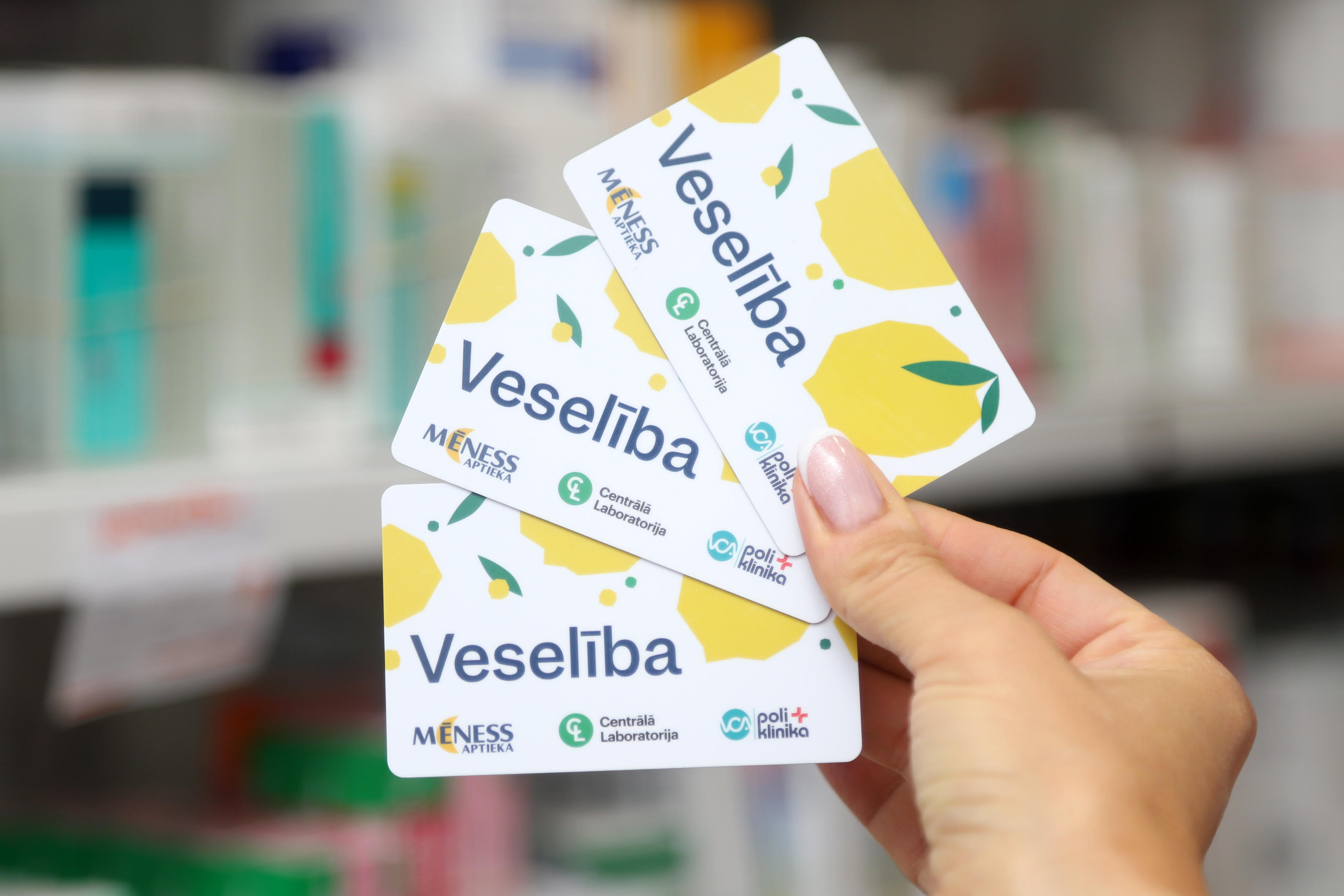
The VESELĪBA card allows you to accumulate points and use them for doctor visits, tests, and purchases at the pharmacy. This loyalty card enables you to earn points and use them at VCA clinics, Centrālā laboratorija, and Mēness aptiekа, in over 330 locations throughout Latvia! Head to the nearest Mēness aptiekа, VCA clinic, or Centrālā laboratorija, fill out the application, and receive the VESELĪBA card for free.











Leave a comment