
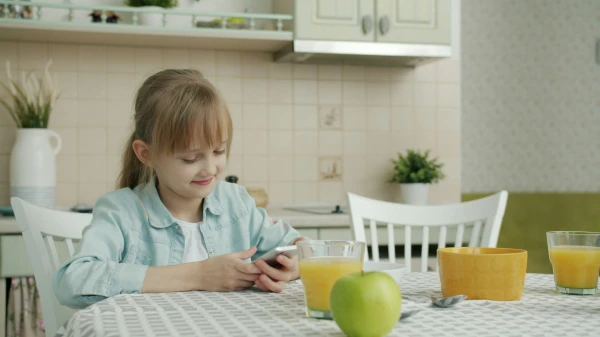
At the end of November, most Members of the European Parliament supported a report calling on EU countries to limit access to social networks for children and teenagers under 16 due to threats to their mental health. Australia has gone even further — there, access to social networks for children under 16 is banned at the legislative level.
Should Latvia follow Australia's example, and how harmful are social networks for children? This was investigated by the portal TV3.lv, which contacted the Centre for the Protection of Children's Rights.
The problem also concerns Latvia
The director of the Department for the Promotion of Child Welfare at the Centre for the Protection of Children's Rights, Ako Karlis Cekulis, pointed out that the issue of social media use by children and teenagers in Latvia is very relevant:
"Every year, together with Drošsinternets.lv, we receive more reports of violations of children's rights online. This happens both in educational institutions and outside of them," Cekulis said in a phone interview.
He emphasizes that the problem is global. However, in Latvia, the discussion is still at the level of individual specialists. According to TV3.lv, the Ministry of Justice and the Ministry of Welfare are not yet discussing the issue of possibly blocking social networks for children at a political level. In Estonia, however, this topic has already reached parliament — but the authorities decided to abandon the ban.
What does the Centre for the Protection of Children's Rights think?
Cekulis believes that the European Union's requirement for digital platforms to be responsible for compliance with the law is the right direction. He acknowledges that the current system for verifying the age of social media users is formal and ineffective. For example, around the world, 85% of four-year-olds use YouTube daily, despite the ban on users under 13.
Cekulis hopes for the implementation of a digital "identity wallet" in the EU, which would store all identity documents. This, he says, could effectively limit children's access to social networks and prevent access to pornography.
Children in kindergartens are already watching porn
Cekulis reported that there are already known cases in Latvia where preschool children gained access to pornographic materials online and later reproduced what they saw in kindergarten.
"Watching porn affects children's behavior and psyche, their understanding of boundaries, shaping an age-inappropriate perception of sexual relationships," the expert warns.
He also notes that social networks like TikTok and YouTube offer a vast amount of content, and their algorithms are becoming increasingly aggressive. For children aged 8–9, this can cause depression, anxiety, and lead to social isolation.
But a complete ban is not the solution
Cekulis is categorically against banning social networks for children. He emphasizes that social media has important social value — youth learns to communicate, participates in interest groups, and develops.
"Complete isolation from the digital environment is not a solution. What will we do with a child who first enters social networks at 16?"
He adds that Australia is not the best example. At a recent international meeting on child safety, Australian experts themselves expressed concern about the possible consequences of a ban — including for the child's psyche.
"Restricting a child's access to devices is like amputation — as if another hand is being cut off," Cekulis says.
Moreover, banning social networks does not eliminate access to other online platforms, such as video games, where children also actively communicate — and often encounter aggression.
"It is important not to restrict but to educate," he is convinced. According to Cekulis, laws should not be made without involving children and teenagers themselves — they need to be included in the discussion.
What should Latvia do?
Cekulis believes that the focus should be on the responsibility of the platforms themselves and parents. Policy should be oriented towards prevention and education, including a complete ban on access to pornographic content for children under 18.
A special role is assigned to parents:
"Adults often spend more time on social media than children do, yet they criticize them. Parents should explain what media literacy is, critical thinking, and what dangers may exist online."
He recommends:
- talking to children about their feelings in the digital environment,
- being interested in what games they play, who they communicate with,
- and starting from kindergarten, teaching children internet safety in schools.
Where to seek help?
If you lack knowledge about safe social media use, Cekulis advises contacting:
- the helpline 112,
- or the portal Drošsinternets.lv.







Leave a comment