The Saeima's Commission on Mandates, Ethics, and Statements will consider the initiative from residents calling for the reconstruction of the Liepaja highway into a four-lane road on Wednesday, January 14, according to the commission's agenda, LETA reports.
The commission meeting will begin at 12:00. A representative from the Ministry of Transport and a representative from the state enterprise "Latvijas Valsts ceļi" (LVC) have been invited.
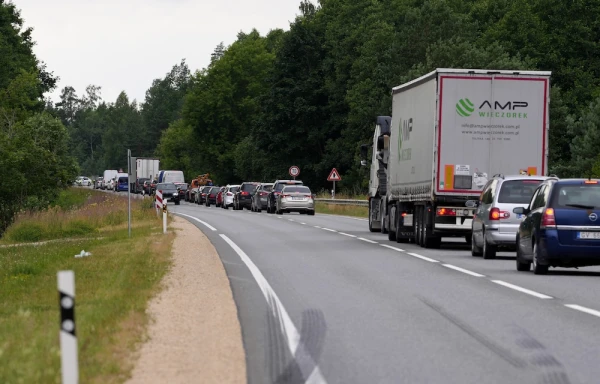
The initiative is represented by Gita Osīte. She notes that she wants to achieve safe traffic on the heavily loaded Liepaja highway, which sees a large number of freight and passenger vehicles, as well as tractors, moving daily.
"This would be a large-scale project of national significance, so I urge to bring it to the Saeima level to politically negotiate the sources and mechanisms for financing such a project," Osīte stated.
As previously reported, several serious traffic accidents occurred on the Liepaja highway at the end of June last year, prompting LVC to order a road safety audit on the Riga–Liepaja (A9) highway from the Road Traffic Safety Directorate (CSDD).
Analyzing the audit results, LVC noted that if traffic flow continues to grow at the same pace as in the last nine years, certain sections of the Liepaja highway will need to be reconstructed in the future to have at least two lanes in each direction. The configuration of certain intersections is not optimal, and reconstruction is necessary to improve the situation.
The audit also concluded that the volume of grass and shrub cutting along the roads is insufficient—the grass and shrubs growing on the roadside, in the median strip, and beyond affect the visibility of the road over longer stretches. Additionally, locations were identified where shrub clearing is necessary.
At the same time, it was established that the condition of the road surface and markings generally meets quality and functionality requirements. The placement and condition of traffic signs are satisfactory, and the information they provide is perceived by drivers; however, some signs and horizontal markings show signs of wear.