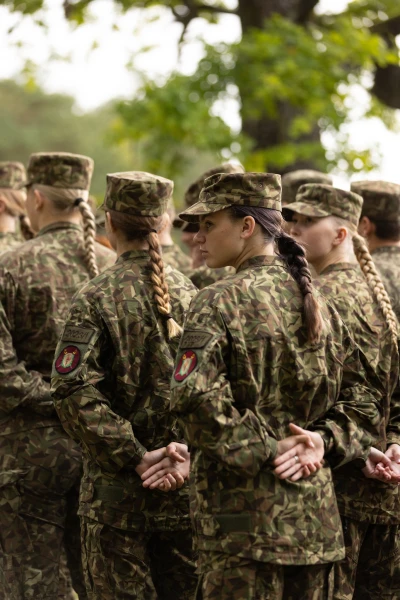
The title of the agenda item in the Cabinet of Ministers was quite neutral — "On the establishment of a vocational secondary education institution." Here, the author thought, a new college will appear in Latvia. I wonder what specialty?
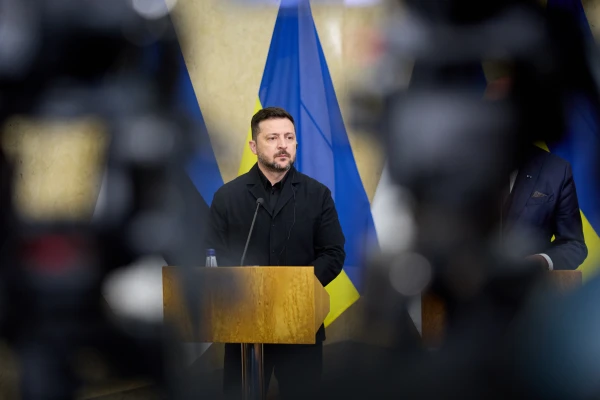
However, everything became clear immediately from the name of the speaker — Minister of Defense Andris Spruds ("Progressives").
"Creating a New Generation of Latvia"
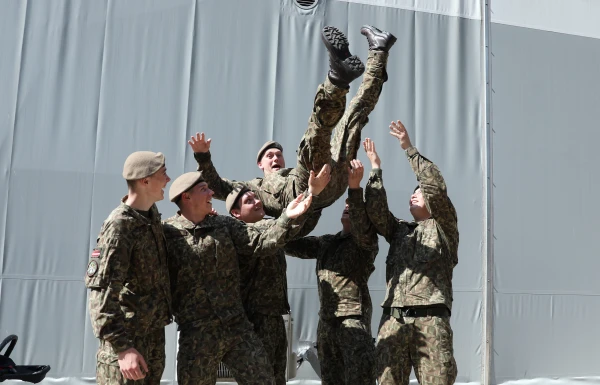
According to the document presented by the head of the defense department, "it is important to support the system of long-term education in the military field, the goal of which is to prepare Latvian youth to strengthen defense capabilities and also for professional military service." Graduates will become leaders who will work in teams, under increased stress, make the right decisions in non-standard situations, and complete tasks...
Among the qualities necessary for a future officer, the Ministry of Defense document lists: wisdom, politeness, moderation, composure, fairness, and tolerance. It is necessary to "develop the overall physical fitness of young men and the ability to withstand increased physical loads." Upon receiving their certificates, young people will be able to enroll in the National Defense Academy without exams or be admitted to the National Armed Forces, Zemessardze, or the reserve.
The new educational institution will be named after a famous Latvian military leader, after whom the embankment near the Central Market in Riga is also named. Ironically, he served most of his military career — 18 years — in the Russian army!
Fought the Japanese, Served the Ukrainian Hetman
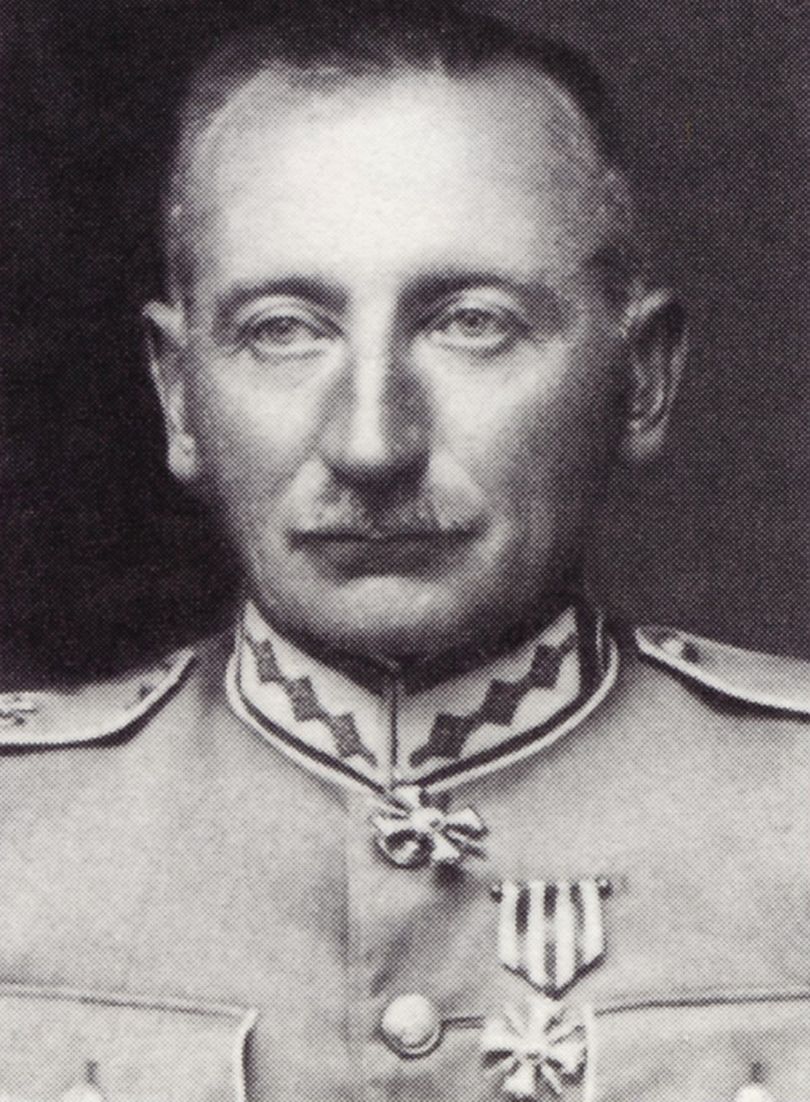
General Radzin — servant to the tsar, father to the soldiers. Photo from the archive.
Peter Radzin (1880-1930) was born in the Lugaž parish, in the family of a farm owner in Jaunvindedezes. A Lutheran. He received home education. In 1898, he entered the Russian army. He began his military career in the 112th Infantry Ural Regiment, which was then stationed in Kovno.
In 1899, he entered the Vilnius Infantry Junker School, graduating in 1901. He was commissioned as a second lieutenant in the 24th Infantry Simbirsk Regiment, which was stationed in the Łomża County. From 1904 to 1905, he participated in the Russo-Japanese War. He was the commander of a company in the 10th Siberian Rifle Regiment. On September 9, 1905, he was promoted to lieutenant.
In 1907, he entered the Imperial Military Academy, graduating in 1910 with a first-class degree. On September 9, 1909, he was promoted to staff captain. He then received the rank of captain. He served as a company commander in the 32nd Infantry Kremenchug Regiment (November 3, 1910 — November 3, 1912), which was stationed in Warsaw. On November 26, 1912, he was appointed senior aide-de-camp to the staff of the 38th Infantry Division. He was later attached to aviation units.
From 1914, he participated in military operations during World War I. On October 6, 1915, he was appointed deputy chief of staff of the 8th Siberian Rifle Division. On December 6, he was promoted to lieutenant colonel. In February 1916, he was appointed deputy chief of staff of the 61st Infantry Division, where he served until the end of the war.
In March 1918, he joined the Ukrainian army of Hetman Skoropadsky, where he was the head of the Organization and Training Department of the General Staff. He fought until the fall of the hetman in 1918. He then joined the army of the Ukrainian People's Republic, serving as assistant chief of the General Staff.
In 1919, he returned to Latvia. On October 29, 1919, he was appointed chief of the General Staff of the Latvian army. As chief of staff, he planned military operations against the Bermondt-Avalov troops and offensives against the Red Army in Latgale. In 1920, he was awarded the rank of general of the Latvian Republic.
In 1928, he left the position of commander of the Latvian army. He was the author of several books on history and military affairs, the most famous work being "Latvijas brīvības karš" ("The War for the Freedom of Latvia").
Elite Institution with Wake-Up at 6:30
However, let’s return to the future generals. It is expected that the circle of students in the new special school will be quite narrow — 24 people per course, with a maximum of 4 courses (one head and 3-4 instructors per course), which implies a strict entrance competition — psychological tests and passing sports standards.
Only citizens of Latvia who have completed basic education (9 grades) will be accepted. The volume of the material taught is impressive — 5724 academic hours, of which 45% are general education subjects and 55% are professional disciplines and modules. The school will place special emphasis on exact sciences (mathematics, physics, robotics) and physical training.
664 hours will be dedicated to qualification practice, 220 to field service skills, 208 to handling weapons and shooting, 138 to drill training, and 112 to the basics of military leadership. Students will be provided with dormitory accommodation, four meals a day, uniforms, and other material and technical equipment. All at the expense of the state!
The Cabinet of Ministers of the Republic of Latvia even considered the planned organization of the school day. Cadets will wake up at 6:30 AM, have 20 minutes of morning gymnastics, morning hygiene, breakfast, daily medical check-ups, and from 8:15 AM — roll call for classes, with breaks for lunch and afternoon tea, followed by self-study and free time after dinner at 7 PM until evening roll call at 10:10 PM and lights out at 10:30 PM. It is expected that from 4 PM on Friday to 4 PM on Sunday, cadets will be able to go home on leave.
How Much Does It Cost?
The cadet corps will be staffed starting in 2026 with 44 people, and after 3 years, the number of staff will grow to 53. One of the effects will be an increase in military presence in the Eastern border area, as the educational institution is planned to be located in a secondary school in the village of Malta in the Rezekne region, which was chosen through a price survey — "thus saving state budget funds and not building new infrastructure." "Nearby, there is land for conducting tactical exercises," and battalions of Zemessardze are stationed — the 32nd in Rezekne, the 35th in Preili, and the 36th in Luznava.
Despite the measures of economy, it cannot be said that military training will be free — in 2026, 2,688,866 euros will be spent on the new institution, and in 2027 — 3,261,236 euros. A contract is planned to be signed with the Rezekne municipality, which will take on part of the funding for teachers. It is likely that some teachers will also come from the "civilian" secondary school, which, by the way, has been proposed to continue functioning together in the same premises! Another detail is that there will be an element of democracy at the Radzin school, namely a council involving teachers, parents, and the cadets themselves.
Meanwhile, at the other end of the republic, a similar school named after Colonel Oskars Kalpaks has been operating for several years. It is located in the premises of the Kandava Agricultural Technical School. Obviously, for the aging state, military matters are becoming increasingly important compared to agriculture...