
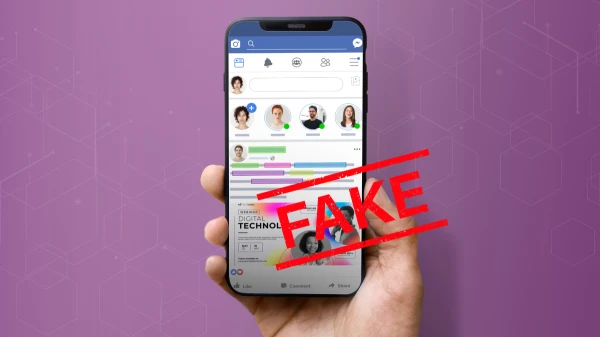
The population of Latvia uses social networks for socio-political information much more often than the residents of the European Union as a whole.
Where do the logs come from?
This is evidenced by a recent Eurobarometer study: 64% of Latvians (58% of Europeans) follow the news on Facebook, 37% of our compatriots (31% of Europeans) use TikTok for this purpose, and 22% use Telegram (13%). However, as experts have found out, it is not that simple...
As reported at a meeting of the Saeima Human Rights and Public Affairs Commission by leading researcher of the Providus public policy center Iveta Kažoka, social networks, especially in Russian, contain "hate speech, violence, misinformation." Artificial intelligence has learned to make "deep fakes"!
What is true, is true — by the way, this also applies to the highest officials of the state. Your author, in particular, had the surprise of seeing on Facebook a supposed Evika Silina, who promised all residents of the country a payout of some thousands of euros on television. Moreover, there was a link to a quite respectable media outlet. This is how far scammers have gone, nothing is sacred.
Providus experimentally established that, after complaints to the respective social networks, support services do not respond. For example, a video still hangs on TikTok where a fake Volodymyr Zelensky proclaims "Glory to Russia!" Thus "creating the impression that Ukraine is capitulating," the expert emphasized.
Life hack: how to kill an illegal immigrant
"A post on Facebook detailed a description of the 'hunt for illegal immigrants': mines, traps with sharpened stakes, infections with feces, the idea of selling tickets to torture people," revealed the dark side of the social network Ms. Kažoka.
Despite the fact that Meta has been informed twice that these calls directly fall under the definitions of Articles 78-3 (incitement to hatred with violence) and 79-6 (calls for terrorism) of the Criminal Code, the American social network has twice reported: "no violations found."
Meanwhile, the EU Digital Services Act "allows Latvian institutions to prevent/remove actions on social media platforms." Just as links to illegal gambling and child pornography are closed, this practice needs to be extended to incitement to hatred and illegal election campaigning. The latter, in particular, includes the use of bots — automatically acting fake profiles, as well as videos generated by artificial intelligence.
By the way, bots have recently become so brazen that they use cryptocurrency to buy political advertising on social media. So if you suddenly see a popular figure on your phone saying or doing something strange, uncharacteristic for them — feel free to report it to the National Electronic Media Council, the Consumer Rights Protection Center, or the Data State Inspectorate. In total, Providus counted 15 structures in the country that are supposedly supposed to monitor content, but for some reason are inactive...











Leave a comment