
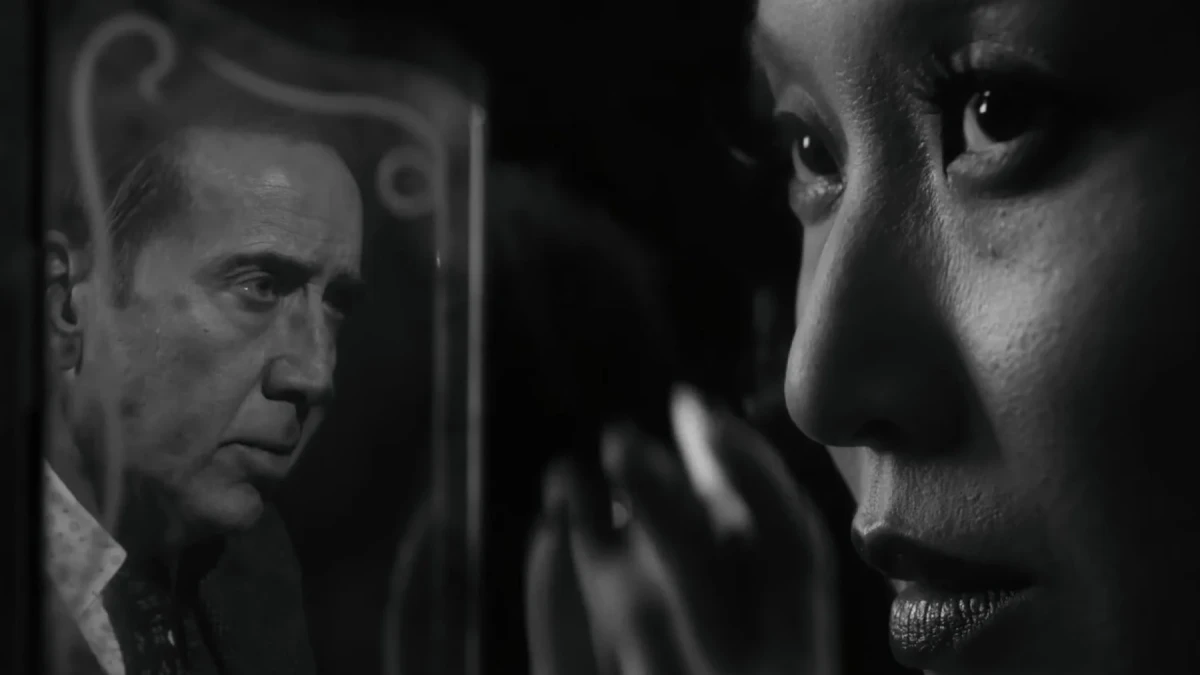
The main character drinks heavily and weaves his web to the sounds of jazz.
People enjoy the eight-episode 'Spider-Noir,' in which Nicolas Cage plays a private detective and, by extension, a dark version of Spider-Man from the 1930s.
Cultural historian Svyatoslav Ivanov explains how the series differs from classic noir and what its popularity says about contemporary pop culture.
A city resembling New York in the 1930s: people in hats and trench coats shoot at each other, ladies in evening gowns sing jazz, and every now and then, a heavy black-and-white rain begins to fall. Nicolas Cage plays a character akin to Humphrey Bogart's roles — a worn-out private detective named Ben Reilly, mostly engaged in tailing unfaithful wives and lamenting past mistakes, until one day he finds himself embroiled in a complex intrigue involving the city's main crime boss, a femme fatale, and a journalist friend.
The action on screen indeed resembles a typical noir detective story, but with one small nuance: Cage's hero skillfully crawls along walls and ceilings and shoots the strongest web from his wrists. He is aging, creaky, and drinking, but still — Spider-Man.
Detective-superhero Ben Reilly has received both a fateful mutation and a bundle of psychological traumas during World War I. As is often the case in classic noirs, the viewer finds the central character of the series in a less than favorable state of mind. Reilly blames himself for the death of his beloved, drinks heavily, performs his work half-heartedly, and his superhero mask has long been gathering dust in a drawer. The appearance of a femme fatale, a jazz singer from a nightclub (Li Jun Li), at his doorstep prompts him to engage in the investigation of a criminal puzzle. She, in turn, is connected to a crime lord (Brendan Gleeson) — bloodthirsty but philosophically inclined.
They will have to deal with a murky past and a grim present over the course of eight episodes, immersed in contrasting lighting, New York rain, tobacco smoke, and the sounds of saxophones and trumpets. But this is where the similarities with mid-20th-century noirs practically end. Their visual style was colder and more restrained, almost never indulging the viewer with dynamic editing and extravagant angles. Not to mention that films from the 1940s certainly did not come with color versions in case the audience found black-and-white too boring to watch.
The stories in noirs and related detective tales by genre classics Raymond Chandler and Dashiell Hammett were convoluted, full of unsaid things, and difficult to perceive — it seems that for 80 years, no one has figured out what actually happened in 'The Big Sleep' by Howard Hawks. Finally, noir almost always implied insoluble moral dilemmas from which there is no good way out — the world lies in evil, and that’s all.
'Spider-Noir,' however, puts noir aesthetics to the service of comic book entertainment, but not the other way around. With each episode, the existential detective increasingly gives way to reliable superhero action: other mutants with superpowers play significant roles (notably the electric trickster Megawatt, played by the lesser-known actor Andrew Caldwell). The plot only pretends to be convoluted — everything is presented quite accessibly, in the spirit of not Bogart films, but rather superhero comics of the same era.













Leave a comment