A change in color, shape, or size of a mole can be one of the first signs of melanoma – a dangerous type of skin cancer.
Mainly, people over 50 years old are affected. The formation of melanoma can be recognized by a number of changes on the skin, including if a mole changes color, shape, and size, said pathologist Ekaterina Motlukh.
"The danger of melanoma lies in its hidden development and rapid metastasis. The tumor can appear in place of a common nevus – a mole – or on unchanged skin. The main thing is to notice alarming signs in time. Key signs that require immediate medical attention include: changes in shape, color, size; the appearance of daughter formations or hardening nearby; a sudden increase in growth," the doctor said.
"The shape is convex, raised above the skin level – this is best seen in side lighting. Changes include accelerated growth of the formation. The borders are irregular, with 'jagged' edges. Asymmetry means one half of the formation does not resemble the other. The size is greater than 6 millimeters. The color is uneven, with random inclusions of brown, black, gray, pink, and white areas," Motlukh explained.
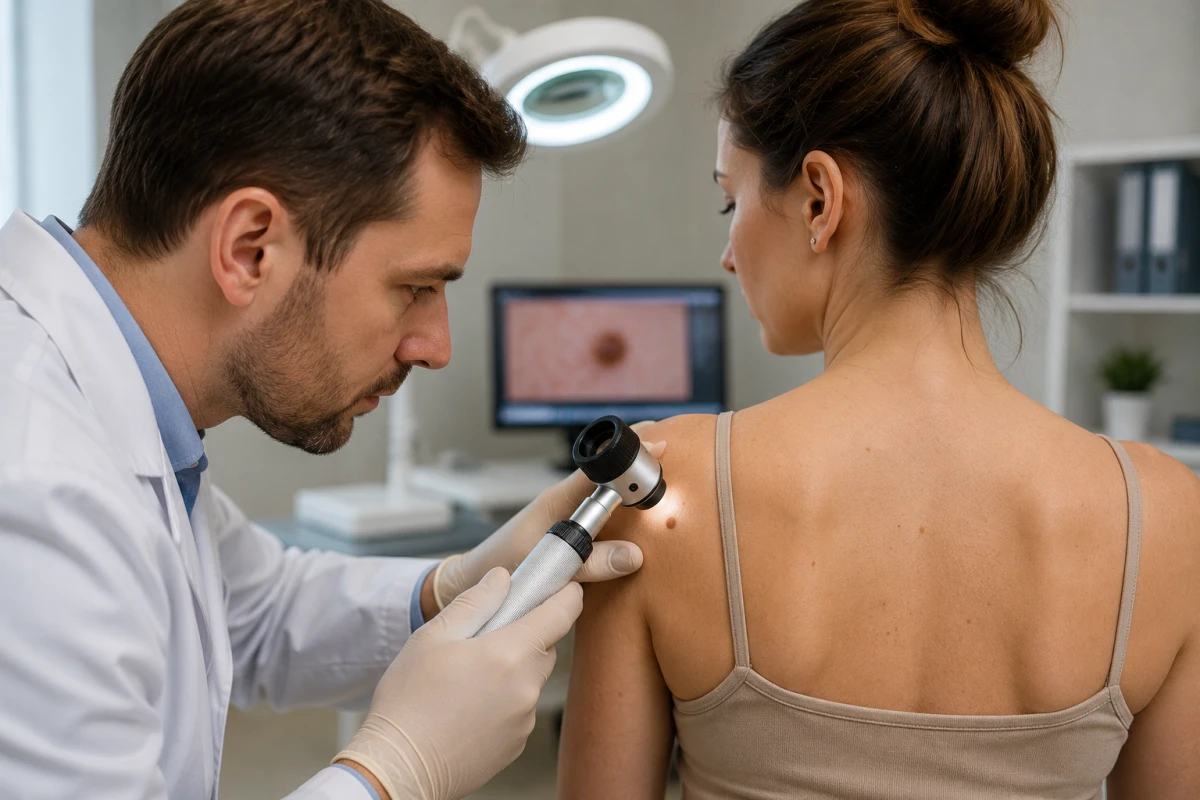
She noted that early self-diagnosis is extremely important, but the final diagnosis is made using dermatoscopy, removal of the formation, and subsequent histological examination.
"If you notice changes in a mole – do not wait. Make an appointment with a dermatologist today. It is better to be sure that everything is fine than to miss the onset of the disease," the interlocutor emphasized.
She added that the main reasons for the increase in melanoma incidence today are excessive tanning, exposure to ultraviolet light, and constant trauma to moles.
"Melanoma is less common than basal cell and squamous cell skin cancers. It occurs equally in men and women. Melanoma develops from melanocytes – cells that produce the pigment melanin, and can affect not only the skin but also mucous membranes and the retina of the eyes," Motlukh said.
Specialists remind that early detection of melanoma significantly increases the chances of successful treatment. In case of any suspicious changes in the skin, doctors advise not to delay a visit to the dermatologist and to avoid excessive exposure to ultraviolet light.