
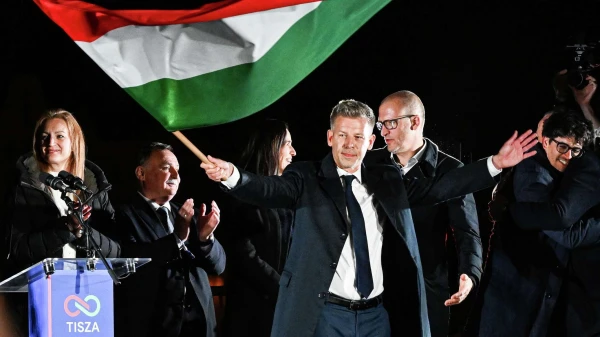
Peter Magyar's victory in the elections in Hungary could mean serious changes in the country's foreign and domestic policy after many years of Viktor Orban's rule. The new politician has already outlined his positions on key issues, including the war in Ukraine and relations with the European Union.
Who is Peter Magyar
Peter Magyar is a lawyer by education, born in 1981. He was previously associated with the ruling party "Fidesz," but later left it, accusing it of corruption, and created his own political force "Tisza."
Over the years, he has held positions in state companies and worked in diplomatic structures in Brussels. His personal life has also been in the spotlight: he was married to former Minister of Justice Judit Varga, who resigned amid a high-profile scandal.
Position on Ukraine and Russia
Unlike Viktor Orban, Magyar directly calls Russia an aggressor and acknowledges Ukraine's right to defend itself. He visited Kyiv in 2024 after a missile strike on the children's hospital "Okhmatdyt" and criticized the previous Hungarian leadership's contacts with Moscow.
Analysts suggest that under the new government, Budapest may lift the blockade on EU financial aid packages to Ukraine and support new sanctions against Russia.
At the same time, Magyar advocates for the restoration of Hungary's pro-Western course but does not rule out pragmatic relations with Moscow. In energy, he supports a gradual abandonment of Russian resources, although he proposes longer timelines than the EU.
Ukraine's EU Membership — A Cautious Approach
Despite the softer rhetoric, Magyar does not support the accelerated accession of Ukraine to the European Union. He also rules out the possibility of supplying weapons to Kyiv and suggests that the membership issue could be put to a referendum in Hungary.
Experts note that such a position may slow down Ukraine's euro-integration process and maintain tension in bilateral relations.
Possible Changes and Risks
Analysts estimate that the new prime minister is unlikely to become an unconditional ally of Ukraine. In the short term, he may act cautiously to maintain voter support, which does not exclude controversial steps.
Nevertheless, the change of power in Hungary is already seen as a factor that could weaken Russia's position in the EU, as Budapest under Orban often blocked key union decisions.
Overall, Magyar's policy may become more balanced; however, significant and rapid changes in relations with Ukraine should not be expected.






Leave a comment