
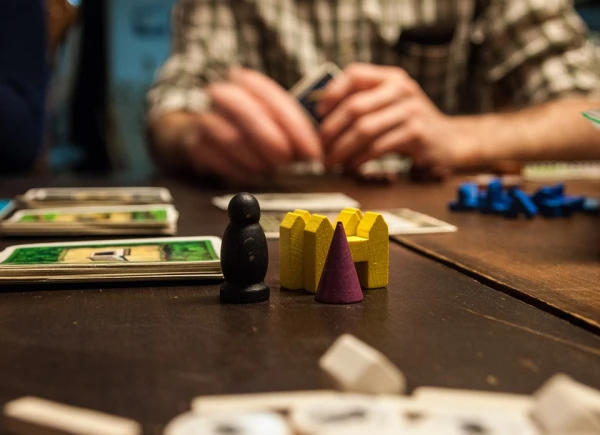
By engaging with their children, parents strengthen their emotional bond.
In the age of gadgets and endless scrolling, live communication becomes especially valuable. This is why board games are once again at the peak of popularity. They bring the family together at one table, teach interaction, and provide genuine emotions. A board game is not just a way to entertain; it is real food for the mind, training logic, attention, and imagination.
For example, classic games like Monopoly teach financial literacy and planning, while logical puzzles and strategies develop analytical thinking. Cooperative games help children work as a team and support each other.
Many parents are looking for an alternative to smartphones and tablets. Board games are the perfect solution. The child is engaged in the process, actively thinks, communicates, and interacts with other participants.
Moreover, by playing together with their children, parents strengthen their emotional bond with them. Joint games create warm family traditions that remain in memory for many years.
A board game is an intellectual workout. During a game, a player:
-
calculates moves in advance;
-
analyzes opponents' actions;
-
makes decisions under uncertainty;
-
learns to quickly adapt to changes.
Strategies, economic simulators, card and cooperative projects develop flexibility of thinking and planning ability. Even simple reaction games help improve decision-making speed.
The modern board game market is incredibly diverse. There are:
-
developmental games for toddlers;
-
family games for fun evenings;
-
strategic games for teenagers;
-
complex hardcore projects for experienced players.














Leave a comment