There used to be a plague cemetery, a sewage dump, and several whale oil factories.
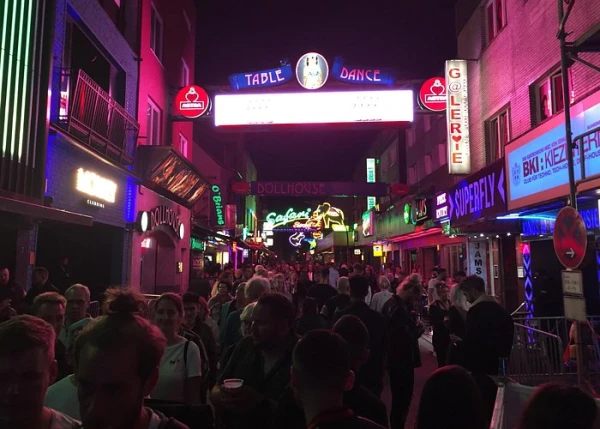
This year, the seedy, toxic, and seductive Reeperbahn celebrates its 400th anniversary. The red lights never go out here, and the scent of cannabis lingers in the air. Raising the level of fun is already a challenge. But it is planned — with historical tours, specially brewed anniversary beer, and numerous events dedicated to art and culture.
According to the organizers, hundreds of events taking place between Millerntor and Große Freiheit will showcase what makes this street so special today. The grand opening will be a large-scale "Reeperbahn Sing-Along Party" at Spielbudenplatz, where more people than ever will sing Udo Lindenberg's song "Reeperbahn" together.
A colorful musical and entertainment program has also been prepared to kick off the anniversary year. The ceremonial tapping of the Reep Royal beer keg will be conducted by Hamburg's mayor, Peter Tschentscher (SPD).
Visually, the anniversary will be marked by a flag exhibition along the Reeperbahn. Tiles created by local artist Anna Henger from the St. Pauli area will adorn the ventilation columns of the Reeperbahn S-Bahn station. A digital photo exhibition titled "400 Faces of St. Pauli" will also be showcased.
At the end of May, the "Hamburg Tug of War Championship" will take place at Heiligengeistfeld. This event is also timed to coincide with the anniversary.
The Reeperbahn is something special, said district mayor Ralph Neubauer. Indeed. Here, a chill tickles the scalp, while heat swells the chest.
The Reeperbahn did not become a symbol of reckless freedom overnight. According to local historian Eva Decker, the first rope makers settled here in 1626, between the then-independent cities of Hamburg and Altona. This marked the beginning of the settlement of the Hamburger Berg area.
At that time, the use of this area was still very limited, Decker said. "There was a plague cemetery, a sewage dump, and several whale oil factories. And, of course, we cannot forget about the Danish neighbor Altona, with which Hamburg was not particularly friendly."
"Thanks to industrialization, which began in the early 19th century, our sparsely built green Hamburger Berg transformed into a densely populated working-class district by the end of the century," Decker said.
"And the road we now know as the Reeperbahn, a path between meadows, pastures, and tree-lined avenues between Hamburg and Altona, has now turned into an entertainment boulevard with an international audience," the historian said.
As explained by museum director Bettina Probst, she, together with the Hamburg History Museum, developed two routes tracing the development of the area from 1616 to 1826 and in the following 200 years. Just in case someone is interested.
<iframe width="560" height="315" src="https://www.youtube.com/embed/OvEw_p3KZKE?si=ugj85HE9IX_DwJwv" title="YouTube video player" frameborder="0" allow="accelerometer; autoplay; clipboard-write; encrypted-media; gyroscope; picture-in-picture; web-share" referrerpolicy="strict-origin-when-cross-origin" allowfullscreen></iframe>