Bioarchaeological methods provide an opportunity to study Katarina's health for the first time.
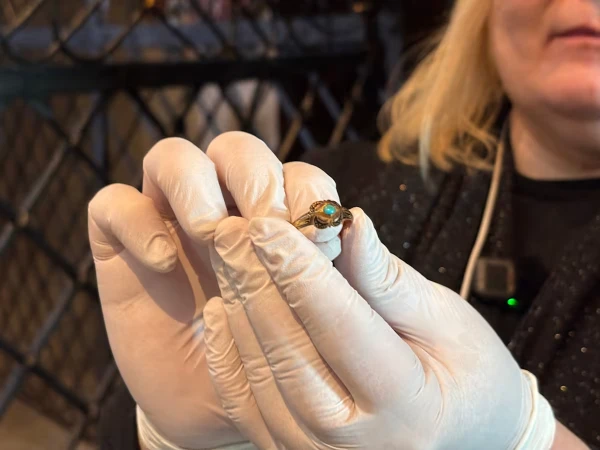
During research at the cathedral in the Finnish city of Turku, a historical discovery was made. A golden ring belonging to Queen Katarina Monsdotter (1550–1612) was found. The discovery is unique on a global scale. It is the only item that can be reliably linked to the queen.
The discovery of the ring came as a surprise to researchers. It had been stored for centuries in an unusual place.
"The golden ring was hidden under a rat's nest. It was stuck on one of the bones of the queen's finger," says bioarchaeology lecturer Ulla Nordfors.
The luxurious ornament is well-preserved. It is a gold ring with turquoise and black enamel decoration. There are no engravings or master marks on it.
"Such rings were luxurious and fashionable among the elite of the 16th century," notes Nordfors.
The researchers' finding changes previous notions about the burial of the queen.
_c_1581.jpg)
When the sarcophagus was last opened in 1867, small scraps of silk were found in the area of the deceased's abdomen. They were considered a sign of embalming. It has now been revealed that the silk scraps are part of another nest that rats built from pieces of Katarina's burial dress.
Other important discoveries have also been made during the research. Samples for DNA analysis were taken from the tombs of Katarina's daughter and Eric XIV, Sigrid Vasa, as well as from an unknown child. The unknown child may be their son Henrik, who died at about three years of age. However, final results will take up to two years.
The golden ring will be displayed at the Vapriikki museum center in Tampere in 2028. The ring will appear at the Turku Cathedral after the completion of the church's major renovation.
"We are glad and happy to receive such a treasure in the collection of the Turku Cathedral museum," says the cathedral's rector Aulikki Mäkinen.
The research group took over a hundred microscopic samples for laboratory studies. Bioarchaeological methods provide an opportunity to study Katarina's health, childhood nutrition, and to obtain reliable information about her appearance and origins for the first time.
Queen Katarina Monsdotter is known in Finnish history as a tragic figure. She rose from the daughter of a peasant to queen, and later endured a mental disorder and the overthrow of her husband, King Eric XIV. Katarina spent her last years in Turku Castle. She was buried in the Turku Cathedral in 1612.