
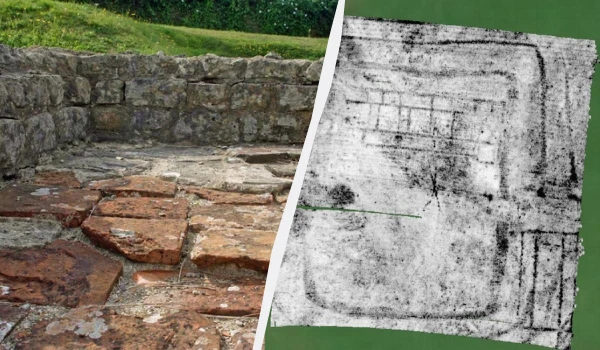
Scientists aim to uncover a wealth of artifacts from the past.
The remains of the largest Roman villa ever found in Wales have been discovered beneath a park area on the southern coast. Archaeologists have dubbed it the "Pompeii of Port Talbot," reports The Independent.
The remains were uncovered during a survey of the pre-industrial heritage of Margam Park, on the outskirts of Port Talbot. At that time, geophysical surveys conducted by Terradat revealed traces of an unexpectedly large complex of Roman villas.
Researchers believe that the villa is "substantial and has a level of preservation that is unparalleled in the region." It is also thought to offer "unprecedented information about the national history of Wales."
"This is an amazing discovery. We always thought we would find something dating to the Romano-British period, but we never dreamed it would be so clearly defined and with such great potential in terms of what it can tell us about the elusive first millennium AD here in South Wales," said project leader Dr. Alex Lenglands, a lecturer and co-director of the Centre for Heritage Research and Teaching (CHART).
The site is located in an ancient park. Therefore, the team expects a high level of preservation: this area has never been used for agriculture and has never been plowed. They hope to find mosaics, paved floors, painted plaster, underfloor heating systems, and even "high-quality sculptures."
"This is a place where one could eat, entertain, and showcase their wealth and power. It was almost certainly visited by dignitaries from across South Wales, if not from Britain, who were aware of it. This could really change our understanding of Roman Britain and certainly of Roman Wales, as well as what was happening here in the late third and fourth centuries," Dr. Lenglands said.
Although many questions remain regarding the use of the building and the reasons for its decline.
The villa is located within an enclosure measuring 43 by 55 meters, which the team believes may be either the remains of a protected settlement from the early Iron Age or may reflect instability in the late Roman world and the need for protection from external aggression from both the east and the west.
There is also evidence of a building in the southeast, which was likely either a large agricultural store or a structure related to the later history of the site, "possibly a meeting hall for post-Roman leaders and their followers."
The initial goal of the project was to revive local interest in the rich history that is already known at this site, where Margam Abbey – a Cistercian monastery – is located.













Leave a comment