He grew up in an elite Soviet environment.
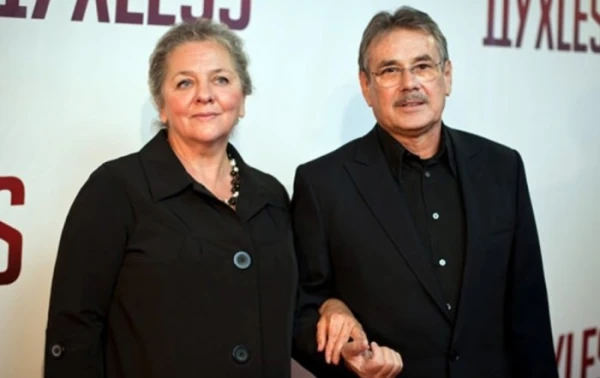
A collection of memoirs titled "Deficit: How They Obtained What Was Impossible to Get in the USSR" has been published by Alpina Publisher — a book in which well-known Russian artists, directors, and actors share personal stories about how they searched for and found the most ordinary things in the USSR — from clothing and food to household appliances and contacts with the necessary specialists. The memoirs of film director Pavel Chukhrai (79), a nominee for the Oscars and Golden Globes, were also published, detailing how the struggle with scarcity in the USSR turned into an art of living.
"Green, smells like sausage" — a riddle from the times of Soviet scarcity. The answer: "the train to Tula from Moscow." People bought sausage and brought it home from the capital. Everything was in short supply! Everyone in our circle had their own butchers. It always looked terrifying: you had to go down to the basement where a big guy was chopping meat like an executioner — heads. Butchers were important people: they were invited to theaters and given tickets. Once, my wife Masha had an acquaintance who was a butcher from the grocery store in our building. One time she invited him to the House of Cinema.
He came with a woman who looked very intellectual, unlike him. She was his wife — a teacher from Gnesinka! Such a contrast, amazing. I remember the scarcity of gasoline and cars. We in the Union of Cinematographers signed up for "Zhiguli" and then waited in line for a year. We would travel to some steppes to get this car, lighting fires to stay awake and not freeze because it was important to get it as early as possible. Often, there could be something wrong with the car, and they would tell you: "No windshield wipers. If you don’t want it, don’t take it." A person would grab the car as it was because there might not be another chance to buy it. There was also no gasoline. Vadik Abdrashitov and I were neighbors and would meet at night on the embankment. We waited for a water truck that could siphon fuel for us — it was not available at gas stations or you had to stand in long lines. We would complain and laugh about these situations, but we adapted.
My childhood friends were kids from cinematic families or neighbors. We lived in the same apartment with a driver from Mosfilm, and I was friends with his son. This really distinguished our group, which has remained to this day. We were not like the children of writers, with whom I started to socialize later. Their childhoods were spent at dachas in Peredelkino or Nikolino Gora. My parents moved to a three-room apartment only when I was fourteen, and until I was six, I lived in a village with my grandmother. Before moving to Moscow, we lived in a dormitory at the Dovzhenko studio in Kyiv, and when we moved to the capital, we were initially not given even a room: we lived with acquaintances, and my father slept at the studio. I was supposed to be in the second grade, but I wasn’t admitted to school because I didn’t have registration; as a result, I simply didn’t attend classes for three months until we finally got a room. But no one suffered because of this; it seemed normal.
Since I was born into a cinematic family, the studio was my world. I walked through all the pavilions of the Dovzhenko studio, watching how films were made and auditions were held. At that time, Khutsiev, Parajanov, and Donskoy were working in Kyiv. They were not just friends of my parents — they were the closest people, and the friendship with them lasted for years. For me, the studio was a home. So when my father started filming "The Forty-First" and we settled in a communal apartment on Mosfilmovskaya, I went to Mosfilm, thinking I would be let in immediately. Naturally, that didn’t happen, and I experienced a child’s shock. How could this be? I had come "home."
Mosfilmovskaya Street at that time was essentially on the outskirts of the city. There were shacks around. Where the embassies are now, there was the village of Troitse-Golenishchevo. Half of my classmates were from there. By the eighth grade, half of those guys had gone to vocational schools to study to be turners, bakers… They wore black uniforms that looked like gymnasium attire and had belts with which they would gladly fight because the belt had a large buckle. Some later ended up in correctional colonies.
In the early 1960s, Komsomol patrols continued to cut the "dudki" pants that "unconscious" youth wore in Western fashion. Such people were called "stilyagi." It’s unclear how stilyagi managed to fit into those dudki: elastic fabric, which exists now, did not exist then. Our time was very musical: the Iron Curtain had slightly opened — and what flowed from there was absorbed with great force. I, a fifteen-year-old, had friends who had already enrolled in Moscow State University. They would take me with them to the dormitory. On each floor, there was a tape recorder, and girls and boys danced to Western music. As soon as the twist or rock-n-roll began, the duty officers with Komsomol armbands would appear and ask us to stop. Otherwise, everything was easy and open. A magical time! Probably because it was my youth.
In 1962, I started working at Mosfilm. The Soviet government was always introducing some innovations: either fighting against something or presenting something unexpected. For example, to enroll in an institute, each of us was required to have two years of work experience. That’s why, and not because I really wanted to, I got a job as a lighting technician after the eighth grade. At the same time, I studied at an evening school. Along with us, adults from real working life came there: for example, they repaired refrigerators or were workers at construction sites. Sometimes they would show up for classes after work having drunk. Teachers found it more interesting to be with us boys: a group of favorites formed with whom they could talk about literature and music, and we, of course, studied better.
I grew up in a family where Valery Frid and Yuli Dunsky came to visit from prison in 1953; we were very close. Naum Korzhavin, who had just been released from Karaganda, would stop by our house. He lived in our room in the communal apartment and wrote poetry in front of me. Conversations about Stalin and dissidents were familiar to me — all of this was, as they say, "in my ears." At sixteen, I watched Andrzej Wajda’s film "Ashes and Diamonds." My father was friends with Wajda. Many years later, when I was filming a Russian story in Steven Spielberg’s project about the Holocaust, I met Wajda in Hollywood, and we talked when my father had long been gone. Andrzej has always been very important to me as a person and a director.
My first trip abroad was to Hungary: I went there with my father when I was fourteen. Since he was a paratrooper-liberator during the war, he became an honorary citizen of several Hungarian cities. He was often invited by the General Secretary of the Hungarian Socialist Workers' Party and the Minister of Culture of Hungary. Budapest then seemed to me a place of incredible cleanliness and beauty, where there were essentially two cities: the more Turkish part of Buda and Pest, which resembled Vienna, as I later found out. Besides the architecture and delicious food, I was struck by the communication between superiors and subordinates, which was completely impossible for us in the USSR. Once, I ended up with my father in the Central Committee cafeteria. My father was supposed to talk to the Hungarian Minister of Culture. He was sitting at a table with his driver, but when we appeared, the driver delicately moved to another table so as not to interfere with the conversation. The division between "superiors" and "service" was not welcomed in Hungary. It was normal and absolutely not demonstrative. A European version of the Soviet system.
In the mid-60s, my father brought me jeans from America. They were real jeans and a denim jacket! There is a funny story associated with them. Before entering the institute, I went to visit friends in the south. I needed to cross by ferry from Novorossiysk to Yalta. But there were no tickets! I approached the ship and saw a crowd that was not being allowed onto the gangway; only sailors with cargo were going on board. Every second person was wearing the same denim jacket as mine (the "farcovka" in the country was already gaining strength). So I blended in with them in appearance. Out of desperation, as I had nowhere to go for a day, I simply removed the sailor's hand from the railing, who was only letting his own people through, and walked onto the ship with the sailors. I was let through because I was dressed like them. I got on board as a stowaway.
My father was interested in tape recorders and players, and one day we got an answering machine. For Moscow, this was a technical novelty. And those friends who encountered my father's answering machine for the first time were not prepared to communicate with a machine, were slightly offended, and often did not leave a proper message, just swearing in frustration. Later, Grigory Gorin told me that when he got an answering machine in the 80s, he came up with a trick to avoid such negativity: he recorded a message in the name of his dog. "Hello, I’m Patrick, Grisha Gorin’s dog. I’m sitting home alone, and I’m very bored! Please talk to me and tell my owner something." Callers began to treat such a recording with humor and left normal messages.
My father also brought records: Ray Charles, Armstrong. In the 60s, the popularity of Elvis faded, we listened to Simon and Garfunkel, and also French singers. The "Beatles" interested me little, but once my friends and I were playing home roulette, and I won the "Abbey Road" record. It played at my place for days, and later my daughter grew up to it.
My father was attached to the "Kremlovka" — a clinic for the upper layer of officials. Since the mid-70s, he was treated there, in a building with a large dome, in Sivtsev Vrazhek Lane. While I was a boy, I also went there. There were corridors, silence, carafes with water, and heavy furniture resembling the figure of Sobakevich from "Dead Souls." They issued coupons for a dietary cafeteria. It was in the courtyard of the House on the Embankment adjacent to the Variety Theater. You had to enter with passes. There were balyk, vobla, sausages that were received by coupons at outrageously low prices. You could buy all sorts of scarce products. Nomenclature, ministerial wives, heads of unions of cinematographers, writers, and artists, officials of various ranks went there. However, it looked unpresentable: just a distribution point with windows. These were the years of total scarcity. There were also rations that were issued to film group workers and various shops at the studio; my mother went there too because you could get good tea, which was hard to buy in the city. They could also distribute, for example, eggplant caviar in jars. Later, when I became a director, my colleagues and I often met at the House of Cinema. There was a special atmosphere. It was a place where we (members of the Union of Cinematographers) spent a lot of time free from filming. For example, you work on a film and don’t see your colleagues, but here is a chance to meet them! There were regulars in the billiard room, and I knew the waiters in the restaurant. Opinions about films were shared there: it was discussed who was slacking off and who was filming as honestly as possible.
I have a story about the restaurant at the House of Cinema. In 1977, with the film "XX Century," Bertolucci came to Moscow for the Moscow International Film Festival. We had already seen the film, and while it was being shown at the House of Cinema, we were sitting in the restaurant with Bertolucci and his wife, as well as my wife Masha, Nikolai Gubenko, and Sergey Solovyov. Bertolucci’s wife was a leftist socialist: she kept explaining to us how well we lived here and how at the same time they were decaying in the West under capitalism. The waiter took a long time to approach, and Gubenko went backstage to order shashlik and wine. We were sitting, talking. The signora said: "I’m very hungry, is anything coming soon?" Gubenko went to find out — it turned out there was no shashlik. We ordered dumplings. Another twenty minutes passed — it turned out there were no dumplings either, only vodka was available. The signora asked: "Isn’t this a restaurant? Why then doesn’t the waiter come, why do you have to run to them yourself?" And we laughed and replied: "We have socialism!" Socialism, which she praised so warmly. Then another young Italian director joined us in the restaurant. He kept repeating to me: "Pavel, pochemu ty ne hochesh’ poehat’ v Roma? Tebe ponravitsa, Pavel!" I tried to explain to him that a trip abroad just like that was impossible for us and that it wasn’t my decision. He didn’t understand what the problem was.